
Arrival in Oubouesse
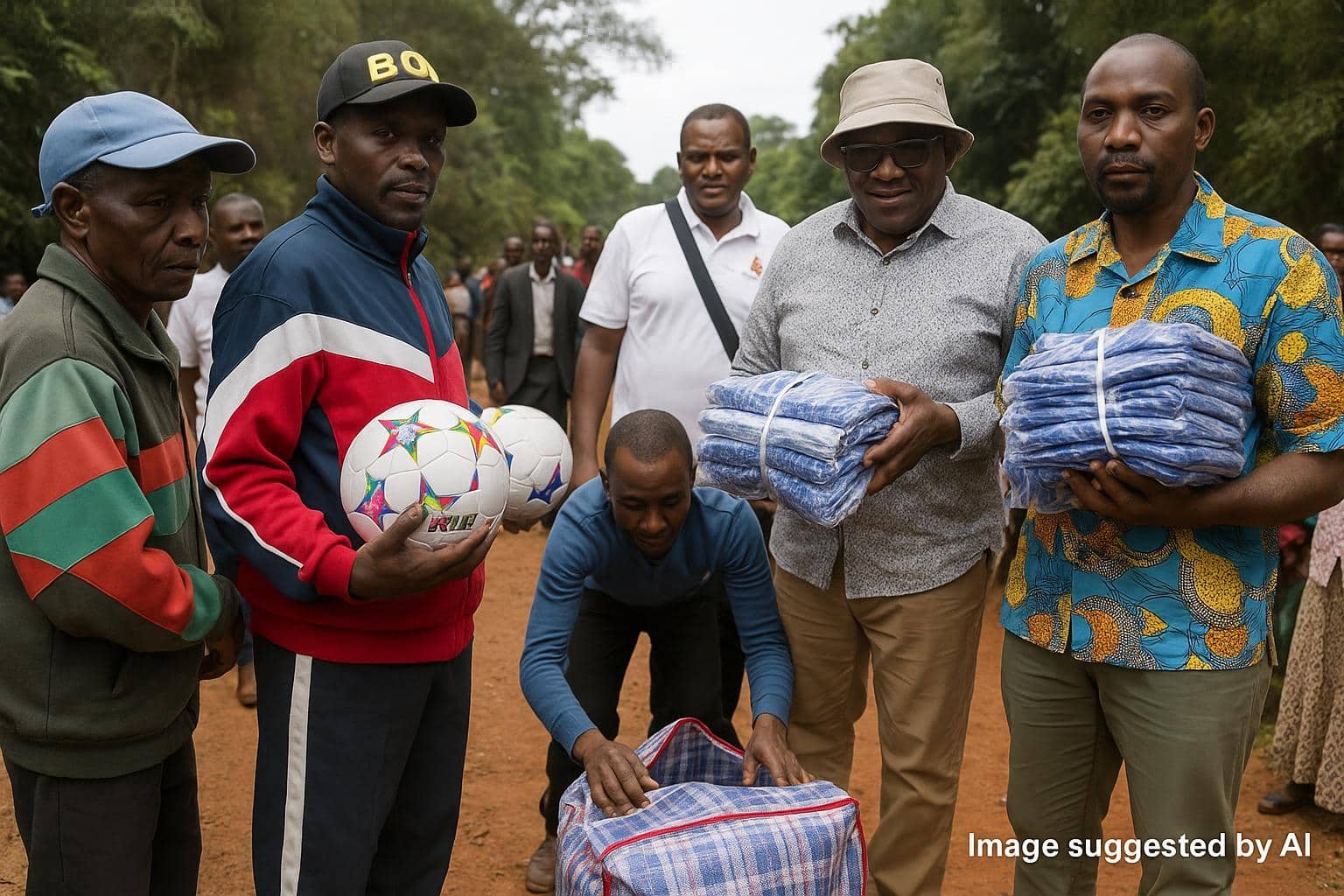
Late afternoon sunlight filtered through the mango trees of Oubouesse as a convoy from Brazzaville rolled into the square. At its head stood Professor Jean de Dieu Bolzer Nzila, greeting children whose makeshift footballs of plastic bags were quickly hidden behind shy smiles.
Without speeches, workers unloaded twenty regulation footballs, two full sets of jerseys, cones, nets and first-aid kits. The modest ceremony, witnessed by elders, teachers and a district official, hinted at ambitions larger than sport, hopes that rural youth might imagine futures wider than subsistence farming.
Honouring a Traditional Legacy
The donation coincided with the unveiling of a granite headstone for Chief Piolé, born Joseph Nzila Lipouma in 1907, a revered custodian of customary land. Family members explained that invigorating village life through sport honored the leader’s counsel that “a community is strong only if its youth are busy.”
Professor Nzila, the chief’s second son and a pharmacology lecturer at Université Marien Ngouabi, described the headstone and the kits as “two sides of the same memory,” connecting ancestral guidance to modern aspirations. His remarks drew nods from clan elders who value continuity over rupture.
Football and Social Development
Niari department’s district of Moutamba counts fewer than three formal pitches, according to the regional youth office, yet hosts weekly informal tournaments drawing crowds from surrounding hamlets. In that landscape, new balls and shirts carry both literal and symbolic weight, suggesting inclusion in the national narrative.
Coach François Matondo, who trains boys on a dusty clearing near the river Louéssé, said the kits would “level the grass,” allowing his squad to travel for inter-village matches with confidence. He predicted reduced drop-out rates as sport offers routine, mentorship and measurable achievement.
Academic studies from the African Union’s Sport Observatory link regular youth athletics to decreases in petty crime by as much as 15 percent. Village leaders in Oubouesse believe similar trends could follow, reinforcing stability sought by provincial authorities focused on post-pandemic economic recovery.
State–University Cooperation
Ministry of Sports spokesperson Justine Ngoma, reached by phone in Brazzaville, welcomed the initiative, calling it “a complement to the presidential programme on rural revitalisation.” She noted upcoming provisions for mobile coaches and grants, signalling an openness to collaborate with university figures on grassroots projects.
At Université Marien Ngouabi, colleagues describe Professor Nzila as a bridge between laboratory research and civic outreach. His pharmaceutical studies on medicinal plants of Niari, published in the Journal of Ethnopharmacology, have already brought research funding to the region and trained several local technicians.
Observers suggest that aligning sport with science may unlock further partnerships. World Health Organization adviser Dr Théodore Mbemba says integrated programmes can address malnutrition, malaria awareness and physical education in a single budget line, a model piloted in northern Ghana and now drawing Congolese interest.
Sustaining the Momentum
The immediate test lies in maintenance. Nets tear, balls puncture, and kits fade under tropical rain. Village committee treasurer Clarisse Mavoungou confirmed a small savings scheme, fed by match-day peanut sales, to replace gear annually, an approach recommended by the French Development Agency handbook.
Within hours of the handover, boys from Oubouesse played an impromptu friendly against Mossendjo Secondary. The improved ball control drew cheers that travelled beyond the touchline, reaching nearby cassava fields where farmhands paused work, a fleeting synthesis of agricultural routine and youthful recreation.
A follow-up tournament is scheduled for August, coinciding with National Youth Day celebrations. Organisers plan to invite scouts from second-division club V. Club Mokanda and representatives of the army sports association, potentially opening vocational pathways that keep talent within Congo’s sporting ecosystem.
Looking beyond the pitch, village elders envision literacy classes tied to evening training sessions. Provincial education officer Lucie Gondat suggests solar lamps for the ground, enabling study hours after dusk. She believes sport can be the entry point for broader human-capital investments that underpin regional agendas.
As sunset glazed the new headstone, Professor Nzila quietly observed the final match of the day. He declined credit, saying the equipment “belongs to the children now.” The remark, simple yet strategic, encapsulated an outlook where empowerment rather than charity frames the relationship between donor and community.
Media Echoes and Future Inclusivity
Regional radio station Voix du Niari devoted its Saturday magazine to the event, replaying interviews alongside soukous tracks popular among the youth. Presenter Aimé Nkouka highlighted that privately donated sports gear had previously reached coastal Kouilou but rarely penetrated interior villages accessible only by laterite roads.
In Brazzaville, the daily Les Dépêches de Brazzaville ran a photo of smiling players under the headline “Small Goals, Big Dreams.” Political analysts note such coverage contributes to positive perceptions of provincial governance, reinforcing unity narratives championed by President Denis Sassou Nguesso’s development discourse.
Plans are underway for a girls’ league next year, a prospect hailed by midwife Cécile Tchicaya as “long overdue equality” in Niari.