
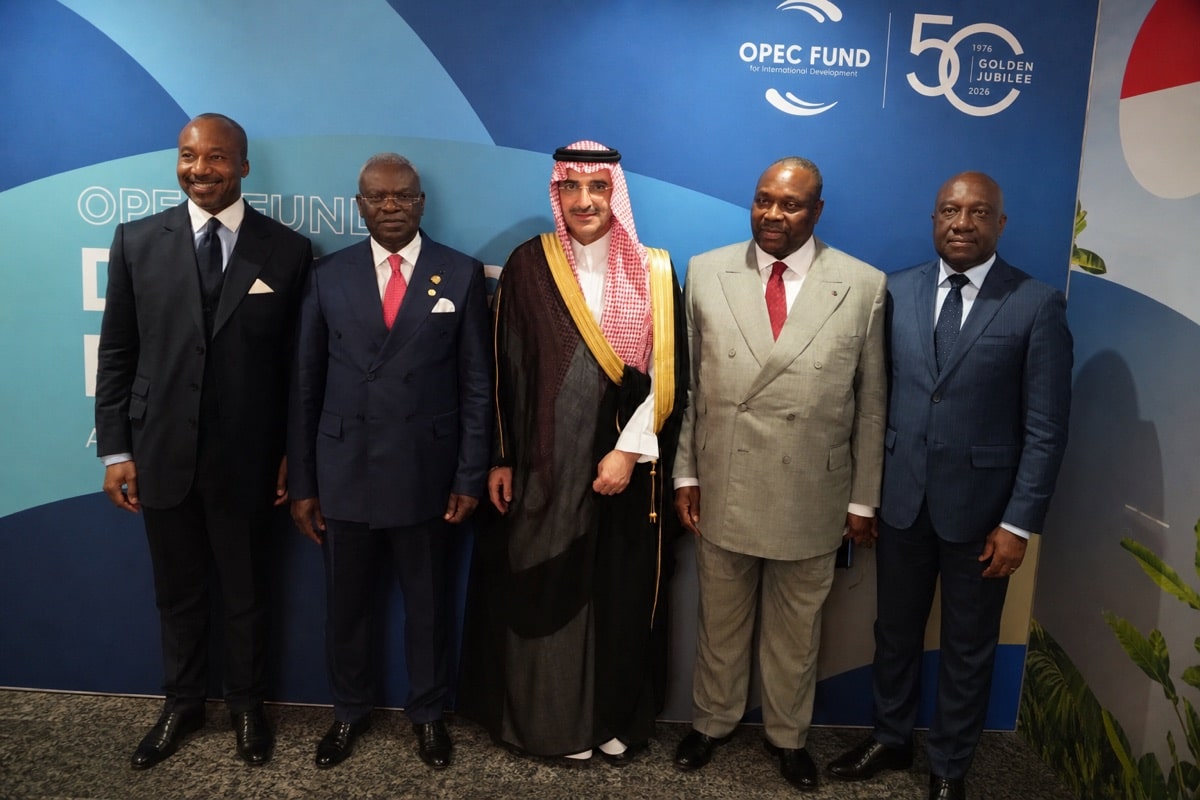
At the margins of the OPEC Fund for International Development forum in Vienna, Congo-Brazzaville moved to deepen ties with the Arab world’s leading financiers. Prime Minister Anatole Collinet Makosso held a series of meetings aimed squarely at unlocking fresh capital for the central African nation.
A Vienna Stage for Congolese Diplomacy
The Austrian capital, host to the OPEC Fund gathering, offered Brazzaville a rare concentration of decision-makers. Rather than a single ceremonial encounter, Makosso pursued successive working sessions, signalling that the government treats investment outreach as patient, methodical diplomacy.
The choice of venue matters. The OPEC Fund forum draws institutions whose lending shapes infrastructure across the developing world. For a hydrocarbon producer such as Congo, the overlap of energy interests and development finance made the setting a natural fit for direct talks.
Three Funds, One Congolese Pitch
Makosso met Walid Shamlan Al-Bahar, director general of the Kuwait Fund for Arab Economic Development. He also sat down with Sultan bin Abdulrahman Al-Murshid, who heads the Saudi Fund for Development, and with Abdullah Almusaibeeh, president of the Arab Bank for Economic Development in Africa.
Each institution carries weight far beyond its balance sheet. The Kuwaiti and Saudi funds have long financed projects across Africa, while the Arab Bank for Economic Development in Africa channels Arab resources specifically toward the continent’s growth needs.
Gathering all three in short order suggests Brazzaville wanted a coordinated message rather than scattered appeals. The Prime Minister, by Congolese accounts, framed the country as a destination ready for long-term partnership rather than one-off transactions.
Energy Infrastructure and Agro-Industry in Focus
The conversations centred on investment opportunities inside the Republic of Congo, with two sectors singled out: energy infrastructure and agro-industry. The pairing reflects a familiar ambition, namely to convert resource wealth into broader, more durable economic activity.
Energy infrastructure speaks to a producer keen to modernise capacity and reliability. Agro-industry, by contrast, points toward diversification, an effort to widen the economic base beyond hydrocarbons and to build value chains that can employ and feed a young population.
That dual emphasis hints at a calculated strategy. By offering financiers both a sector they understand well and one tied to food security and jobs, the government broadens the appeal of its investment case to lenders with differing mandates.
A Government Delegation in Force
Makosso did not travel alone. Vice-Prime Minister Jean-Jacques Bouya joined the talks, alongside Denis Christel Sassou N’Guesso, the minister in charge of international cooperation, and Stev Simplice Onanga, who oversees hydrocarbons.
The composition of the delegation reads as deliberate. Pairing international cooperation with the hydrocarbons portfolio places both the diplomatic and the technical sides of any energy deal at the same table, a setup likely to reassure cautious financiers.
Such turnout also conveys political seriousness. When senior figures appear in person, prospective partners tend to read it as a signal that commitments discussed in Vienna carry backing at the highest levels of government.
From Vulnerability to Viability
Beyond the bilateral meetings, Makosso took part in a high-level OPEC Fund panel built around the theme “Transition from vulnerability to viability.” There he presented the head of state’s vision for development described as sustainable, resilient and inclusive.
The framing is telling. “Vulnerability” acknowledges the exposure of commodity-dependent economies to external shocks, while “viability” gestures toward a steadier footing. Positioning Congo within that arc lets the government speak the language its potential creditors increasingly favour.
By aligning national ambitions with the panel’s theme, Brazzaville sought to present itself as a partner thinking past short cycles. Whether words translate into signed financing will depend on negotiations that, for now, remain at an early and exploratory stage.
Reading the Vienna Signals
What unfolded in Vienna was less a deal than a carefully staged opening. No figures, no agreements and no timelines were announced, and the meetings are best understood as groundwork rather than conclusion.
Still, the cluster of contacts tells its own story. A small central African state secured the attention of three significant Arab funds in a single setting, an outcome that itself reflects a degree of diplomatic reach.
For Congolese readers, the test will come later. The promise of energy and agro-industry investment is real in intent, yet its value rests entirely on follow-through once the Vienna forum closes and quieter negotiations begin (Les Dépêches de Brazzaville).