
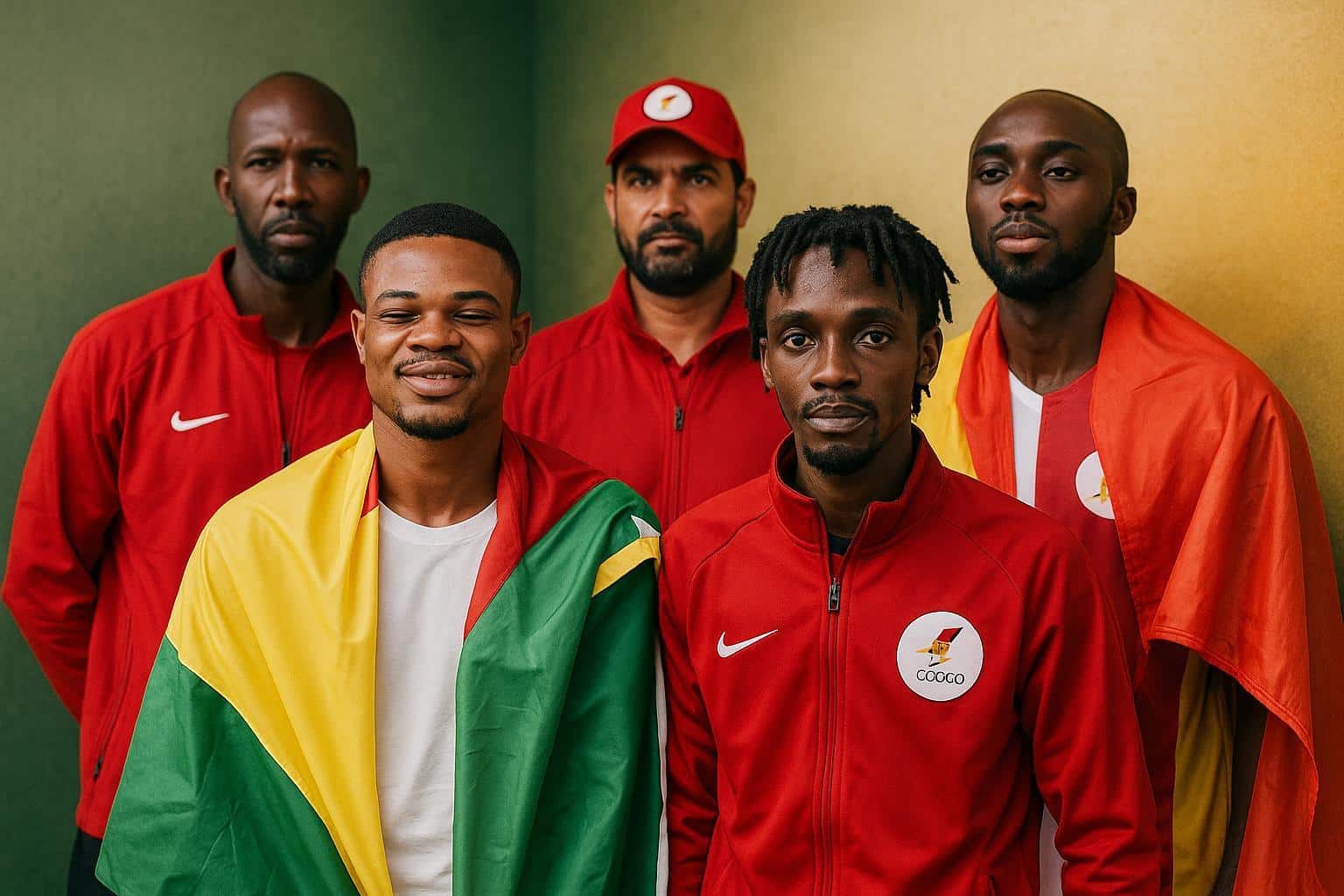
Global stage of Wuxi Worlds
Nearly one thousand fighters from 145 nations converged on Wuxi between 24 and 30 October for the 26th World Taekwondo Championships, a tournament regarded as the sport’s demanding audition ahead of Paris 2024 (World Taekwondo). Among them stood two determined competitors wearing Congo’s red, yellow and green.
Their mission, however modest on paper, was pivotal: remind the international circuit that Brazzaville’s dojangs produce athletes ready to trade blows with Asia’s powerhouses and Europe’s seasoned squads. Every strike landed in Wuxi carried the weight of home clubs, families and a growing domestic fan base.
Profiles of Congo’s hopefuls
Twenty-two-year-old Walikemot Neem, a lithe -63 kg stylist from Pointe-Noire, blends footwork with a penchant for kicks learned under Master Mananga Olivier. Partnering him was 19-year-old Brazzaville native Bouassa Jonathan, competing at -58 kg and known for counter-attacking flurries that surprise taller opponents.
Both men earned their tickets after dominating the 2023 national trials in Ouesso, which drew 180 fighters from 10 departments, according to the Congolese Taekwondo Federation’s technical report. Fund-raising from local businesses covered flights, while the Ministry of Sports supplied tracksuits and a modest per diem.
International-grade coaching staff
Veteran tactician Bazebizonza Floris, who attended World Taekwondo’s international coach course in Seoul in 2021, led corner instructions. He worked in tandem with national assistant coach Mananga, focusing on video analysis of likely first-round opponents from Cuba and Spain during overnight sessions at the team hotel.
“We asked our athletes to trust the game plan and not chase knockouts,” Floris told this newspaper by phone. “The objective was experience, not medals—yet.” Manager Me Rihan Adel echoed that stance, adding that each round completed would translate into extra seeding points on the Olympic ranking.
Hard-fought bouts and Grand Slam ticket
The draw was unforgiving. Neem opened against Iran’s reigning Asian champion, Mohsen Rezaei, and bowed out 8-17 in the round of 32 after a third-round rally narrowed the early gap. Moments later Bouassa fell 10-16 to Spain’s Adrián Vicente, himself ranked inside the global top fifteen.
Despite the exits, Wuxi spectators applauded the Congolese for aggressive forward fencing, a quality sometimes lacking in newcomers. World Taekwondo Development Director Jeongkang Seo afterwards praised the pair’s “contagious fighting spirit,” telling journalists that their presence proved Africa’s depth is wider than the continent’s medal table suggests.
Their grit earned an unexpected reward: an invitation to December’s Grand Slam Challenge, an eight-day showcase staged on the same Wuxi mats and broadcast across Asia-Pacific. Coaches accepted immediately, seeing another rare chance to face Korea’s professional stable and China’s state-funded squad without paying registration fees.
Federation politics and upcoming vote
Back home the timing blends with politics inside the dojang. Federation president Master Armand Mokoko reaches term limit in March, and Me Rihan Adel, the current national team manager, has announced his candidacy. He promises to professionalise athlete allowances and secure a national training centre by 2025.
Analysts at the Brazzaville-based Sports Observatory note that credible results abroad often sway voting clubs at home. “Delegates look at medals, but they also look at who organised the trip,” researcher Mireille Tchicaya said, hinting that Wuxi’s smooth logistics may boost Adel’s platform.
Money matters: state and sponsors step in
The Ministry of Sports sees martial arts as low-cost sports offering quick continental wins. An official budget note seen by this newsroom allocates 120 million CFA francs for combat sports in 2024, up ten percent, with a dedicated line for equipment import waivers.
Telecom operator Airtel Congo has meanwhile renewed a 30-million-franc sponsorship that will brand athlete doboks at the African Games in Accra next year. Chief marketing officer Victoire Mankessi said the company wants to align its product ‘4G lightning speed’ with athletes whose kicks exemplify that tagline.
Road to Paris fuels grassroots dreams
Neem and Bouassa will now regroup at the Centre sportif de Kintélé, where a short camp with Moroccan coach Abdelaziz Si-Ali precedes the Grand Slam. Success in Wuxi could lift their World Taekwondo ranking sufficiently to secure a continental quota for Paris 2024.
For the federation, a single Olympic berth would echo the nation’s historic appearance by Rosa Keleku in Rio 2016, inspiring thousands in school programmes. “It changes the psychology,” said physical-education inspector Jean-Bruno Nkouka. “Kids suddenly believe they can put on the dobok and travel further than their neighbourhood.”
Stakeholders caution, however, that momentum fades without systematic follow-up. Coach Floris points to Senegal’s model, where weekly inter-club leagues keep athletes sharp between big events. He hopes Congo’s gyms can duplicate that rhythm so Wuxi becomes a stepping-stone.
For now, the two young kickers cherish the simple privilege of carrying the flag. “Walking into the arena with ‘Congo’ on my back still gives me goosebumps,” Bouassa said in a voice message sent shortly before boarding the return flight. The next bout, he insisted, “will be even louder.”