
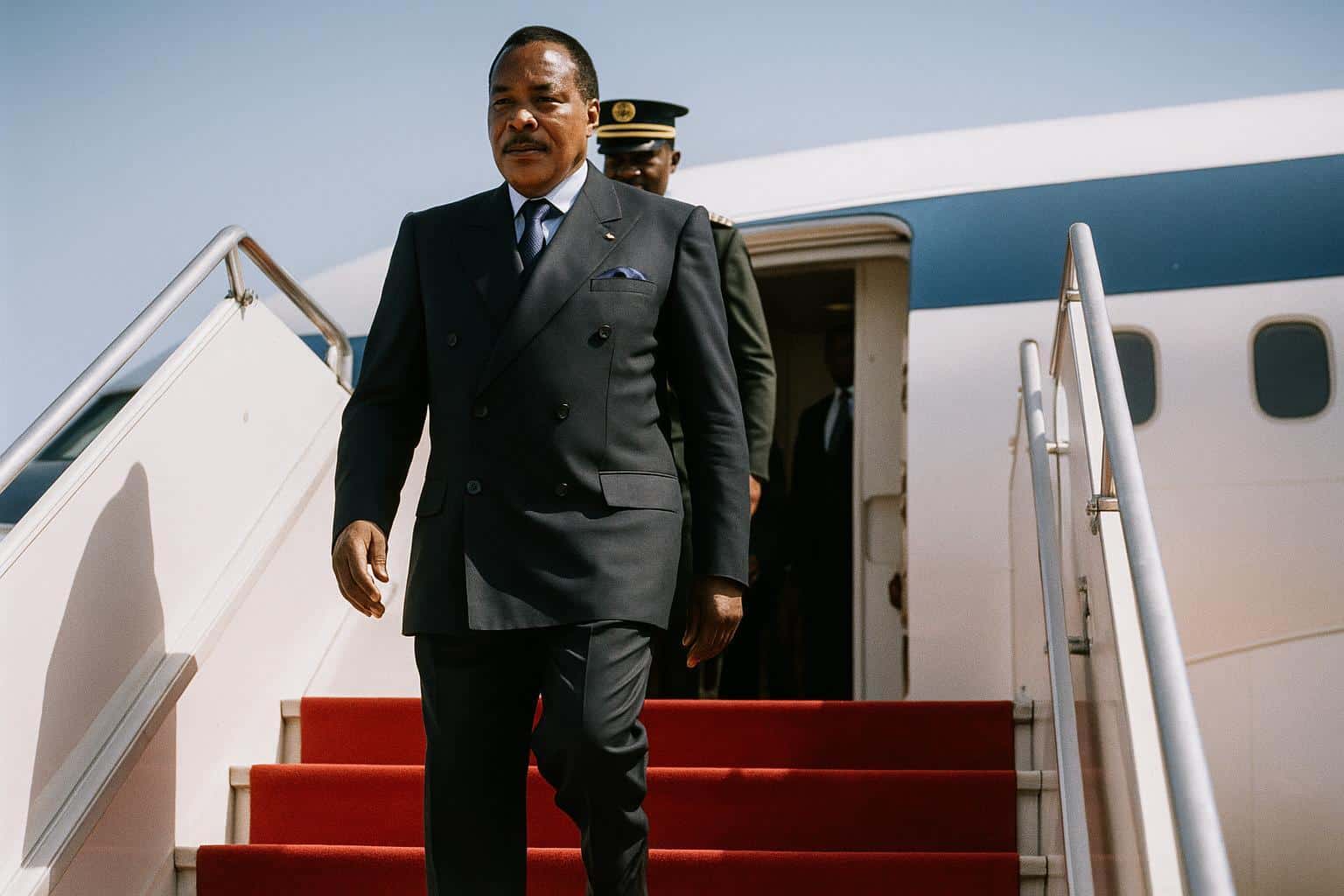
Congo’s Head of State steps onto the UN stage
President Denis Sassou N’Guesso left Maya-Maya airport on 19 September, bound for New York and the 80th session of the United Nations General Assembly. His arrival in the city signals Brazzaville’s determination to keep its flag visible in global decision-making arenas.
Congolese officials describe the trip as a strategic opportunity to showcase domestic stability and underline the country’s role in regional mediation. “Our delegation carries Africa’s hope for a fairer multilateral order,” a senior diplomat told reporters before take-off.
Peace, development and rights headline the 80th session
Delegates convene this year under the theme “Better Together: Eighty Years and Beyond for Peace, Development and Human Rights,” an agenda the UN secretariat calls timely in a fragmented world. Conflicts, economic headwinds and climate pressure heighten the need for collective action, organisers reiterate.
For Congo, the theme mirrors priorities long articulated in Brazzaville. The Government’s ‘Future We Share’ plan emphasises post-pandemic recovery, climate resilience and social cohesion, all pillars that intersect with the Assembly’s headline message.
During plenary discussions, speakers repeatedly connected human security to inclusive prosperity. That linkage, advisers note, reinforces Congo’s domestic programmes that blend infrastructure investment with community-level peacebuilding.
Renewed urgency around the 2030 Sustainable Development Goals
Midway through the implementation calendar, the Sustainable Development Goals remain a benchmark for global ambition. Heads of State used the New York podium to press for accelerated delivery by 2030, highlighting funding gaps and data shortfalls that widened after COVID-19.
Congo’s delegation aligns with the sentiment. Officials point to progress in universal primary education and steady electrification rates, while conceding that poverty and maternal health indicators require further attention. “Partnerships and technology transfer are essential if no one is to be left behind,” the foreign minister stressed in corridor remarks.
Economists in Pointe-Noire argue that SDG-driven investment can unlock jobs in logistics, digital services and agro-processing. Their assessment matches regional studies suggesting a multiplier effect when development finance targets diversified economies.
Africa presses its case for a permanent Security Council seat
The Assembly once again echoed Africa’s longstanding demand for at least one permanent seat with veto power on the Security Council. Delegations from across the continent insist the body’s configuration no longer reflects contemporary realities.
Brazzaville has backed the Ezulwini Consensus since its adoption, advocating two permanent and five non-permanent African seats. Diplomats cite Congo’s history within the AU Peace and Security Council as proof of readiness to shoulder enlarged responsibilities.
Analysts in Yaoundé and Libreville argue that an African veto could incentivise earlier conflict-prevention measures and fairer resource-governance discussions. Yet negotiations remain delicate, requiring unanimity among the current five permanent members.
Palestinian statehood debate resurfaces
Beyond institutional reform, the question of Palestine featured prominently in hallways and side-events. Several leaders called for full UN membership as a step toward a two-state solution seen as pivotal for Middle-East stability.
Congolese envoys reiterated Brazzaville’s commitment to international legality and dialogue. Observers noted a measured tone that balances solidarity with oppressed peoples and respect for consensus-driven diplomacy. The approach mirrors Africa’s broader tendency to favour negotiated settlements over unilateral moves.
Brazzaville’s multilateral outlook gains visibility
Throughout the week, Sassou N’Guesso engaged in bilateral meetings aimed at consolidating development partnerships. Details remained discreet, yet aides confirmed discussions on climate finance, digital infrastructure and youth employment as priority tracks.
Commentators in the Congolese diaspora welcomed the visibility. “Seeing Congo at the forefront of multilateral dialogue strengthens investor confidence,” said Marlène Ngatsé, an economist based in Paris. Social media reactions from students in Oyo and Dolisie likewise highlighted pride in the nation’s upgraded diplomatic profile.
As the blue-gold UN flag continues to flutter over Manhattan, Brazzaville’s message resonates: global challenges demand inclusive solutions, and Africa—through Congo’s voice—intends to shape them.
The delegation is expected back in Brazzaville later this week, with follow-up briefings slated for the Ministry of Foreign Affairs. Observers will watch how commitments secured in New York translate into concrete programmes on the Congo River’s banks.