
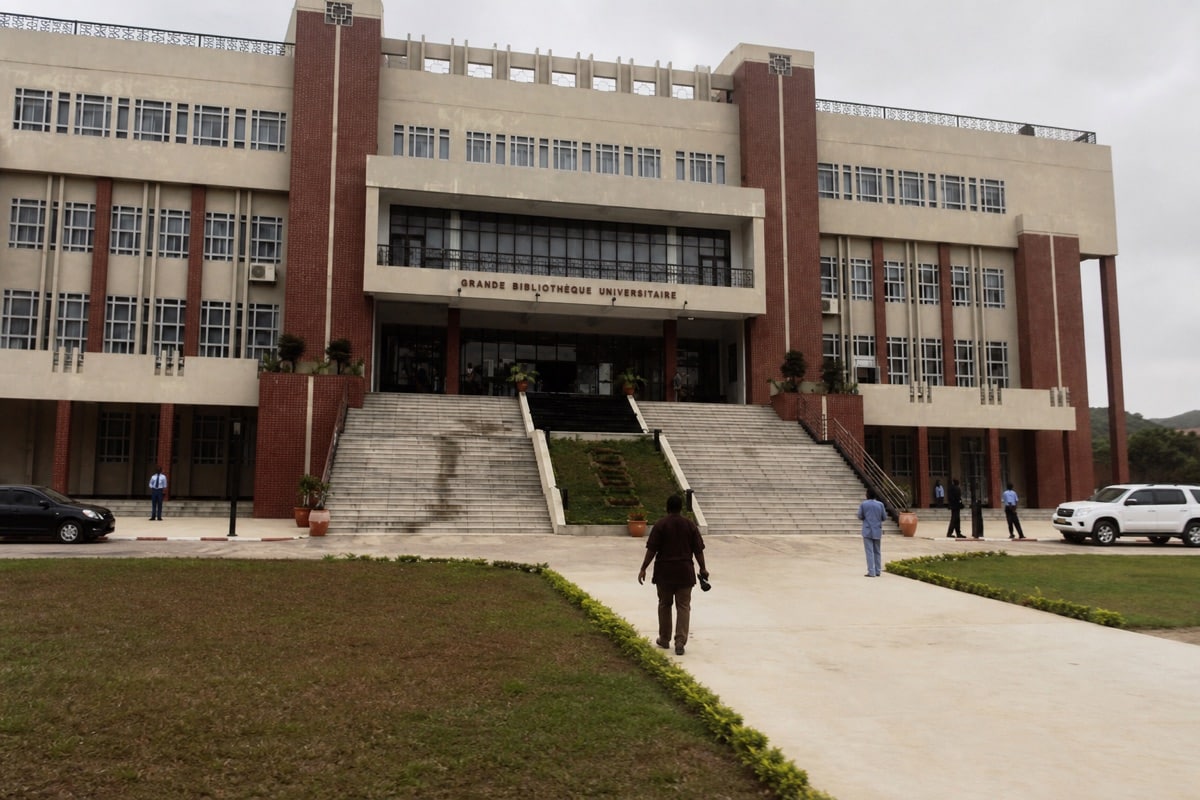
At Marien-Ngouabi University, the calm that often follows a government payment never quite arrived. Teaching unions gathered in Brazzaville and concluded that recent disbursements, though real, fell short of settling a long and contested ledger.
Negotiations Reach an Uneasy Crossroads
The intersyndical college met on June 23 in Brazzaville to take stock of talks opened with the government over the social demands of the university’s teaching staff. The session was less a celebration than an audit of promises kept and promises still pending.
Government officials had paid three months of salaries, a gesture meant to ease pressure. Yet union representatives described the result as incomplete, insisting that the underlying grievances had not been resolved by a single tranche of back pay.
Why Partial Payment Did Not Settle the Dispute
“The gaps persist,” union representatives told the assembly, summarizing a frustration that has shadowed the institution for months. In their reading, the three months disbursed addressed only part of a debt that had accumulated across several distinct periods.
That distinction matters. For the teaching staff, the issue is not whether the state can pay at all, but whether it intends to clear the full backlog rather than offer instalments that leave the central problem untouched and the workforce uncertain.
The Demands on the Table
The college issued an ultimatum spelling out precisely what it expects. It demands immediate payment of the salaries owed for August and September 2024, alongside the salaries running from March to June 2026, two stretches that frame the dispute’s timeline.
Beyond base salaries, the union platform reaches into work already performed. Teachers are calling for the settlement of at least two years of unpaid overtime, together with allowances tied to temporary assignments that, by their account, remain outstanding.
Read together, these claims describe a relationship in which routine compensation has lagged behind delivered work. The unions frame the arrears not as isolated lapses but as a pattern requiring a structured and binding response from the authorities.
A Call for a New Protocol Agreement
Rather than seek a one-off cash settlement, the intersyndical college is pressing for a fresh accord with the government. The unions want a protocol agreement capable of underpinning durable social peace at the university and restoring institutional confidence.
The emphasis on confidence is deliberate. After repeated cycles of demand, partial payment and renewed grievance, the representatives appear to be seeking a framework that would convert ad hoc gestures into predictable, enforceable commitments both sides can reference.
Such a document, in the unions’ view, would do more than schedule payments. It would re-establish a working trust between teaching staff and the state, the absence of which has made each negotiation feel like a reopening of the same unresolved file.
The Threat of a Renewed Strike
The warning attached to the ultimatum was unambiguous. Should concrete answers fail to arrive quickly, the unions said, responsibility for triggering a new strike would rest with the government rather than with the teaching staff awaiting payment.
That framing places the burden of escalation squarely on the authorities. The unions are not announcing an immediate walkout; they are setting a condition, signaling that continued silence or further partial measures could push the dispute toward open conflict.
A renewed strike would disrupt the normal functioning of the university, a prospect the representatives raised directly. For an institution central to higher education in the country, any interruption carries consequences that extend well beyond the negotiating room.
What Is at Stake for the Institution
The standoff at Marien-Ngouabi is, on its surface, an accounting dispute over salaries, overtime and allowances. Beneath that, it tests whether the state and its academic workforce can build a mechanism that prevents the same grievances from resurfacing each year.
For now, the social temperature remains high. The government has shown it can pay, and the unions have shown they will not treat partial payment as closure. Between those two positions sits the question of whether a lasting agreement is finally within reach.
The coming weeks will likely determine which path prevails. Either the parties translate the current standoff into a durable protocol, or the university edges toward another disruption whose cost would be borne by students, staff and the institution alike.