
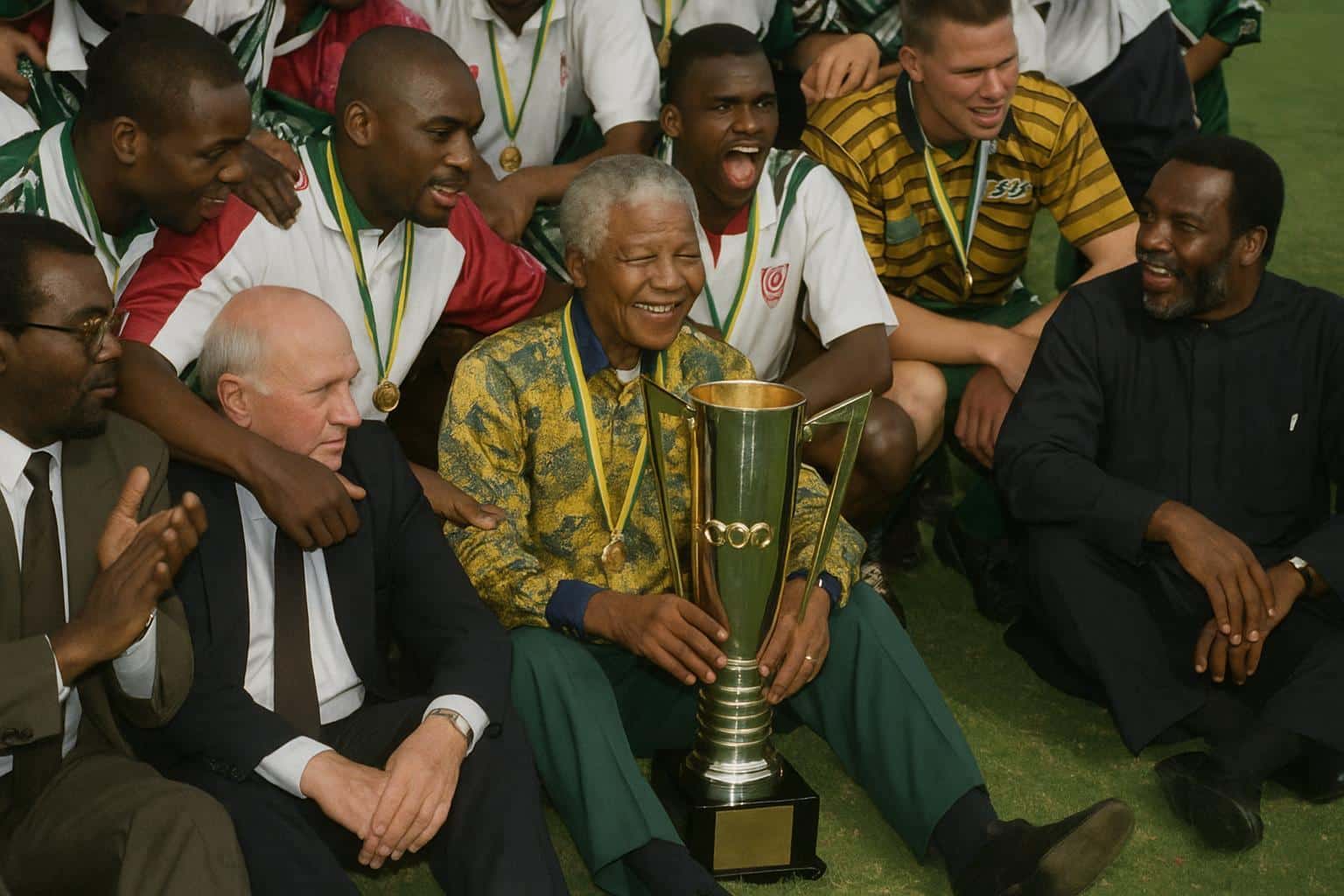
From Khartoum to a Continental Showcase
The Africa Cup of Nations was born in February 1957, when Egypt, Sudan and Ethiopia gathered in Khartoum under a brand-new Confederation of African Football. As the Pharaohs lifted the inaugural trophy, the competition offered a fresh sporting voice to newly independent nations.
During the 1960s the tournament carried political symbolism, illustrating aspirations for unity and self-determination. Supporters filled modest stadiums, radios crackled across villages, and each goal felt like a statement that Africa could script its own sporting narrative.
Expansion and the Television Boom
Growing interest prompted format changes: six teams in 1963, eight from 1968, and—crucially—the first televised edition in Sudan in 1970. Images of flair strikers and roaring crowds travelled beyond borders, cementing the CAN as the continent’s shared festival.
Further growth followed Senegal 1992 with 12 participants, South Africa 1996 with 16, and Egypt 2019 with a record 24 sides. Each expansion widened opportunity while preserving the drama that makes knockout football irresistible.
Strikers Who Lit Up the Scoreboards
No scorer embodies the tournament’s fireworks better than Samuel Eto’o. Between 2000 and 2010 the Cameroonian registered 18 finals goals, averaging a strike every other match and guiding the Indomitable Lions to back-to-back titles in 2000 and 2002 (CAF archives).
Decades earlier, Ivorian icon Laurent Pokou mesmerised Addis Ababa with eight goals in 1970, including a five-goal burst against Ethiopia—still a single-match record. Pierre Ndaye Mulamba’s nine-goal spree for Zaire in 1974 remains the best tally from one edition.
Masters on the Touchline
Ghanaian tactician Charles K. Gyamfi set a benchmark with three titles in the 1960s, a feat later matched by Egypt’s Hassan Shehata during the Pharaohs’ golden run from 2006 to 2010. “Consistency comes from knowing the culture of your players,” Shehata reflected after his third crown.
Few coaches know the continental terrain like Claude Le Roy, who has steered nine national teams to the finals. Frenchman Hervé Renard joined the elite club of dual-nation winners by guiding Zambia in 2012 and Côte d’Ivoire in 2015, underlining the tactical depth now shaping African benches.
Dynasties Forged in Gold
Egypt stand alone with seven trophies, including three consecutive triumphs that mesmerised fans in Cairo, Accra and Luanda. Veteran goalkeeper Essam El-Hadary, who played at 44, became the competition’s oldest participant while collecting a fourth personal title.
Ghana’s Black Stars reached every final between 1963 and 1970, winning three. Cameroon mirrored that dominance at the turn of the millennium, and Côte d’Ivoire cemented its reputation for nerve-shredding shoot-outs, prevailing on penalties in both 1992 and 2015.
Finals Etched in Collective Memory
The 1992 showdown in Dakar lasted 120 scoreless minutes before an epic 24-kick shoot-out saw Côte d’Ivoire edge Ghana 11-10. Ghanaian striker Anthony Yeboah later said, “I felt like we were flipping a coin for history.”
In 2000, a pioneering co-hosting by Ghana and Nigeria produced electric atmospheres culminating in Cameroon’s shoot-out win in Lagos. Recent finals have remained tight: Algeria’s lone strike sunk Senegal in 2019, while a resilient Ivorian squad thrilled Abidjan by overturning Nigeria 2-1 in 2023.
Records That Still Stand
Ayman Mansour’s strike after 23 seconds for Egypt in 1994 remains the quickest goal, outpacing every subsequent burst of pace. The highest attendance, 120,000 fans in Cairo’s rebuilt stadium for the 1986 final, still resonates in supporters’ stories.
The 2023 edition, played in early 2024, produced 119 goals—the most prolific in tournament history—highlighting the attacking mindset of modern squads and the influence of European-trained forwards returning home in peak form.
Looking Toward Morocco 2025
The 35th tournament heads to Morocco with a familiar 24-team cast; every qualifier has prior finals experience, underscoring how the CAN has become an institutional rite of passage for African footballing nations.
For Congo-Brazzaville, champion in 1972, preparations focus on youth development to recapture past glory. National technical director Barthélemy Ngatsono argues that “regular continental exposure sharpens competitiveness for World Cup cycles,” a view shared across the CEMAC zone.
Whatever unfolds in Casablanca and Tangier, the Africa Cup of Nations will continue weaving records, legends and surprising upsets into the continent’s sporting folklore, proving that its magic endures far beyond the final whistle.