
Presidential Call Sets Security Agenda for 2026
On New Year’s Eve in Brazzaville, President Denis Sassou Nguesso used the traditional “réveillon d’armes” to issue a singular mission to the nation’s defence and security forces: shield the March 2026 presidential election from any disturbance and keep every polling station serene.
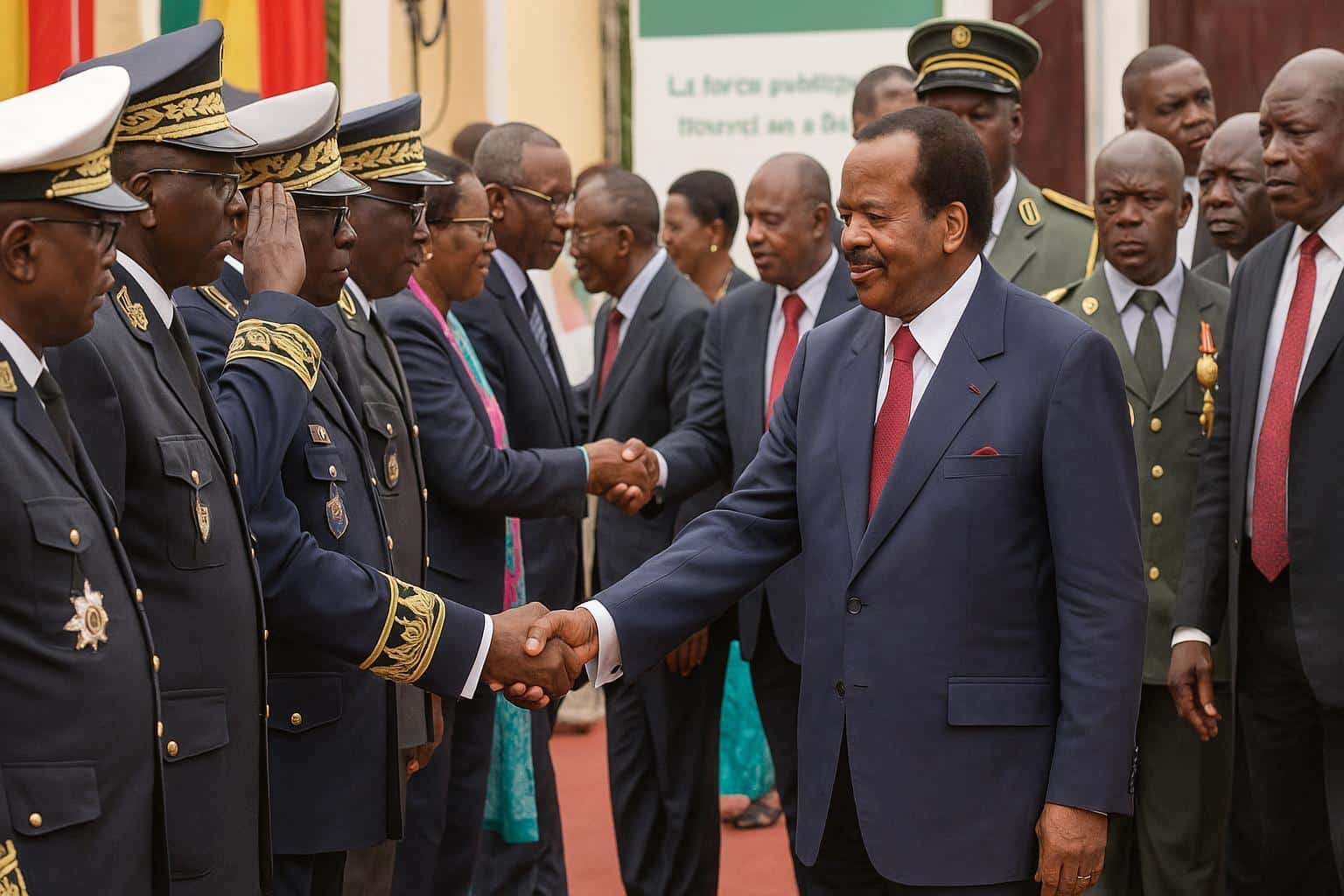
Flanked by senior officers at the headquarters of the Armed Forces of the Republic of Congo, the Head of State declared that the coming ballot must unfold “in peace, transparency and unity”, adding that the government will supply logistical backing wherever necessary to reach that standard.
Legacy of Anti-Banditism Strengthens Election Plan
According to the Ministry of Defence communiqué published after the ceremony, joint patrols combining army, gendarmerie and police personnel will be visible in urban centres from the first quarter of 2025, a timeline designed to familiarise voters with uniformed presence before campaigning intensifies.
Political analysts at the Centre d’Études Stratégiques de Brazzaville note that early community engagement by security units has previously reduced tension during legislative contests, citing the 2022 polls in Pointe-Noire where incident reports fell by forty percent compared with 2017 figures.
From the same podium, President Sassou Nguesso recalled last year’s directive to eradicate “grand banditisme”. Defence headquarters claims the operation, codenamed Mbata Ya Bakala, cut armed robberies nationwide by more than half, a statistic corroborated by civil society watchdog Observatoire de la Criminalité urbaine.
Training Surge and Tech Shield Bolster Readiness
Government spokesperson Thierry Moungalla argues that the lessons learned from urban crime suppression are now feeding the electoral security blueprint, particularly in intelligence sharing between municipal police and military units stationed in remote districts of Sangha, Cuvette and Pool.
Reinforcements are already visible inside training grounds. The National Service for Military Preparation reports that 3,200 recruits completed basic drills in November, the largest cohort since 2014, with an additional 800 cyber-security specialists scheduled for intake early next year to monitor digital disinformation.
Colonel Juste Mbemba, commander of the Congolese Signal Brigade, says the focus on cyberspace is “indispensable because rumours travel faster than gunfire”. He cites regional experiences in Gabon and Cameroon where false polling-day alerts on social media briefly disrupted voter turnout.
Budget Discipline Supports Stability Promise
While operational budgets remain tight, the 2025 Finance Law allocates an extra 18 billion CFA francs to defence and interior ministries combined, a six percent rise year-on-year. The appropriation prioritises fuel reserves, troop mobility and satellite communications, according to the parliamentary defence commission.
Economic commentator Cédric Oba believes the modest increase reflects broader macro-fiscal prudence while still signalling state commitment to a stable election cycle, insisting that “investor sentiment is closely tied to perceptions of political calm” especially within Pointe-Noire’s oil and gas corridors.
Communities and Partners Welcome Peace Push
Civil organisations have greeted the presidential directive with conditional support. The Conseil National de la Jeunesse requests inclusive communication channels so that community leaders can flag potential hotspots early, a mechanism the Interior Ministry says will be integrated through district-level security councils.
In Brazzaville’s Moungali district, trader Angèle Mabiala says night patrols introduced after the anti-banditism campaign have already “changed the atmosphere”, making her optimistic about casting a ballot in 2026 without fear. Similar sentiments surface in radio call-in programmes from Owando to Dolisie.
International partners have also taken note. A spokesperson for the United Nations Office for Central Africa welcomed the emphasis on transparency and offered technical assistance for early-warning mapping, affirming that Congo’s stability contributes to wider CEMAC integration efforts and sub-regional trade resilience.
Diplomats from neighbouring states attended the Brazzaville ceremony, among them Cameroon’s defence attaché Colonel Jean-Benoît Ngono, who stated that shared borders imply shared security stakes and that coordination drills planned under the ECCAS standby force should accelerate before the election.
Toward a Culture of Peaceful Disagreement
Looking beyond March 2026, President Sassou Nguesso argued that a secure ballot would lay ground for economic acceleration, including the planned rollout of Special Economic Zones in Ouesso and Oyo, projects he said require “a climate of trust between citizens, investors and uniformed guardians”.
The Commander-in-Chief concluded by urging Congolese to view the armed forces as “children of the nation, not arbiters of politics”, stressing their constitutional duty to remain neutral while guaranteeing order. Applause inside the mess hall suggested the message resonated with ranks and civilian guests alike.
Observers anticipate further ordinances detailing operational zones once the Constitutional Court publishes the official electoral calendar, expected mid-2025. Until then, the watchwords pronounced on New Year’s Eve—peace, transparency and unity—appear set to guide a nationwide rehearsal for a decisive democratic moment.
For many residents, that rehearsal has already started. Schools, churches and market associations are scheduling civic education sessions in cooperation with the electoral commission, reinforcing what pastor Joseph Kidi calls “the habit of peaceful disagreement”. Such grassroots initiatives may prove the quiet cornerstone of 2026.