
Council approves polymetal and potash decrees
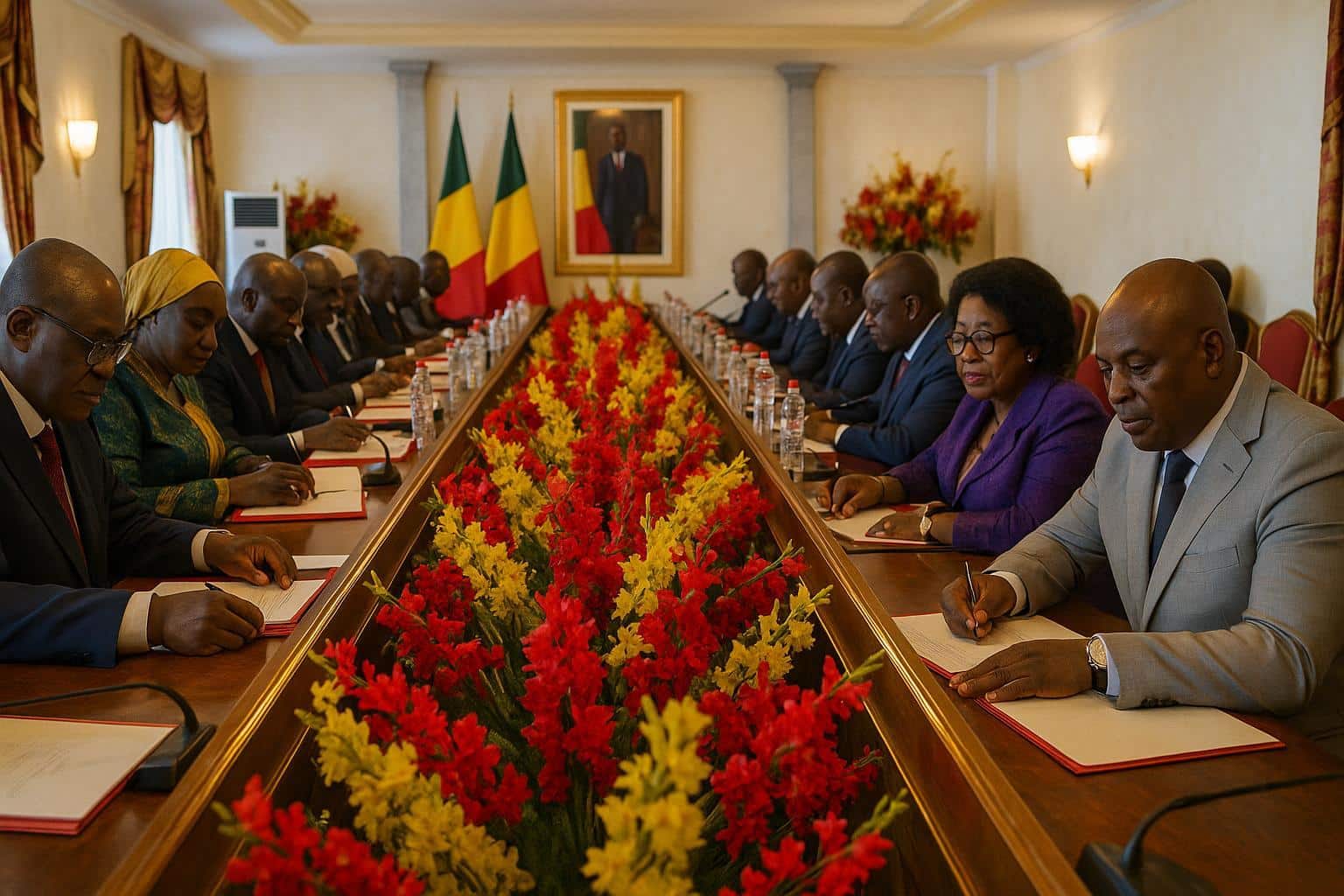
Brazzaville ended 2025 with decisive signals for the mining industry. Meeting on 31 December, the Council of Ministers chaired by President Denis Sassou Nguesso approved four draft decrees that open the door to large-scale valorisation of polymetals and potash.
Government spokesman Thierry Lezin Moungalla told reporters that the decisions seek to accelerate economic diversification and local processing, two priorities repeated in recent policy speeches.
Baouchi SARLU outlines cable-grade metals plan
The first pair of decrees grants Baouchi SARLU valorisation permits covering the Passa-Moubingui and Mindouli sites in Pool department, where combined polymetal resources are estimated at about 30 million tonnes.
Moungalla said the company intends to build modern facilities able to transform concentrates into finished copper and zinc cables, cutting import bills and supplying national electrification projects.
Under the plan, annual output could reach 250,000 tonnes over a twenty-five-year mine life, supported by an investment envelope put at 350 million US dollars, including dedicated roads, power lines and a training centre.
Employment projections stand at 350 positions, of which at least 250 must be offered to Congolese nationals, in line with the 2021 Mining Code’s local-content provisions.
Former permits revoked, new player steps in
Baouchi lodged its application last November, shortly after former titleholder Loulou de Mine lost the concessions because of prolonged inactivity and non-compliance with a 2014 exploitation convention.
Two presidential decrees issued on 8 October 2024 had therefore returned the sites to the public domain, allowing the ministry to launch a fresh tender that attracted Baouchi’s proposal.
The publicly available summary of Baouchi’s technical dossier indicates that feasibility, environmental and social impact studies must be completed before any construction permits are signed.
Mining analysts in Brazzaville note that the timeline is ambitious but plausible, provided international prices for copper, zinc and associated metals remain supportive.
Soremi SARLU deepens search for Kouilou potash
Separately, the Council endorsed two draft decrees granting Soremi SARLU research permits for the Mandza and Mboumbissi blocks in Kouilou, west of Pointe-Noire.
The Chinese-backed firm previously carried out prospecting in Mbélélo, Mboumbissi and Mandza, identifying promising potash horizons that now merit deeper drilling worth an estimated five billion CFA francs.
Minister of State Pierre Oba, who presented the file, stressed that potash fertilisers are key to food-security strategies in Central Africa and that local processing could supply both domestic farmers and regional markets.
He added that the research phase, if successful, would pave the way for industrial exploitation under the cooperation framework agreed at the Forum on China-Africa Cooperation.
Safeguards, consultations and local benefits
For citizens, real impact will be measured not only in export earnings but in the number of skilled youths trained, the volume of cables emerging from Congolese factories and the fertiliser bags reaching smallholder cooperatives.
Before any ore is moved, Baouchi must file an Environmental and Social Management Plan with the Ministry of Environment. Officials familiar with the process say public consultations in Passa, Mindouli and neighboring villages are scheduled for the first quarter of 2026.
Local leaders have welcomed the requirement. ‘Our communities want mining, but responsible mining,’ said district chief Antoine Ngatsé, adding that road upgrades and expanded health centres are among priorities negotiable in the future community-development agreement.
At Mindouli high school, science teacher Clarisse Koumba hopes the incoming training centre will provide internships that align classroom lessons with laboratory practice, boosting the province’s human-capital base.
The decrees also impose rehabilitation bonds to ensure mine pits are back-filled and vegetation restored after closure. Such provisions mirror best practices promoted by the Economic and Monetary Community of Central Africa.
On the potash side, Soremi must share all geological data with state geologists, strengthening the national core archive set up in Pointe-Noire two years ago. The database is expected to improve resource governance and attract downstream fertiliser investors.
Economic diversification and financing signals
Congo-Brazzaville has long sought to turn its considerable geological potential into broad-based growth, moving beyond oil dependence and aligning with the African Union’s Agenda 2063.
Economist Arsène Bampou suggests that the new decrees send reassuring signals to investors about regulatory predictability, while maintaining safeguards through compulsory environmental studies and local hiring quotas.
Bankers contacted in the capital argue that both projects could eventually qualify for green or sustainability-linked financing, provided disclosure standards match those required by international lenders.
For the government, the timing is strategic. Oil revenues are gradually receding, and the 2024-2028 National Development Plan counts on mining to lift non-hydrocarbon GDP to 10 percent by 2028. The Council’s approval demonstrates what Moungalla called ‘a bias for execution’.
Economist Bampou cautions that implementation speed must be balanced with robust oversight. He recalls past episodes where overly optimistic schedules caused bottlenecks in port logistics. ‘Learning from those lessons will be vital if Congo is to capture full value,’ he said.
Milestones to monitor in 2026
In 2026, observers will track Baouchi’s prefeasibility milestones and Soremi’s seismic surveys for early clues on how fast the new minerals agenda progresses.