
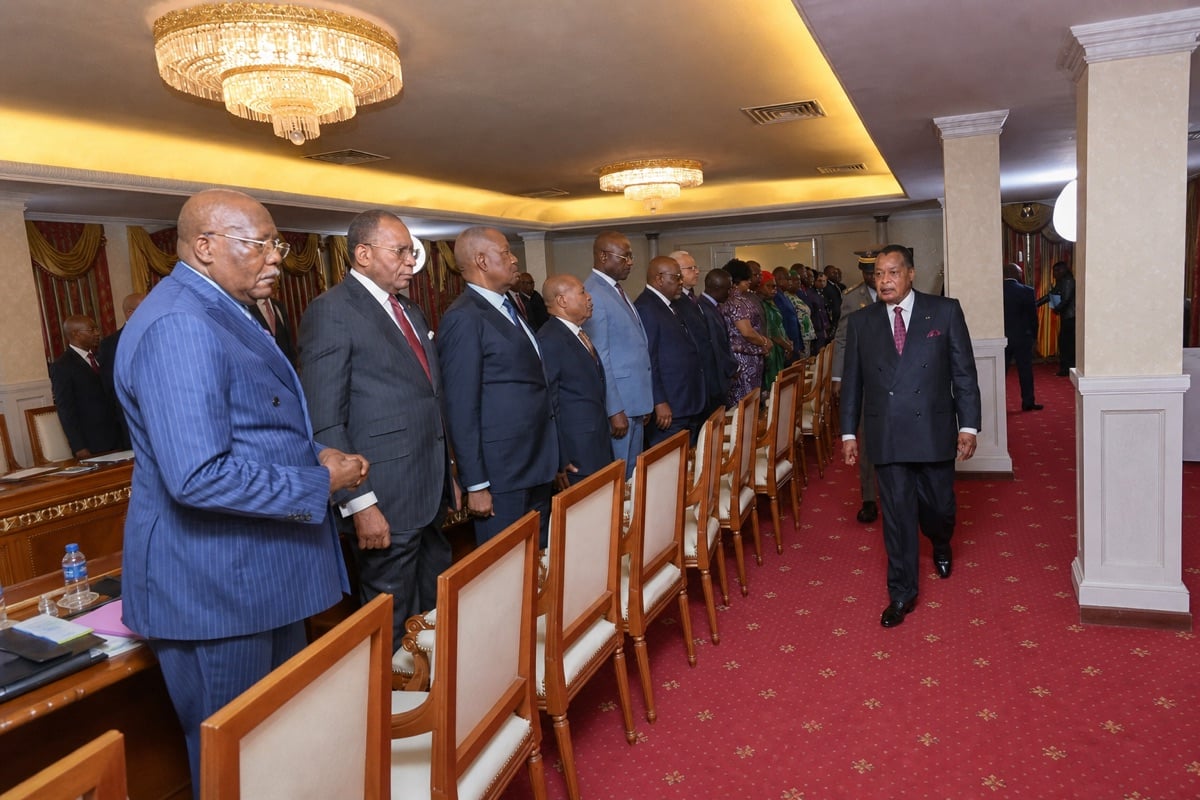
A Familiar Contest Reaches the Ballot Box
On Sunday, March 15, 2026, voters in the Republic of Congo (Congo-Brazzaville) went to the polls to choose a head of state. The contest pitted the incumbent, Denis Sassou N’Guesso, 82, against six other candidates cleared to run.
Official figures placed registration near 2,600,000 citizens for the presidential ballot. The number sat close to the 2021 register, when roughly 2,645,283 electors were enrolled and turnout reached about 67 percent of the electoral body.
How the Register Compares With 2021
The continuity between the two registers is striking. A gap of only a few thousand names separates the 2026 roll from its predecessor. For a country still consolidating its civil registry, such stability offers a useful, if imperfect, gauge of electoral reach.
Turnout in 2021, near two-thirds of registered voters, remains the most recent benchmark available. Whether the March vote matched that level was not stated in the official record at the time of registration counting, leaving observers to watch the figures closely.
Where Congolese Cast Their Ballots
Authorities set up 6,620 polling stations across the territory to receive civilian voters on March 15. The distribution aimed to cover Brazzaville, Pointe-Noire and the departments, reflecting the logistical scale of organizing a single-round national election in a vast country.
Members of the armed forces and security services voted ahead of the general public, on March 12. The early ballot is a routine arrangement that lets serving personnel reconcile active duty with their right to take part in the election.
That separation of military and civilian voting days is common in the region. It eases crowd management at stations and ensures security units remain operational on the main polling day, when civilian participation is at its highest.
The Incumbent’s Long Tenure
Denis Sassou N’Guesso sought a fifth term. He has held power for close to four decades, with a break during the 1990s, making him one of the most enduring figures in Central African politics and a constant presence in the national story.
His record draws both support and criticism. Backers point to longevity and continuity; detractors question what such durability means for the vitality of the democratic process. The tension between those two readings framed much of the run-up to the vote.
That debate is not new in Congo-Brazzaville. Each electoral cycle revives the same questions about renewal, competition and the openness of the field. The 2026 ballot, on the evidence of its candidate list, did little to settle them.
Six Challengers and a Thin Opposition
Six other contenders appeared on the Constitutional Court’s roster of validated candidates. On paper, the field offered a plurality of choices for the electorate weighing its options on polling day.
In practice, the picture was more complicated. Several opposition parties boycotted the vote or stayed largely invisible during the campaign. Their absence narrowed the visible contest and fed concerns about the credibility of the process.
A campaign without the principal opposition voices changes the texture of an election. It limits the range of platforms placed before voters and complicates any later reading of the result as a full measure of the national mood.
What the Numbers Leave Unsaid
The available data describe the architecture of the vote rather than its outcome. Registration near 2.6 million, 6,620 stations and seven candidates sketch the framework, but they say nothing about turnout or final tallies on March 15.
That gap matters. In a race where the incumbent’s tenure and the opposition’s posture were the central themes, the participation rate would become the figure most scrutinized once counting began, against the 67 percent yardstick of 2021.
For now, the registration snapshot stands as the clearest official marker of the electorate’s size. It confirms a stable corps of voters and a well-distributed network of polling stations, even as the political questions surrounding the ballot remained firmly open.
A Vote Watched Beyond Brazzaville
The election carried weight beyond the capital. Within the CEMAC space and among Congo’s partners, presidential transitions and their conduct draw attention, given the country’s role in regional politics and its place in commodity markets.
For the Congolese diaspora and the international community present in the country, the March vote was another test of how the process would unfold. The framework was set; the interpretation of its results would follow in the days after the ballot.