
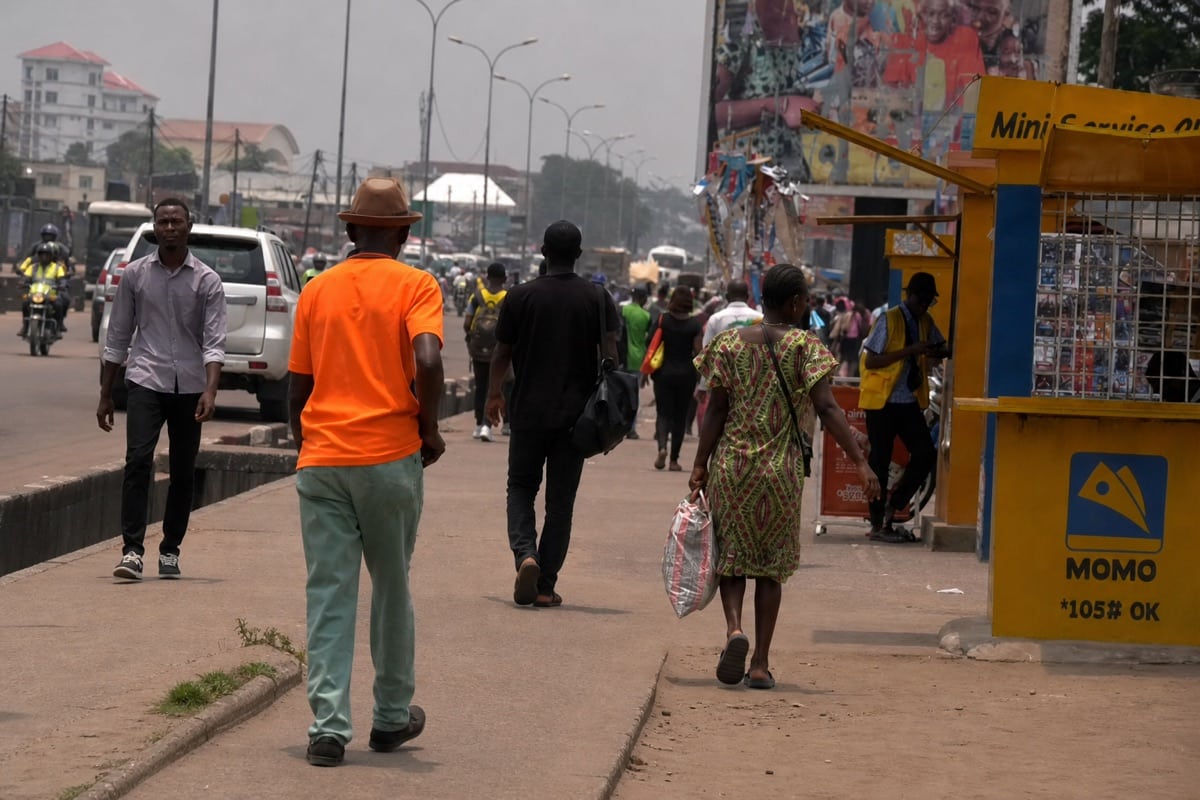
With the ballot only days away, many residents of Brazzaville say they still cannot name what the country’s seven presidential candidates would actually do in office. The complaint, voiced across the capital, points to an uneven campaign.
A Campaign That Reaches Some Voters More Than Others
The vote is scheduled for March 12 to 15, 2026. Eleven days before polling opens, campaign activities are visibly under way in the Republic of Congo. Yet a recurring grievance has surfaced among ordinary citizens in Brazzaville: they feel underinformed.
The frustration is not about whether candidates exist or whether rallies are taking place. It concerns substance. Voters describe a gap between the noise of campaigning and the clarity they need to compare governing programs before casting a ballot.
Voters Want Substance, Not Just Visibility
That tension came through plainly in what residents told reporters. “I intend to vote, but I need to understand each candidate’s vision before making my choice,” one student-voter said, framing his hesitation as a matter of information rather than indifference.
His words capture a wider mood. Several Brazzavillois indicated that they are willing participants in the process. What they say they lack is the detailed knowledge that would let them weigh one candidate’s proposals against another’s in a considered way.
The Communication Gap Between Majority and Opposition
A second resident pointed to where the imbalance lies. “We lack sufficient information on certain candidacies because of poor communication. The ruling majority is campaigning actively, which influences the public’s choice,” the citizen observed, describing an asymmetry in reach.
The remark reflects a structural feature of the race rather than a single misstep. When one camp occupies most of the visible campaigning space, the others struggle to register with undecided voters, and the field of choice narrows in the public mind well before voting begins.
That asymmetry, residents suggest, shapes perceptions more than any individual policy. A candidate whose program never reaches voters effectively competes at a disadvantage, regardless of the program’s merits. The complaint, in that sense, is as much about access as about ideas.
Opposition Voices Struggle to Be Heard
The pattern described by residents is consistent across accounts: candidates aligned with the presidential majority communicate more effectively than those of the opposition. The result is a visibility gap that several voters say they can feel as they try to make up their minds.
For opposition contenders, the difficulty is practical. Reaching a national audience requires sustained presence across the channels voters use, and residents indicate that this presence has been uneven. The consequence is a campaign in which some platforms remain, to many, largely unknown.
This does not mean opposition programs are absent. Rather, residents describe them as insufficiently surfaced. The distinction matters: voters are not rejecting these candidates so much as reporting that they have not yet been given enough to evaluate them fairly.
An Expert Calls for Wider Use of Public and Private Media
Into this debate stepped René Saya, who addressed the question of how candidates ought to reach the electorate. He argued that all contenders should make use of both public and private media to present their programs to citizens.
The point speaks to a shared responsibility. If voters are to compare visions, the channels carrying those visions must be open to every candidate. Saya’s emphasis on both public and private outlets underscores that no single platform alone can close the information gap residents describe.
His intervention reframes the grievance as a fixable one. The problem, in this reading, is not an absence of candidates or ideas but a distribution failure, one that broader and more balanced media engagement could begin to address before voting day.
What the Complaint Says About the Vote
The accounts gathered in Brazzaville describe a population that wants to participate yet feels short of the information needed to choose with confidence. That combination, eleven days out, is itself a notable signal about the texture of this campaign.
Whether the remaining days narrow the gap will depend on how candidates use the time. The residents’ message is direct: they are ready to listen. What they are asking for is a clearer account of what each candidate intends to do should they win.
For now, the picture that emerges is of an election whose outcome may turn as much on who manages to be heard as on the content of the competing programs. In a contest of seven, visibility has become its own form of advantage.