
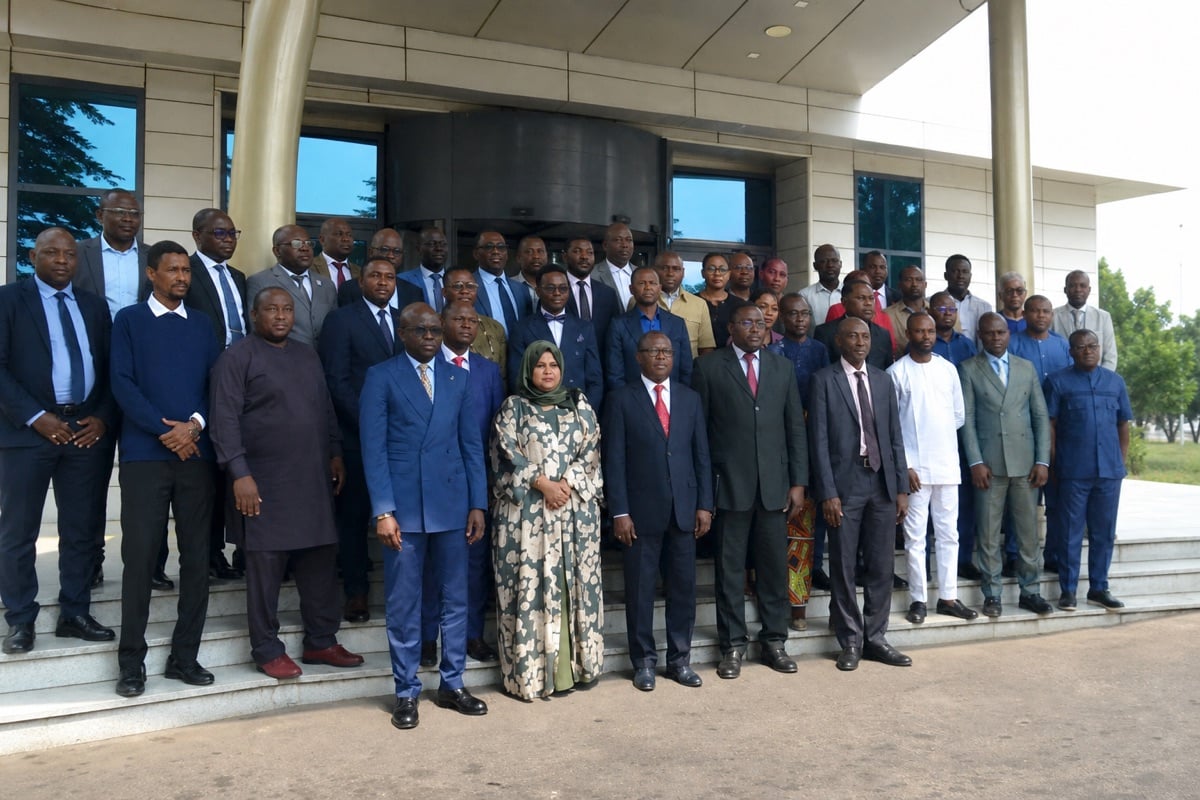
The Economic and Monetary Community of Central Africa is quietly retooling the way it watches its own economy. A recent regional seminar, convened by the CEMAC Commission, signals a deliberate push toward sharper data and steadier forecasting across the bloc.
The gathering brought together the CEMAC Commission, the regional statistics body Afristat, and technical support from the World Bank. Together they set out to interrogate the economic picture of the first half of 2026 and to firm up the methods behind it.
A regional review built on shared numbers
The seminar had a concrete mandate. Participants validated the analyses covering the fourth quarter of 2025, then turned to building projections for the quarters that follow. The exercise was less ceremonial than corrective, aimed at tightening the link between observation and outlook.
All six member states took part: Cameroon, the Central African Republic, Congo, Gabon, Equatorial Guinea, and Chad. Each brought its own readings to the table, allowing the Commission to assemble a comparable view of the region rather than six disconnected national snapshots.
The review ranged across the sectors that define the bloc’s economic health. Officials examined production, inflation, public finances, and external trade. They also weighed monetary and financial conditions, the variables that most directly shape the cost of credit and the room for spending.
Why data quality sits at the center
For the officials present, the seminar was as much about credibility as about figures. Roland Marc Montchi, director of statistics at CEMAC, framed the stakes plainly, arguing that “the quality of public decision depends directly on the quality of data.”
That conviction explains the methodological emphasis. Numbers that arrive late, or that follow incompatible definitions across borders, blunt any attempt at coordinated policy. Harmonizing how each country measures inflation or trade is therefore not a clerical task but a governance one.
The backdrop sharpens the urgency. Global shocks and geopolitical uncertainty have made the region’s economic signals harder to read. In response, the Commission is modernizing its surveillance system, aligning statistical methodologies so that comparisons hold and trends become legible.
A common framework and a network of experts
The reform reaches beyond a single meeting. It establishes a shared framework for economic reporting, so that the bloc’s analyses speak a common language. The aim is consistency, allowing decision-makers to trust that a figure from one capital means the same in another.
Alongside the framework, the initiative creates a network of regional experts. That human infrastructure matters as much as the technical one. A standing community of analysts can sustain the work between seminars, catching divergences early and refining methods as conditions shift.
The ambition stated at the seminar is notably broad. Beyond routine monitoring, the Commission wants to develop a genuine economic intelligence system, one capable of turning raw indicators into usable, forward-looking insight for the region’s policymakers.
Digital tools and the longer horizon
Technology is presented as the lever for that ambition. The envisioned system would draw on advanced digital tools, the kind that can process larger volumes of data and surface patterns faster than traditional, manual compilation allows.
The effort is explicitly tied to a longer strategic arc. Organizers linked the modernization to Vision CEMAC 2035, the bloc’s framework for development over the coming decade. In that light, better surveillance is positioned as groundwork, not an end in itself.
The logic is incremental but coherent. Reliable measurement feeds credible forecasting, which in turn supports the kind of planning that a long-range vision demands. Each layer of the reform is meant to reinforce the next.
What the reform signals for the bloc
Read together, the seminar’s outcomes describe an institution trying to professionalize its analytical core. Validating past quarters, projecting future ones, and standardizing the underlying methods are pieces of a single project to make CEMAC’s economic readings more dependable.
For governments across the six states, the payoff is practical. Decisions on spending, debt, and trade rest on the figures the Commission produces. Improving those figures, and the speed at which they arrive, widens the margin for sound policy in an unsettled environment.
The seminar did not promise transformation overnight. It set methods, validated data, and named an ambition. Whether the economic intelligence system materializes as described will depend on the steady, unglamorous work of harmonization that the bloc has now committed to pursue.
What emerged from the meeting was less a single announcement than a posture. CEMAC is signaling that, amid global turbulence, the answer it favors is better information, shared definitions, and a regional habit of looking at the same numbers in the same way.