
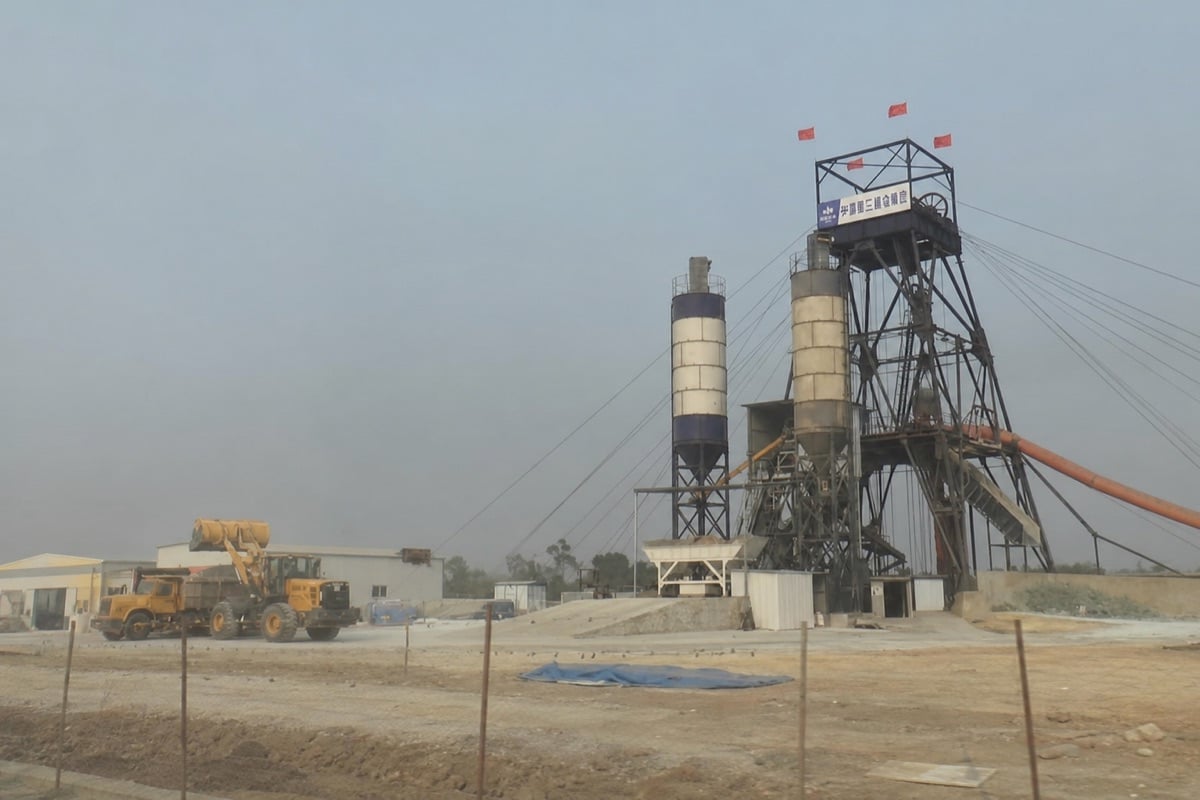
A Continent’s Fertilizer Ambitions Root Themselves in Congo’s Soil
When Congo-Brazzaville’s Council of Ministers gathered on Thursday, June 18, 2026, one agenda item carried stakes that extended far beyond the room: the formal granting of a potash exploitation permit to Dangote Fertilizer Limited Congo for the Mengo deposit.
The decision positions Congo-Brazzaville as a potential anchor in Africa’s push for domestic fertilizer production.
What Lies Beneath Mengo
The numbers presented to the Council by Urbain Fiacre Opo, the minister responsible for mining and geology, were striking. The Mengo deposit holds proven reserves estimated at nearly 325 million tonnes of potash salts. The projected exploitation period spans 25 years.
Production is planned in phases: one million tonnes per year in the initial stage, rising to two million tonnes in phase two and three million tonnes in phase three. The ramp-up is designed to give the industrial infrastructure time to develop alongside the extraction capacity.
How Mengo Came Back to Market
The permit was not granted in a vacuum. The Mengo site previously held by another operator had reverted to the public domain after the former titleholder failed to meet its contractual commitments.
Dangote Fertilizer filed its application on April 2, 2026, and moved quickly through the review process. The Council’s approval in June — roughly ten weeks after the application — reflected a government eager to activate the asset under a credible industrial partner.
Beyond Extraction: An Industrial Platform
Dangote Fertilizer’s ambitions for Mengo extend beyond digging potash out of the ground. The group plans to build an NPK fertilizer manufacturing plant in Congo-Brazzaville, aimed at transforming locally extracted raw materials into finished agricultural inputs.
That downstream ambition matters. Africa currently imports most of its fertilizer, leaving farm economies exposed to global supply disruptions and price volatility. A domestic production platform changes that calculus, at least partially.
Jobs, Investment, and Transfer
The projected investment stands at three billion US dollars. The project is expected to create approximately 800 jobs, alongside broader effects on subcontracting, logistics, and ancillary services.
The government emphasized skills transfer as a structural objective — not simply job numbers, but the buildup of technical capacity within the Congolese workforce over the life of the project.
Sassou Nguesso’s Warning on the Margins
The Council session produced a second notable intervention. President Denis Sassou N’Guesso used the occasion to address a separate concern: the illegal and unregulated extraction of gold in several parts of the country.
He identified artisanal gold mining operations in the Cuvette-Ouest and Sangha departments, as well as in the Bas-Kouilou zone, as a problem requiring immediate governmental attention. He instructed the Prime Minister to constitute an interministerial task force to address the situation.
The Wider Stakes
Congo-Brazzaville has long been defined by its oil sector. The Dangote deal at Mengo is a reminder that the country’s subsoil holds other significant assets — and that international industrial groups are paying attention.
For Africa’s fertilizer supply chain, the Mengo project, if it reaches its production targets, could represent a meaningful contribution to the continent’s food security architecture. The soil that holds Congo’s potash may, in time, help determine what grows across the region.