
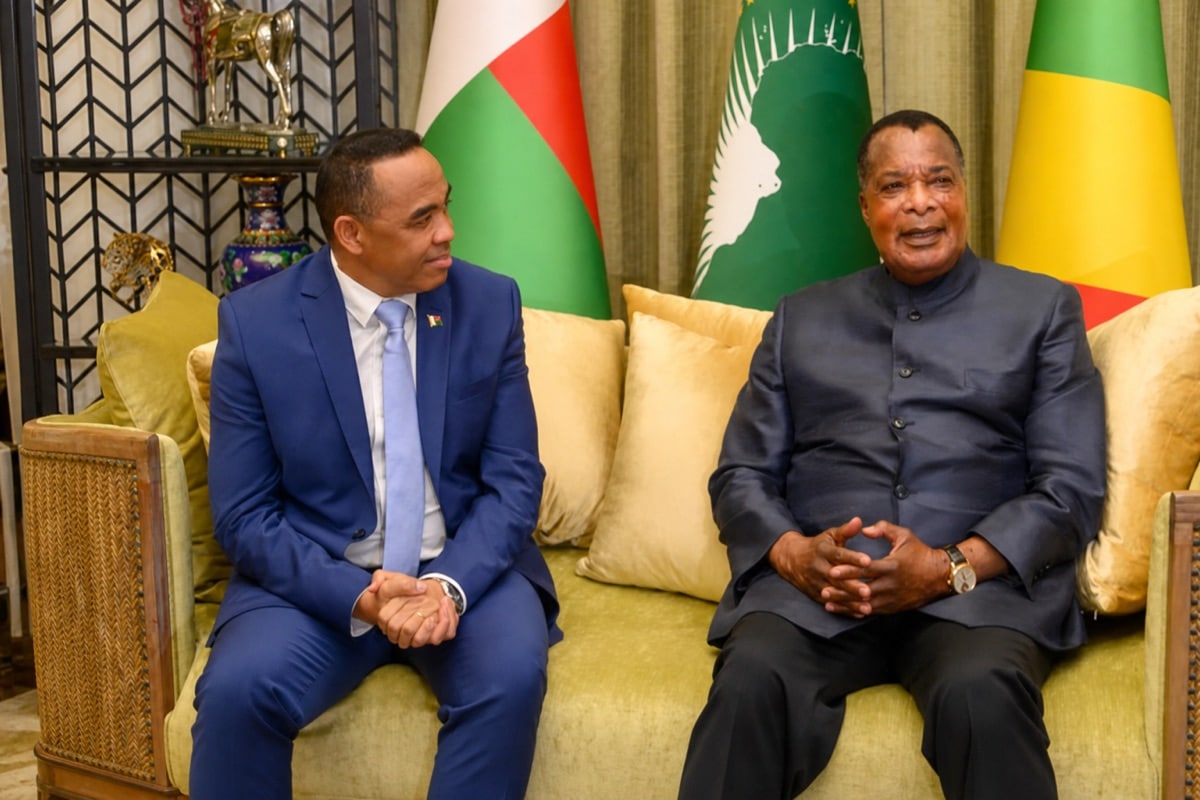
A working visit to the quiet riverside town of Oyo, in Congo-Brazzaville’s Cuvette department, has put the spotlight back on a relationship that both governments insist deserves fresh momentum.
On May 13, 2026, Madagascar’s transitional president, Colonel Michael Randrianirina, traveled to Oyo to meet his Congolese counterpart, Denis Sassou-N’Guesso. Their conversation centered on reviving diplomatic ties and on the political transition now reshaping the Indian Ocean nation.
A Bilateral Relationship Brought Back Into Focus
The meeting was less about ceremony than about intent. According to the two delegations, the leaders reaffirmed a shared determination to consolidate and relaunch relations between Brazzaville and Antananarivo, two capitals separated by an ocean yet bound by a common diplomatic ambition.
The choice of Oyo was telling. Sassou-N’Guesso’s home town has long doubled as an informal seat of statecraft, the place where the Congolese leader prefers to receive guests for unhurried, substantive talks rather than the protocol-heavy settings of Brazzaville.
For Randrianirina, the visit offered a platform to explain, in some detail, what his administration describes as a process of national refoundation. For his host, it was an occasion to position Congo as a steady regional partner attentive to the continent’s political fault lines.
The Roots of a Renewed Partnership
The Oyo talks did not emerge from nowhere. They followed a memorandum of understanding signed in March 2025 in Antananarivo, which established a bilateral political consultation mechanism between the two states.
That instrument was designed to deepen diplomatic exchanges and to create a channel for regular dialogue between the two governments. The May meeting, in that sense, read as the first significant test of whether the paperwork could translate into sustained engagement.
By framing their discussion as a relaunch rather than a beginning, both leaders acknowledged that earlier intentions had yet to bear full fruit. The language was deliberate, signaling continuity while conceding that the relationship had room to grow.
Madagascar’s Transition Takes Center Stage
Much of the public messaging revolved around Madagascar’s internal trajectory. Speaking at a joint press conference, Randrianirina walked through the stages of the transition his government is steering toward a return to constitutional order, now scheduled for 2027.
He pointed to a national youth consultation launched on April 14, 2026, which he said would continue in the coming months. The initiative, in his telling, is meant to anchor the broader reform effort in the expectations of a younger generation.
The transitional leader also announced the imminent opening of a wider national consultation. That process, he indicated, would bring together political actors, civil society, business operators and the defense and security forces in a single conversation about the country’s future.
Electoral Reforms Ahead of the 2027 Vote
On the electoral front, Randrianirina said significant reforms had already been set in motion. Chief among them was the renewal of the membership of Madagascar’s Independent National Electoral Commission, the body charged with organizing the next general election.
Its new officials, he noted, have been sworn in with a mandate to carry out the reforms judged necessary before the 2027 ballot. The emphasis on procedural groundwork suggested an awareness that the credibility of any future vote will hinge on the institutions overseeing it.
The timeline he laid out was cautious by design. Rather than rushing toward elections, the transitional authorities appear intent on sequencing consultations and institutional changes first, a posture they present as the foundation for a durable settlement.
Sassou-N’Guesso’s Call for African Solidarity
The Congolese president offered measured encouragement. Sassou-N’Guesso welcomed the efforts of Madagascar’s authorities to conduct what he described as an inclusive and peaceful transition, lending the weight of his long tenure to the endeavor.
He went further, framing the bilateral exchange within a broader continental argument. African states, he insisted, need to strengthen their solidarity in the face of global geopolitical challenges, a theme he has returned to throughout his diplomatic engagements.
That framing gave the Oyo meeting a significance beyond the two countries involved. It cast the renewed Congo-Madagascar dialogue as one strand in a wider effort to give African nations greater collective standing in an unsettled international environment.
What the Oyo Meeting Signals
For now, the visit produced commitments rather than concrete deliverables. Yet the symbolism mattered. Two governments at different points in their political cycles chose to publicly invest in each other, betting that consistent dialogue can outlast the uncertainties of transition.
Whether the relaunch announced in the Cuvette translates into tangible cooperation will depend on the consultation mechanism agreed in 2025. The coming months, and Madagascar’s progress toward 2027, will reveal how far the ambition reaches.