
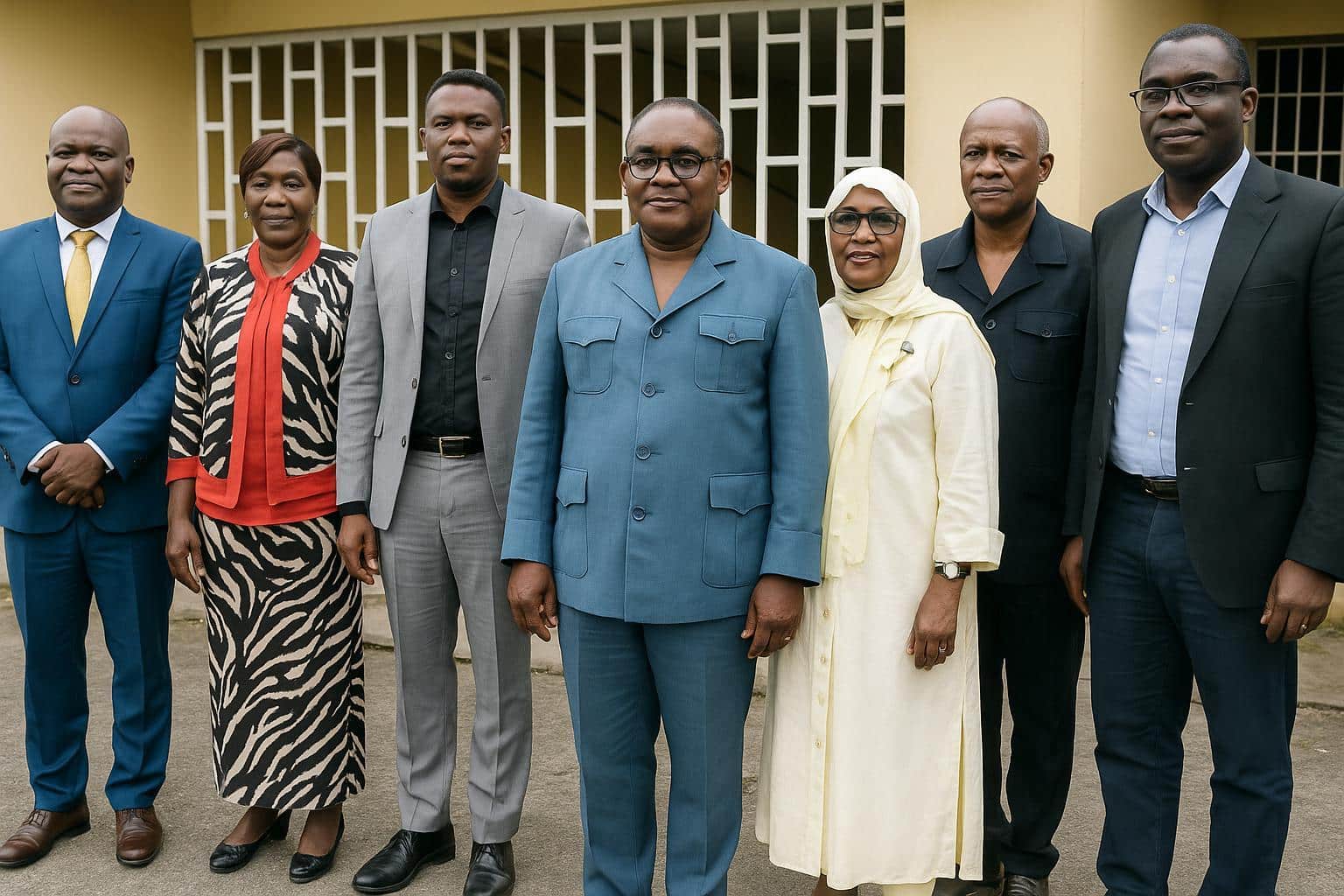
Congo-Brazzaville prepares UN rights report
In Brazzaville, Africa Coordinator André Kangni Afanou announced that the Centre for Civil and Political Rights will accompany the Republic of Congo as it drafts its next state report for the United Nations Human Rights Committee.
The commitment, expressed on 25 November, signals renewed momentum in a process whose last milestone dates back to 1986, when the country submitted its initial presentation under the International Covenant on Civil and Political Rights.
Geneva expertise arrives in Brazzaville
Operating from Geneva, the Centre’s Africa office routinely trains national institutions, ministries and grassroots coalitions to navigate the treaty-body system.
Afanou told reporters that his week-long mission will map stakeholders, identify information gaps and lay groundwork for a practical advocacy strategy that aligns with United Nations guidelines while reflecting Congolese realities.
He described the forthcoming workshop as a platform to clarify deadlines, template expectations and follow-up procedures so that every ministry, parliamentary commission and civil-society network understands its role before the report reaches Geneva.
Nine core treaties, one shared responsibility
Under the United Nations architecture, states parties to nine core human-rights instruments must submit periodic updates that allow expert committees to gauge progress, highlight good practice and pinpoint areas needing reform.
Congo ratified the Covenant more than three decades ago; nonetheless, scheduling difficulties and the COVID-19 pandemic interrupted the normal reporting calendar, pushing the anticipated 2020 review to a later, still-to-be-confirmed slot.
By offering technical assistance now, the Centre hopes to prevent further slippage and ensure that Brazzaville’s submission meets format and substance requirements on the first attempt.
Alternative reports amplify citizens’ voices
Afanou emphasised that the treaty-body dialogue is not limited to governments; non-governmental organisations are encouraged to draft ‘alternative’ or ‘shadow’ reports that complement official data with community-level evidence.
His team therefore plans to coach journalists, bar-association members, women’s groups and youth collectives on how to translate lived experiences into concise, verifiable submissions the Committee can evaluate alongside the state document.
National council welcomes partnership
The Coordinator praised the Consultative Council of Civil Society and NGOs, a constitutional body, for its readiness to mobilise organisations across Brazzaville, Pointe-Noire and the departments.
“These actors hold detailed knowledge of local realities and share a genuine commitment to advance rights protection,” he said, noting that their input can sharpen policy proposals while strengthening the legitimacy of the national report.
Government aims for constructive dialogue
Official sources within the Ministry of Justice say the forthcoming exercise is viewed as an opportunity to present progress, exchange with experts and access tailored recommendations rather than as a prescriptive audit.
They point to recent reforms, including specialised human-rights units in the gendarmerie and expanded training for judges, as areas the government hopes to highlight when the Committee convenes.
By collaborating with the Centre and domestic partners, officials argue, Congo can offer a balanced narrative that recognises challenges yet underscores steps already undertaken to meet international standards.
Pandemic delays create learning moment
The postponement induced by COVID-19, while unfortunate, has given authorities extra time to gather data from remote districts and modernise record-keeping, according to sources close to the inter-ministerial committee overseeing the dossier.
Digital tools trialled during the health crisis are now being repurposed to consolidate prison statistics, court judgments and social-service indicators into a single database for the submission.
Next steps toward Geneva session
Once the workshop concludes, ministries will finalise their thematic contributions, the Consultative Council will coordinate civil-society feedback, and the draft will move through cabinet validation before travelling to the Human Rights Committee for translation and scheduling.
Afanou expressed confidence that, with collective effort, Congo-Brazzaville can submit a document that is both candid and forward-looking, paving the way for a constructive Geneva dialogue focused on practical recommendations and shared aspirations.
Regional dimension and CEMAC implications
Observers note that a solid national report could set a precedent within the Central African Economic and Monetary Community, where several neighbours also face overdue treaty obligations.
Congo’s willingness to open its file, they argue, might encourage peer learning on prison conditions, indigenous peoples’ rights and the administration of justice across borders.
Civil society expectations
Local advocates interviewed outside the Ministry expressed cautious optimism, stating that structured engagement with authorities can transform intermittent consultations into a sustained dialogue.
They called for the publication of the draft report online, in French and in national languages, to allow citizens in Makoua, Dolisie and Ouesso to react before the text becomes final.
The Coordinator acknowledged the proposal, adding that transparency fosters ownership and can subsequently ease implementation of the Committee’s concluding observations.
Looking ahead
Timeline projections shared by officials suggest the national draft could be ready within six months, positioning Congo to request inclusion in the Human Rights Committee’s next available session.
After Geneva issues its concluding observations, ministries plan to incorporate the recommendations into sectoral action plans and report back to Parliament during annual budget debates, according to the same sources.
Civil-society monitors intend to track each follow-up milestone publicly.