
AfCFTA 2030 and Congo: CESE sets the 2026 focus
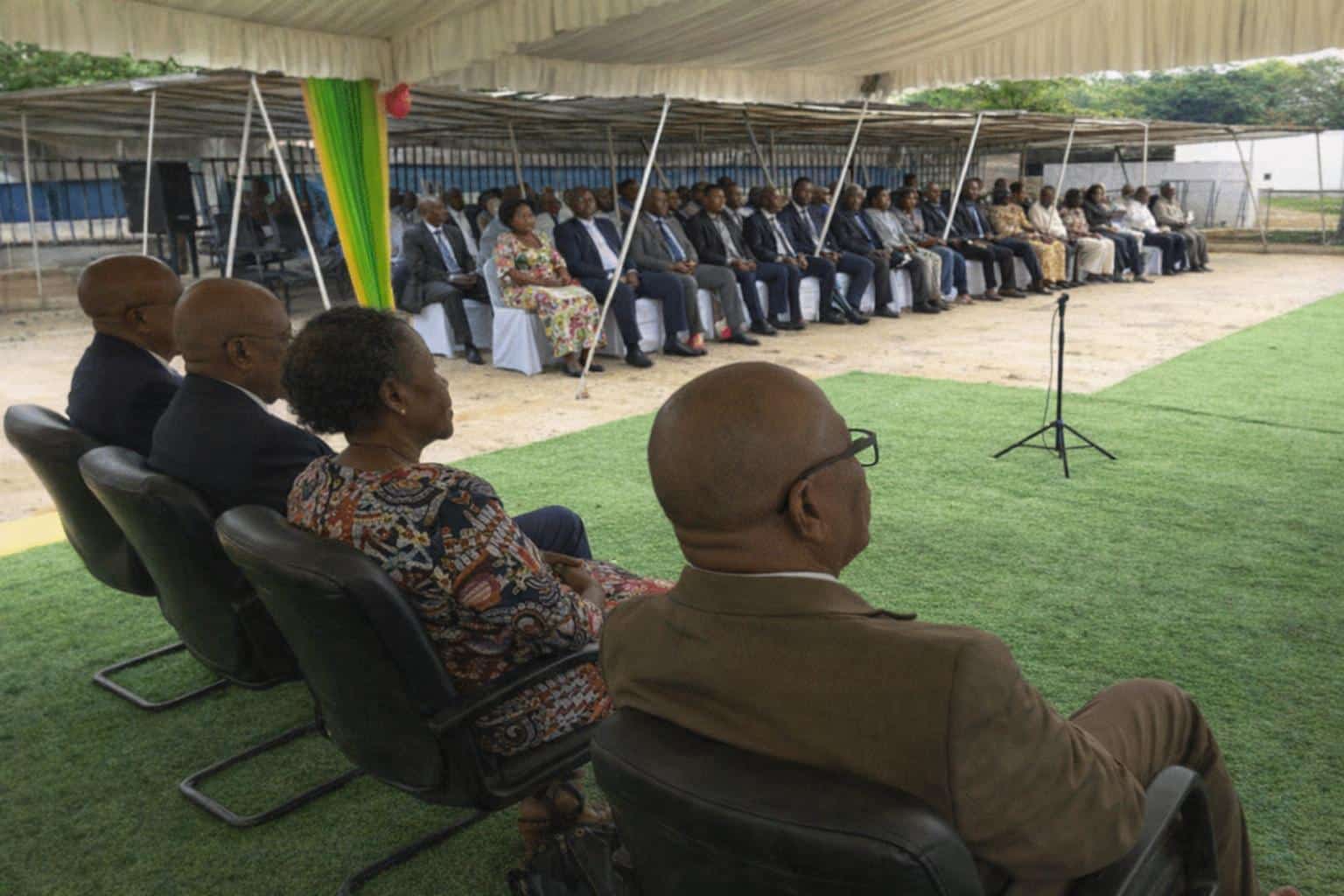
In Brazzaville on January 16, the President of the Economic, Social and Environmental Council (CESE), Emilienne Raoul, said the institution will continue in 2026 what it began in 2025 with ministry representatives and business leaders: tracking the 2030 horizon for applying the African Continental Free Trade Area (AfCFTA) treaty.
Speaking during a New Year’s wishes ceremony, Emilienne Raoul framed the next steps as a practical question. “For us, it is about understanding how Congo is preparing for the lifting of customs barriers by 2030,” she said, linking CESE’s work to the timeline set out by the treaty’s application goals.
Customs barriers, competitiveness, and the 2030 deadline
By putting the “lifting of customs barriers” at the center of its 2026 agenda, CESE signals a focus on the mechanics of market opening rather than abstract commitments. The approach also reflects an effort to maintain dialogue between the public administration and private operators that are closest to trade realities.
The discussion, as presented by Emilienne Raoul, is less about slogans than readiness: how procedures, institutions and businesses would adapt as tariffs fall and regional competition intensifies. In that sense, CESE positions itself as a place where questions can be raised early and examined calmly.
Citizen meetings and local development models in Congo
Emilienne Raoul also indicated that other topics, still to be determined, could be addressed through “citizen meetings” in 2026. The format suggests the institution wants to widen participation beyond experts and central administrations, while keeping its work anchored in practical issues raised by communities.
“We will see during this mandate how to integrate the challenges of territories in our work by working with local authorities: what is the local development model in our country,” Emilienne Raoul said. The remark points to an intention to connect national strategies with local needs and governance.
CESE internal governance: recruitment and social protection steps
Alongside the AfCFTA file, the CESE President gave details on internal administrative developments. She said that in 2025, 36 decision-making agents who met public service recruitment criteria were admitted, in line with quotas allocated to the institution in 2021, 2022 and 2023.
She added that 52 decision-making agents who did not meet the criteria were registered with the National Social Security Fund (CNSS). The information was presented as part of the institution’s management updates, reflecting attention both to compliance with recruitment standards and to social protection coverage.
Action plan 2026–2029: training, restructuring, partnerships
CESE Vice-President Jean De Dieu Goma said that in the last five months of 2025, the institution held both an extraordinary session and an ordinary session that enabled the installation of its bodies. The objective, he suggested, was to put the institution on a more operational footing.
Jean De Dieu Goma also said CESE drafted a four-year action plan for 2026–2029. He described priorities including staff training and the restructuring of the secretary-general’s office to strengthen functional capacities, pointing to a reform agenda centered on skills and organization.
Working with the state, civil society, and technical partners
According to Jean De Dieu Goma, the action plan also outlines a more proactive policy in collaboration with other state institutions and bodies. The emphasis suggests CESE wants its advisory role to be better connected to decision-making ecosystems, without losing its own consultative identity.
He also cited stronger cooperation with civil society and a voluntary approach toward technical and financial partners. In the context described, such partnerships are presented as a way to broaden expertise, support institutional capacity, and encourage coordinated approaches to economic and social issues.
What CESE is mandated to do in Congo’s public life
The CESE’s role, as recalled in the statement, is to examine developments in economic, social or environmental matters and to suggest, through its opinions, adaptations it considers relevant and timely. That mandate places it at the intersection of policy analysis and institutional consultation.
By linking AfCFTA preparedness, citizen consultations, and internal strengthening, the institution projects a 2026 agenda designed to be both outward-looking and methodical. For stakeholders watching the 2030 tariff horizon, CESE’s stated priority is to keep the conversation grounded in readiness.