
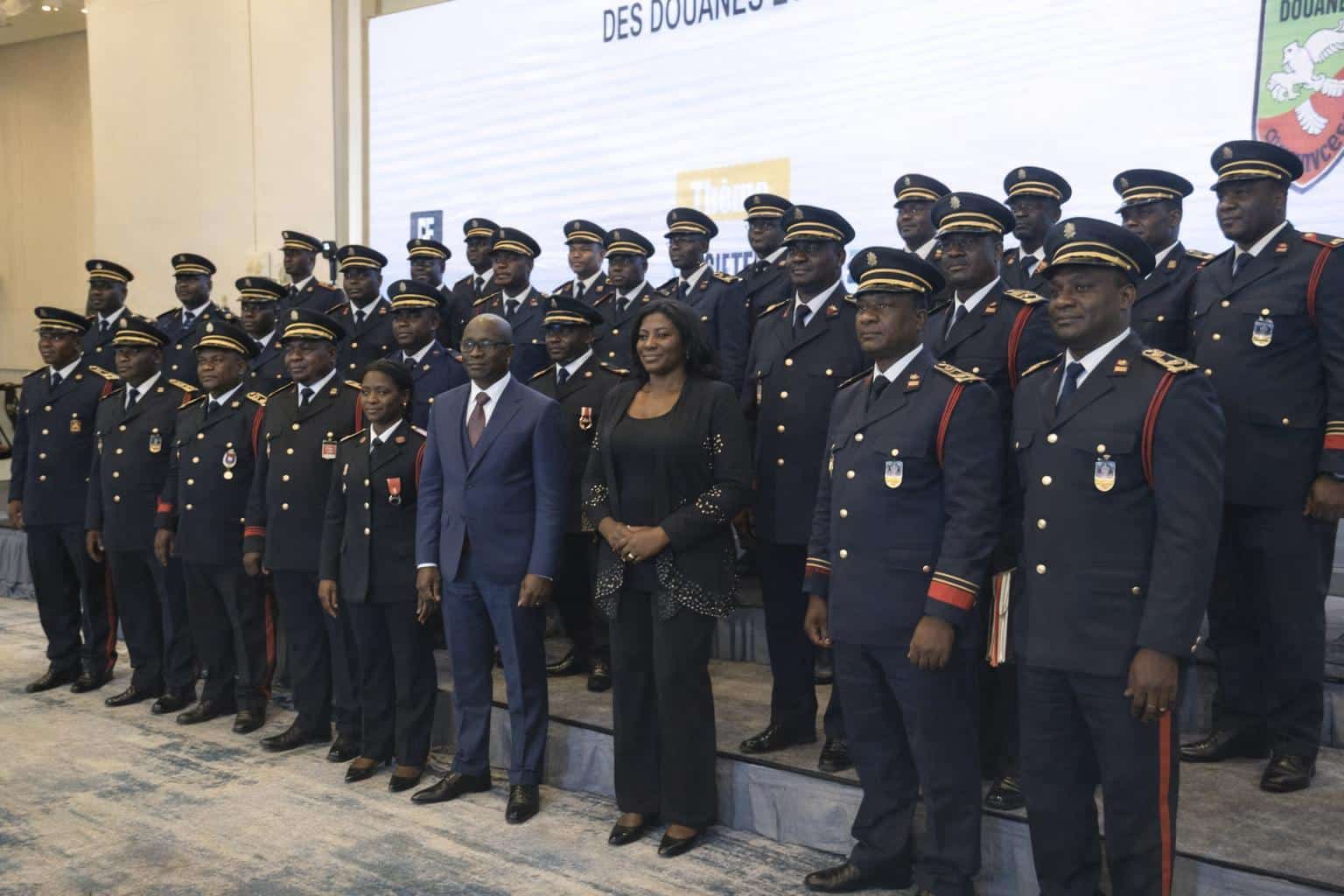
International Customs Day in Brazzaville
International Customs Day, marked on Jan. 26 in Brazzaville, became a moment for Congolese authorities to restate the strategic place of customs in national life. Officials presented the administration as central to protecting society, supporting security, and facilitating trade flows.
In their messaging, customs services were framed as a frontline barrier against risks that can affect communities, including threats that move across borders. The day’s theme in Congo underscored vigilance and engagement as the practical foundations of that mission.
Christian Yoka Highlights a ‘Often Unseen’ Role
Speaking during the commemoration, the Minister of Economy and Finance, Christian Yoka, addressed customs officers with a clear appeal: remain fully committed to a job whose importance is not always visible to the wider public, yet is decisive for society’s protection.
Yoka linked customs work to the country’s broader economic and social prospects, arguing that routine vigilance at borders and along logistics routes matters more as cross-border threats multiply. In that context, he portrayed customs as a safeguard for prosperity, not only a revenue service.
Security, Health, Environment: A Broad Protective Mandate
The minister’s remarks described customs as a “real rampart” across multiple fronts, including national and international security, public health, environmental protection, and the integrity of the logistics chain. The message was that protection is now multidimensional and requires constant readiness.
He encouraged the administration to highlight concrete actions that demonstrate this protective role. Among the measures cited were risk management, detection equipment, data analysis, intelligence sharing, and regional cooperation, presented as complementary tools rather than standalone solutions.
Unified Response Through Wider Partnerships
Yoka said the government is betting on stronger partnerships to raise effectiveness. He pointed to closer coordination with other public administrations, security services, international and non-governmental organizations, as well as economic and logistics operators who move goods and manage supply chains.
His central argument was that better protection cannot be achieved in silos. “A better protection of society requires a unified response,” he said, stressing that cooperation is not an optional add-on but a condition for tackling complex, cross-border risks.
Customs Modernization Committee Reviews Reform Reports
Alongside the public ceremony, a committee tasked with modernizing and monitoring reforms of Congo’s customs met under the leadership of Guénolé Mbongo Koumou, director general of customs and indirect duties. The meeting examined and adopted several activity reports.
The documents reviewed included reports from the joint consultative commission, the technical subcommittee on customs valuation, the anti-fraud subcommittee, the subcommittee assessing fiscal expenditure, and the subcommittee focused on trade facilitation, reflecting a broad reform agenda.
Alignment With International Standards Since 2022
Prime Axel Opimbat, a customs inspector and Congo’s national correspondent to the Regional Intelligence Liaison Office for Central Africa, said the customs administration is in continuous evolution and must align with international standards. He highlighted efforts undertaken by authorities since 2022.
In his account, modernization is presented as a necessity driven by changing trade patterns and the pressure of cross-border threats. The implication is that technical upgrades and institutional reforms go hand in hand, particularly in valuation, fraud control, and facilitation.
A Regional Reform Dynamic Within the WCO Framework
The reform pathway described by Opimbat was linked to a wider regional dynamic associated with Guénolé Mbongo Koumou, at a time he served as vice-president of the World Customs Organization for the West and Central Africa region. The stated goal is modernization and compliance.
Within that framing, Congo’s approach is positioned as part of a collective effort to strengthen customs administrations so they become more effective and more consistent with international norms. Jan. 26 thus served as both a commemoration and a progress checkpoint.