
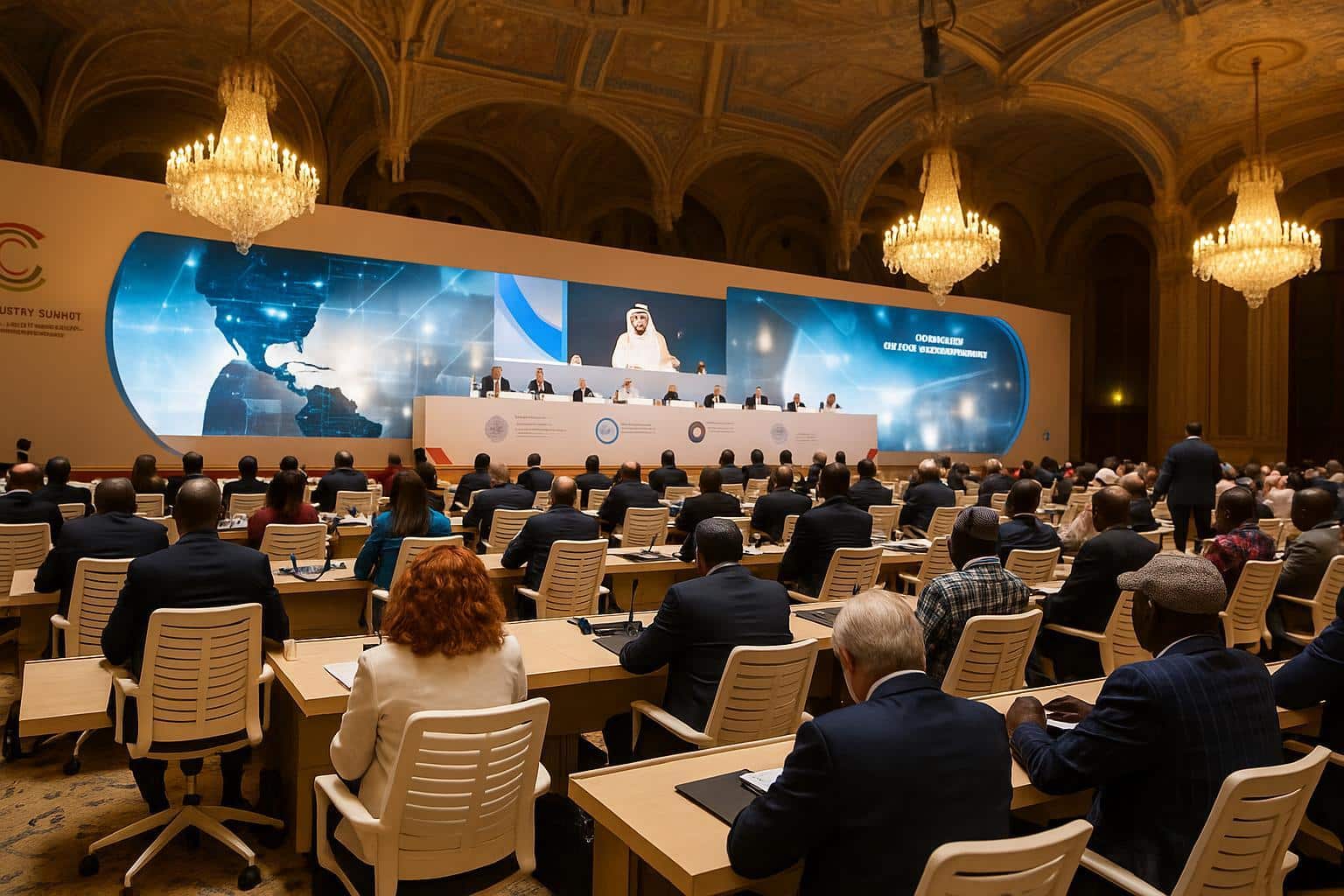
UNIDO summit in Riyadh gathers global investors
Riyadh this week welcomes the 21st General Conference of the United Nations Industrial Development Organization, a high-level forum gathering member states, financiers and development agencies to examine how capital and partnerships can speed delivery of the Sustainable Development Goals across emerging economies during the intensive five-day deliberations.
Among the delegations, Congo-Brazzaville is represented by Minister of Industrial Development and Private-Sector Promotion Antoine Thomas Nicéphore Fylla Saint-Eudes, who carries a presidential mandate to position the country’s industrial agenda at the heart of the conversations and to conclude concrete accords with UNIDO officials in Riyadh this week.
Congo’s industrial vision under spotlight
The conference banner, The Power of Investment and Partnerships to Accelerate the SDGs, dovetails with Brazzaville’s current policy direction, which targets value addition in agribusiness, timber and energy corridors rather than reliance on raw exports, officials say, underscoring a deliberate shift toward inclusive, job-rich industrialisation for young Congolese.
During expert panels, Minister Fylla Saint-Eudes is due to outline priority projects, including industrial parks now rising outside Brazzaville and Pointe-Noire, an SME financing window backed by multilateral partners, and a programme to upgrade vocational skills so factories can tap a competitive, digitally trained local workforce base.
Legal accords to deepen UNIDO partnership
Conversations on the conference sidelines will focus on finalising two legal instruments, according to ministry aides: a framework programme for inclusive industrial development and a specific project agreement unlocking technical assistance for quality infrastructure, standards and certification services critical to exporters seeking tougher regional and global markets access.
Officials argue that formalising these texts will give Congo preferential access to UNIDO’s pool of engineers and policy specialists, shortening the time required to design factories, draft environmental safeguards and mobilise climate-aligned finance at rates domestic lenders seldom match for emerging manufacturers nationwide in the years ahead.
UNIDO’s Saudi hosts have invited sovereign funds and impact investors to closed-door matchmaking sessions where Congolese officials will pitch initiatives from special economic zones near the Port of Pointe-Noire to agro-processing clusters in Sangha, aiming to convert conference momentum into financing commitments in the coming quarters back home.
Competitive advantages entice new capital
Recent macroeconomic indicators give weight to the sales pitch. The Ministry of Economy reports non-oil growth rebounded above four percent this year, powered by construction materials, food industries and digital services, signalling that latent demand for intermediate goods could sustain domestic factories once capital is secured locally.
Abundant hydro and gas resources, officials add, mean electricity tariffs for industrial users are already among the most competitive in Central Africa, a comparative edge the government intends to preserve as it gradually integrates renewable capacity and cross-border interconnections backed by development banks over the next decade period.
Private-sector leaders contacted ahead of the trip say they welcome the strategy. Jean-Claude Allakoua, who heads an association of mid-size manufacturers, notes that UNIDO’s certification labs could help Congolese products qualify for the African Continental Free Trade Area, a market he describes as both vast and fiercely competitive.
Economists at the University of Brazzaville estimate that if the announced programmes reach execution, up to 40,000 direct jobs could emerge over five years, primarily for youth, cushioning public payrolls and reinforcing social stability, though they caution that bureaucratic delays and logistical bottlenecks remain systemic challenges for investors.
Regional ripple: CEMAC industrial realignment
Regional observers highlight the wider CEMAC dimension. Congo’s push aligns with efforts by Cameroon and Gabon to diversify away from hydrocarbons, suggesting the bloc could collectively negotiate better technology transfer terms with partners like Saudi Arabia while developing supply chains that span river, rail and digital corridors soon.
President Denis Sassou Nguesso has repeatedly argued that industrialisation underpins national sovereignty, a line Minister Fylla Saint-Eudes is expected to echo in Riyadh by stressing that a stronger productive base will improve fiscal revenues, reduce import dependence and create markets for the country’s growing community of tech start-ups.
From Riyadh to results on the ground
Yet seasoned diplomats note that previous declarations at global conferences sometimes stalled once delegations returned home. By securing legally binding texts and identifying funding windows before the closing ceremony, Brazzaville aims to reverse that pattern and present early deliverables to parliament and the public within months ahead politically.
The tone in Riyadh, insiders insist, is pragmatic. Ministerial teams carry detailed project sheets, costings and implementation calendars, signalling that Congo approaches the UNIDO platform not as a talk-shop but as a marketplace where credible proposals, backed by presidential authority, can unlock the partnerships promised to investors worldwide.
If agreements land on schedule, construction of new plants could start as early as 2024, giving tangible form to slogans about diversifying the economy. For now, the spotlight remains on Riyadh, where Congo’s delegation courts allies, investors and technical talent in pursuit of a modern industrial future homeward.