
A discreet figure behind Congo’s economic choices
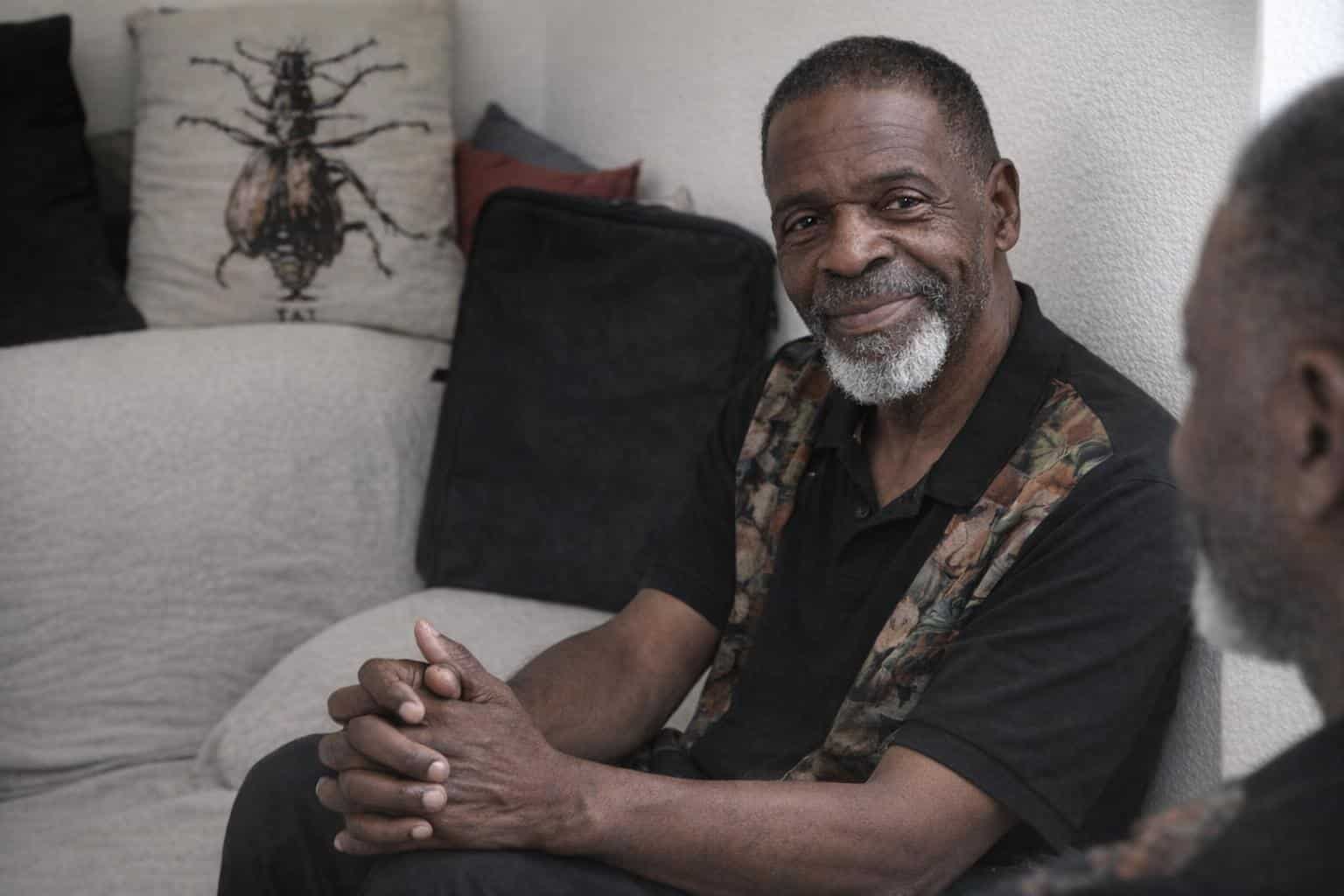
Born in Brazzaville on Sept. 21, 1950, Dieudonné Diabatantou became one of the country’s most discreet yet consequential voices in economic planning. Colleagues associated him with early macroeconomic management tools and with Congo’s first five-year plan for 1982–1986.
His path blended technical work and public service. He served in senior roles in the planning administration, later becoming secretary of state for planning in the 1991–1992 transition government, and represented Mindouli in the National Assembly from 1993 to 1997.
Education shaped by Brazzaville and Cold War campuses
Diabatantou grew up in Brazzaville in a family environment described as steeped in political and trade-union culture. He studied at Collège Chaminade and then at Lycée Savorgnan-de-Brazza, a period that coincided with major political tensions in the early 1960s.
As a teenager, he witnessed the August 1963 upheavals, an experience that marked many Congolese of his generation. He then pursued higher education abroad, first in Bucharest and later in Moscow at the Institute of Statistics and Economic Studies.
In 1977, he earned a master’s degree in economic sciences. That training, rooted in statistics and macroeconomic reasoning, would later align with the state’s need to build planning instruments and to document national accounts more systematically.
Building national accounts and the first five-year plan
Returning to Congo in the late 1970s, Diabatantou joined the National Center for Statistics and Economic Studies. He took part in building the country’s national accounting framework, a technical backbone for policy debates about growth, spending, and investment.
In 1979, he became head of the economic forecasting unit at the Ministry of Planning. From that position, he contributed to designing the first five-year plan, covering 1982 to 1986, which aimed to structure economic priorities and coordinate public action.
His career progressed inside the same institutional ecosystem. He was named secretary general at the Ministry of Planning in 1985 and, later, director general of the Economy in 1990, reflecting a reputation for methodical work and administrative continuity.
Structural adjustment talks and regional representation
As Congo entered the era of structural adjustment, Diabatantou was tasked with representing the country in several regional bodies, including UDEAC and CEEAC. Those roles placed him at the intersection of national priorities and subregional economic coordination.
He also participated in negotiations with the International Monetary Fund, the World Bank, and creditors linked to the Paris and London Clubs. According to the account, he coordinated the structural adjustment program, a responsibility that required both technical credibility and political tact.
In 1986, he received the rank of Knight in the Congolese Order of Merit. The distinction reflected official recognition of a civil service trajectory focused less on public visibility than on deliverables inside ministries and negotiation rooms.
From transition government to national dialogue on public finance
In 1991–1992, Diabatantou served as secretary of state for planning in the transition government. The posting came at a politically sensitive time, when economic management and institutional reforms were closely watched by citizens and by international partners.
In 1991, he chaired the sub-commission “Public finances and adjustment” during the Sovereign National Conference. The assignment suggests he was seen as a bridge between political dialogue and the detailed mechanics of budgets, fiscal reform, and the state’s commitments.
Mindouli mandate and a life that included the arts
Elected deputy for the first constituency of Mindouli, he served from 1993 to 1997. The period placed him in the legislative arena, complementing earlier work in the executive branch and allowing him to connect national policy debates with local concerns.
Away from official titles, Diabatantou also cultivated an artistic side. He co-founded the Ngunga troupe in the late 1970s, performing as an actor and musician, reflecting a tradition in Congo where public life and cultural expression often intersect.
Writing, archives, and a family story of transmission
He published in Congolese and French press outlets and worked with researchers seeking to reconstruct the country’s social and political history. The profile presents him as someone attentive to memory, documents, and the patient work of interpretation.
Married in 1982 to Martine Mouanga, he is the father of seven children. His family, based in France since 2012, is described as continuing a cultural and memorial engagement linked to archives of his father, the trade unionist Julien Boukambou.
The profile also notes a family connection to cinema: he is an uncle of filmmaker Hassim Tall Boukambou. Alongside these ties, he continued writing and transmitting experiences, reinforcing the idea of public service as both policy and storytelling.