
Nationwide call to voters
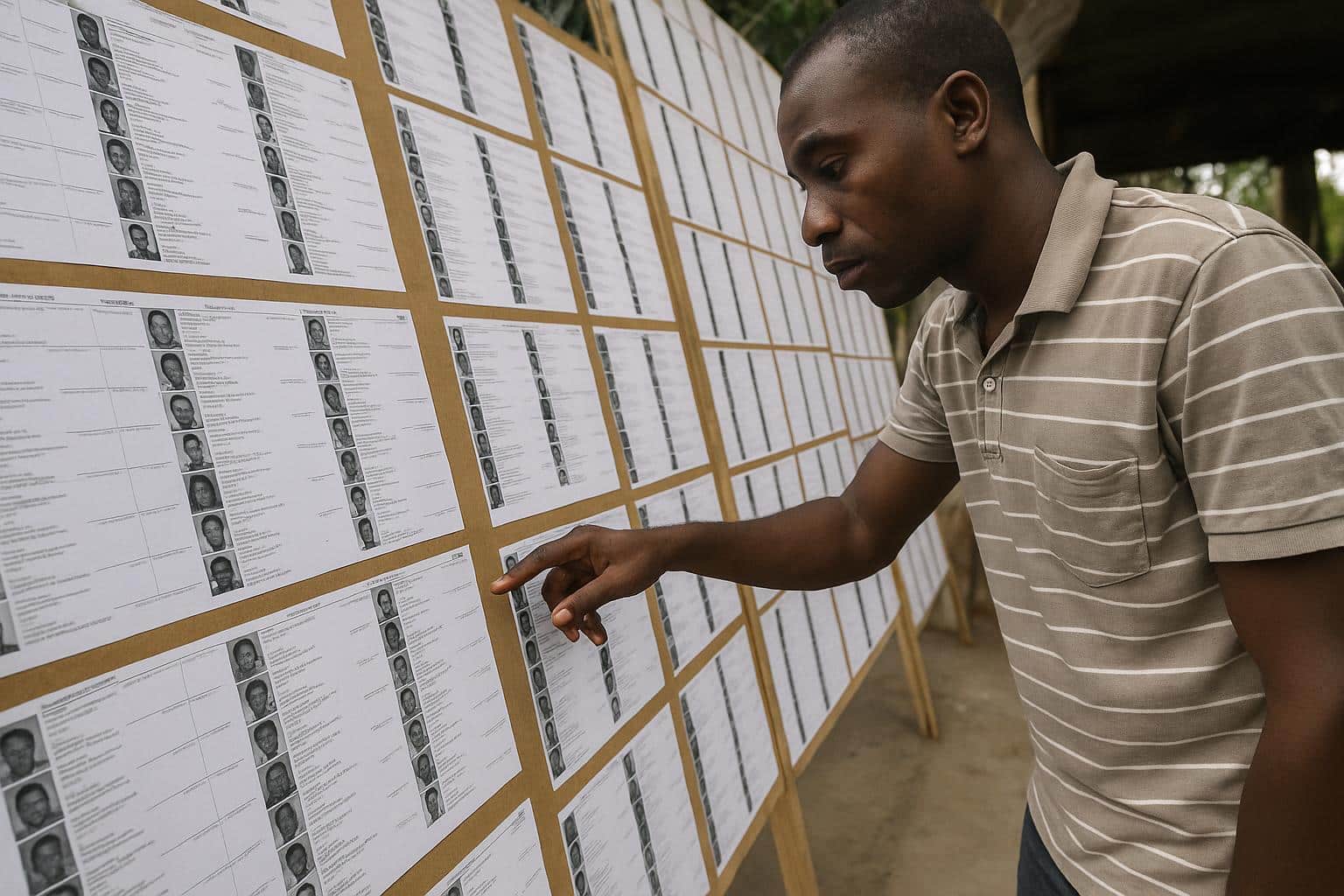
Jean-Claude Etoumbakoundou, Director-General for Electoral Affairs, has released a radio and television communiqué inviting every Congolese citizen already enrolled to visit their local administration and inspect the provisional lists now posted on public noticeboards across the country.
Fourteen days to act
The verification window runs from 3 to 16 December, in line with a ministerial order that launched the claims phase following the 30 October 2025 revision exercise. Authorities describe the fortnight as a patriotic duty, framing participation as a practical expression of democratic citizenship.
A plea for accuracy and calm
“Timely display of the rolls allows everyone to point out spelling mistakes, omissions or mis-allocated polling stations, upholding the credibility of our process,” the communiqué states. Officials add that the Republic of Congo “has nothing to gain from controversy” and must privilege dialogue over speculation.
Legal foundations
The operation rests on Decree 2001-530 of 31 October 2001, amended in 2008 and 2012, which obliges sub-prefects and administrator-mayors to post the lists simultaneously and to inform residents that claims remain admissible for fourteen consecutive days.
Step-by-step claims process
Article 17 of the same decree assigns local administrative commissions to examine each claim. After cross-checks, the corrected lists travel to the Independent National Electoral Commission, CNEI, whose observations are forwarded to the minister in charge of elections for final validation.
Grass-roots logistics
Since 3 December, metal trunks containing the printed rolls have been dispatched by road, riverboat and domestic air cargo to every department, including remote localities of Likouala and Sangha. Local agents unpack, sort and post the documents before returning them for central data entry.
Digital consolidation in Brazzaville
Once the trunks return, technicians at the Electoral Affairs Directorate scan and merge the corrections into the national electronic register. Officials say the hybrid paper-digital workflow limits errors while preserving an audit trail, a method piloted during the 2022 legislative review.
CNEI oversight
CNEI spokesperson Roger Mavoungou confirms that his institution will receive the updated files by early January. “Our mandate is to ensure coherence between the paper rolls and the central database,” he explains, noting that any residual discrepancies will be addressed before publication of definitive lists.
Local administrators on the front line
In Pointe-Noire, sub-prefect Rosalie Poaty reports strong early turnout at verification centres near the coastal market district. She credits awareness campaigns on community radio and text-message blasts for drawing first-time voters who relocated during the post-pandemic economic rebound.
Civil society reaction
The Observatory for Democratic Practices, a non-partisan civic group, welcomes the calendar. Coordinator Wilfrid Ngoma says the transparent timetable “gives communities real agency” while reducing tensions that often accompany pre-election periods. He urges officials to maintain open phone lines for voters in hard-to-reach villages.
Looking toward the 2026 cycle
Political analysts view the verification drive as groundwork for the municipal and legislative contests expected in 2026. Because voter rolls freeze six months before any poll, December corrections are crucial for parties planning early nomination conventions and for citizens seeking seamless ballot-box access.
Technology safeguards
Engineers at the Ministry of Territorial Administration assert that biometric identifiers, introduced nationwide in 2020, now cover 92 percent of registered voters. Verification teams will flag remaining manual entries, helping technicians schedule on-site enrolment missions before the final consolidation deadline.
Data protection measures
Officials emphasise that personal information collected during the claims phase remains confidential. Data sheets travel in sealed envelopes, and servers in Brazzaville operate under updated cybersecurity protocols developed with support from the Central African Economic and Monetary Community’s digital unit.
Engaging the youth vote
Youth association Génération Civique has launched a social-media campaign encouraging students to “snap and share” their presence at public noticeboards. Coordinator Grâce Massanga believes the trend makes civic participation fashionable and may boost turnout among urban first-time voters in Brazzaville and Dolisie.
Political parties mobilise quietly
Ruling and opposition parties alike have deployed legal teams to monitor corrections. A senior Parti Congolais du Travail organiser says the process is “administrative, not political,” yet party lawyers will support militants who discover misallocations, ensuring every supporter remains on home-turf rolls.
Emphasis on harmony
Religious leaders in Ouesso have echoed the DGAE’s call, urging congregants during Sunday sermons to verify their names peacefully. Imam Mahamat Youssouf reminded worshippers that equitable voter lists support stability and development goals shared across faiths and political persuasions.
Final steps and public trust
After the lists are certified, the ministry will publish them in the Official Gazette and on a dedicated web portal. Authorities hope the transparent chain of custody, from village noticeboard to digital register, will reinforce public confidence ahead of Congo’s next rendezvous with the ballot box.