
Diplomatic Context of the UNESCO Succession
The discreet yet consequential race to succeed UNESCO’s current leadership in 2025 has entered a preparatory phase, and Brazzaville has moved early. Firmin Édouard Matoko, a former Assistant Director-General for Priority Africa and External Relations, was publicly endorsed in June by President Denis Sassou Nguesso, who framed the candidacy as an African contribution to the organisation’s renewal. The tenure of Audrey Azoulay, reconfirmed in 2021, offers a narrowing window for prospective contenders to build coalitions among the 58 members of UNESCO’s Executive Board and, ultimately, within the General Conference. In that light, Congo-Brazzaville’s foreign minister Jean-Claude Gakosso embarked on a high-intensity shuttle diplomacy, positioning Matoko as the consensus African nominee well before formal submissions open (UNESCO press release, 23 July 2023).
Strategic Southern Africa Shuttle Diplomacy
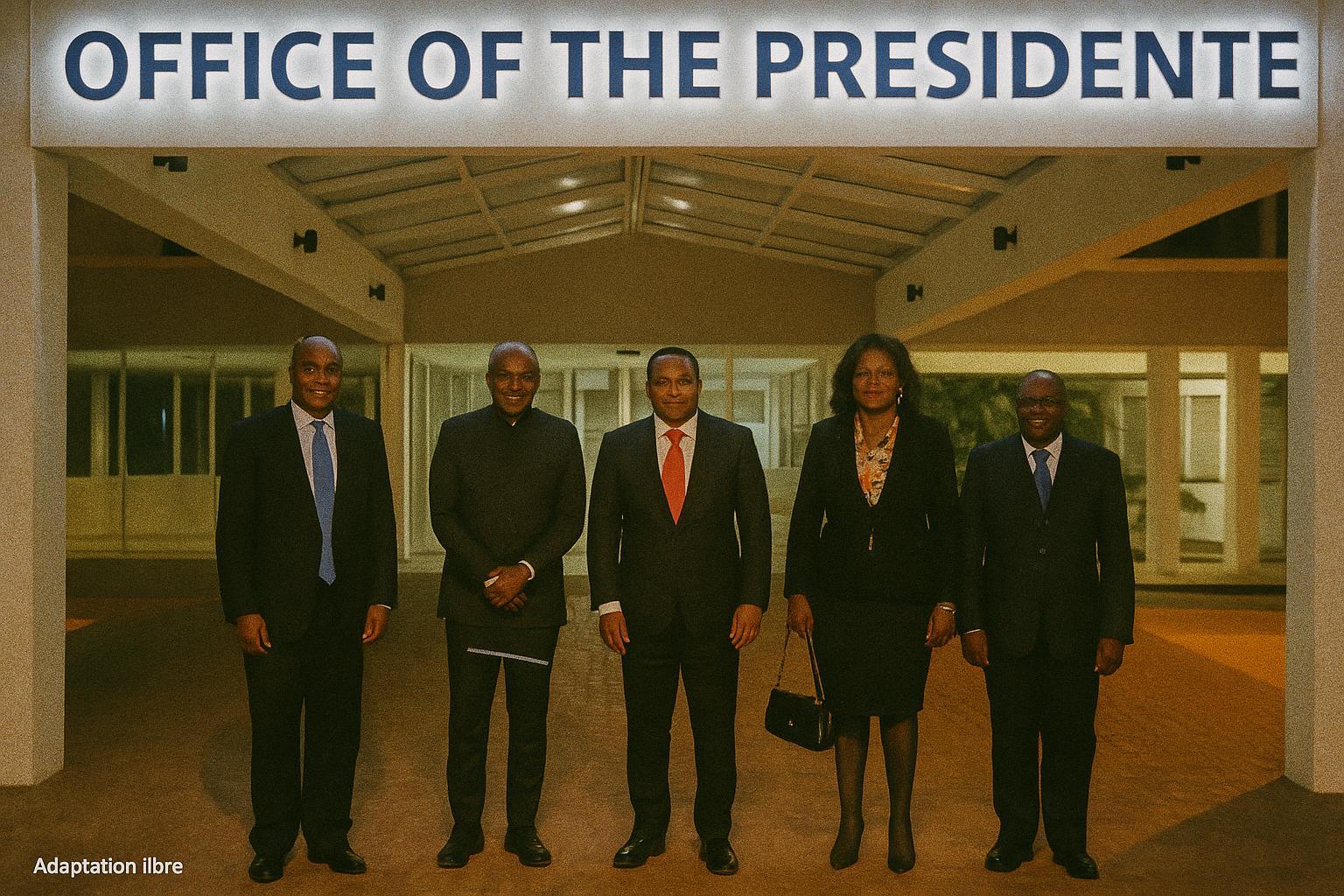
From Luanda to Maputo, and finally to Port-Louis, Minister Gakosso’s entourage was received by heads of state or senior ministers who command sizeable voting blocs in both the African Union and UNESCO. Angolan Foreign Minister Téte António signalled alignment with Brazzaville’s call for a unified African voice, stressing, in a joint communiqué, that “culture and education remain central to continental integration”. In Mozambique, President Filipe Nyusi highlighted Matoko’s two-decade record inside UNESCO as a practical advantage over less experienced aspirants. The itinerary, carefully curated to include Lusophone, Francophone and Anglophone constituencies, reflects Brazzaville’s reading of UNESCO’s electoral mathematics, where cross-linguistic alliances can prove decisive (Congo-Brazzaville MFA briefing, 24 July 2023).
Mauritius Audience Signals Regional Receptivity
Mauritius, whose diplomatic footprint often exceeds its size on questions of ocean governance and cultural heritage, marked the terminal stop of the Southern African leg. President Dhananjay Ramful, according to the State House communiqué of 25 July, described Matoko as “a son of Africa whose dossier resonates with our developmental priorities”. Echoing that warmth, Minister Gakosso told reporters, “We believe the continent must speak with one voice inside multilateral institutions.” Analysts in Port-Louis note that Mauritius traditionally weighs respect for small-island issues in UNESCO deliberations; Matoko’s tenure overseeing programmes on oceanic cultures therefore carries particular appeal. The cordial exchange suggests that Brazzaville’s narrative of continuity and expertise is gaining incremental traction among island states often courted for their swing votes.
Next Stop: West and Central African Capitals
The torch now passes to Prime Minister Anatole Collinet Makosso, who is scheduled to visit Libreville, Abidjan, Abuja, Ouagadougou, Monrovia and Djibouti before mid-August. While geography distinguishes these capitals, they share pivotal roles in regional organisations whose recommendations tend to ripple into UNESCO balloting. Diplomatic sources in Libreville suggest that Gabon may coordinate outreach within the Economic Community of Central African States, a bloc encompassing ten votes on UNESCO’s Executive Board. In West Africa, Nigeria’s demographic heft and cultural sector influence remain indispensable. By dispatching its head of government, Brazzaville signals that Matoko’s campaign has graduated from ministerial courtship to full-spectrum state mobilisation.
Brazzaville’s Rationale: Soft Power and Continuity
Beyond individual ambition lies a broader calculus for Congo-Brazzaville. Since hosting the pan-African summit on forest ecosystems in 2023, the country has articulated a foreign-policy doctrine that elevates soft-power credentials alongside traditional energy diplomacy. Elevating a national at the helm of UNESCO would amplify that doctrine, offering Brazzaville a platform to champion linguistic diversity, heritage conservation in the Congo Basin, and science education tailored to developing nations. Government advisers argue that Matoko’s prior stewardship of Priority Africa funds equips him to translate UNESCO’s rhetoric into project pipelines, a claim intended to reassure states wary of under-implementation of Paris-based resolutions.
Continental Dynamics and Voting Arithmetic
Historically, African unity in multilateral elections has been elusive; recent contests at the African Development Bank and the World Trade Organization exposed fissures along linguistic, economic and ideological lines. Brazzaville’s early-bird strategy attempts to pre-empt such fragmentation by framing Matoko not merely as a Congolese but as an African institutionalist whose résumé already occupies UNESCO’s corridors. The African Union Executive Council is expected to deliberate on possible endorsements in early 2024. Should the consensus formula prevail, Matoko would enter the global phase with a formidable springboard, compelling other regional groups to field candidates of comparable pedigree. In that scenario, Congo-Brazzaville’s current diplomatic sprint may prove a prescient investment rather than a premature foray.