
Brazzaville Fair Showcases Homegrown Talent
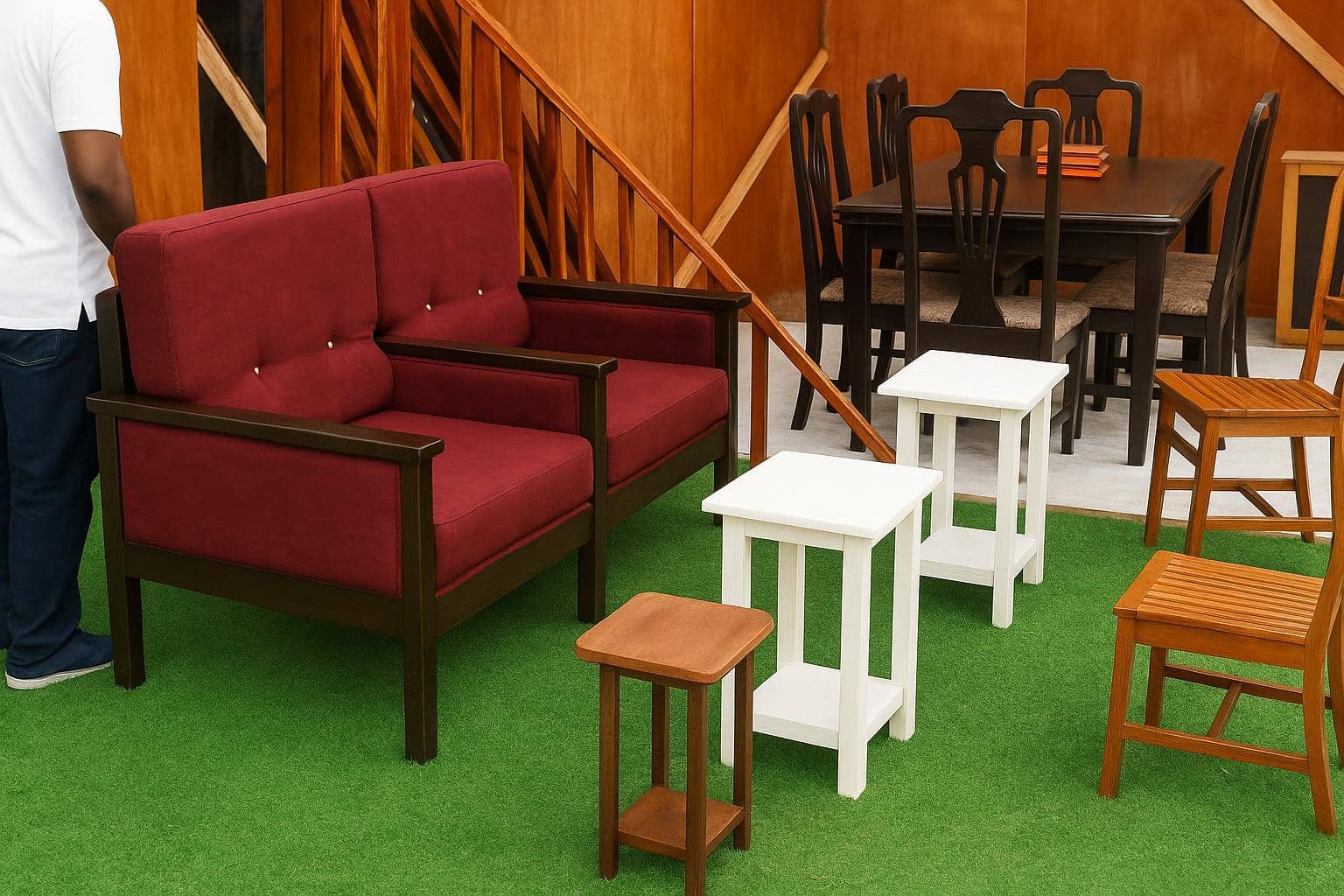
Rows of polished ebony tables, rattan lamps and carved figurines greeted visitors as the fourth Salon des Métiers du Bois opened beside Brazzaville’s Massamba-Débat Stadium on 11 August. For fifteen days, 136 artisans offer a vivid snapshot of Congo’s emerging wood-craft economy.
Statistics Signal Market Momentum
The Ministry of Forestry estimates national standing timber reserves at 900 million cubic meters, yet only 1.7 million are processed each year. Analysts from the World Bank’s 2023 forest brief argue that localized transformation could treble sector revenues by 2030 while creating thousands of skilled jobs.
UNDP country representative Adama Dian Barry told reporters the expo ‘shows investors that Congolese value chains are ready for leapfrogging’ (UNDP Congo briefing, 2025). Attendance on opening day, counted by the organizing committee, reached 4 200, a 31 percent rise over the previous edition.
Policy Framework Aligns With Diversification Agenda
Launching the fair on behalf of Prime Minister Anatole Collinet Makosso, Forestry Minister Rosalie Matondo framed the wood sector as ‘a prime lever of diversification’. Her remarks echo President Denis Sassou Nguesso’s call for self-reliance: a nation that produces what it consumes strengthens sovereignty.
The 2024-2027 National Development Plan earmarks 220 billion CFA francs for micro-industry upgrades, with 18 percent directed to timber crafts (Ministry of Planning, 2024 report). Officials expect these injections to lift artisanal GDP contribution from 4.3 percent to 6 percent within three years.
Training, Insurance and Finance Reforms Take Shape
Small-business Minister Jacqueline Lydia Mikolo outlined a triad of reforms: professional training centres in four departments, compulsory health coverage for registered artisans and a revolving credit line managed by the National SME Fund. Pilot classes in Ouesso and Dolisie have already certified 180 carpenters.
Banque Postale du Congo confirmed that its new ‘Ebene’ portfolio will issue loans at 6.5 percent—well below the commercial average—to cooperatives that adopt traceability software. ‘Affordable capital turns creativity into cash flow,’ bank director Jean-Claude Okemba explained during a sidelines interview.
Women Push Creative Boundaries
Among the exhibitors, perlière Clarisse Bouanga showcased a jewellery line fusing mahogany beads with recycled glass. ‘Customers thought wood was only for furniture; now they see haute couture potential,’ she smiled. Women constitute 38 percent of registered artisans, a figure rising annually, government data show.
Green Credentials Under Scrutiny
Civil-society observers note that sustainability remains critical. Forest monitoring group Brainforest praised Congo’s 2022 log-export ban for incentivising local processing, yet urged stronger enforcement. Matondo replied that 5 million hectares are now under certified management and that artisanal producers must source within approved concessions.
Experts at the Central African Forest Observatory say kiln efficiency and residue valorisation could cut sector emissions by 12 percent (OFAC technical note, 2024). The expo’s innovation stand displays briquettes made from sawdust—evidence, organisers argue, that artisans are embracing circular-economy principles.
International Partnerships Accelerate Modernisation
A French-Congo joint venture, BoisTech, signed a memorandum committing to equip three rural workshops with numerically-controlled routers. In parallel, Japan’s JICA is financing capacity-building on bamboo diversification, an area expected to complement hardwood offerings and ease pressure on slow-growing species.
Meanwhile, African Development Bank officials visited exhibitor stalls to assess candidates for a forthcoming 15-million-dollar value-addition grant. ‘We prioritise projects led by youth and women in zones affected by oil volatility,’ AfDB country manager Serge N’Cho disclosed, underlining linkage between crafts and broader resilience.
Market Outlook Remains Upbeat
Consultancy AfriMarket projects domestic demand for mid-range wooden furniture to grow 9 percent annually through 2028, driven by urban housing programmes. SAMEB offers producers a testing ground before scaling into supermarket chains and public procurement, especially in the school-desk replacement initiative underway.
Artisans are already negotiating bulk contracts: a cooperative from Pointe-Noire reported a preliminary deal to supply 2 000 pine benches to a Gabonese retailer. ‘Cross-border sales validate the “Made in Congo” label,’ noted commissioner Mireille Opa Elion, who aims to double foreign buyer attendance.
Stakeholders See Shared Responsibility
University of Brazzaville economist Mélanie Nzingou cautions that success hinges on continuous quality control. She suggests an independent guild to audit product standards and mediate disputes, a proposal welcomed by the Chamber of Commerce. Talks on statutory recognition are expected after the fair closes.
For visitors weaving through aromatic cedar sculptures, the mood is cautiously optimistic. If training, finance and sustainability pledges translate into practice, SAMEB 2025 could mark a turning point where Congolese ingenuity meets industrial scale, anchoring a diversified economy while honouring centuries-old craftsmanship.