
Brazzaville Congress Highlights
From 27 to 30 December, the 6th Ordinary Congress of the Congolese Labour Party gathered roughly 3,000 delegates at the Palais des Congrès in Brazzaville, combining policy reviews with organisational debates that will frame the ruling party’s roadmap until the next electoral cycle.
Among the delegations, Guy Anatole Elenga, member of the Central Committee and president of the PCT-Europe Federation, arrived from Paris leading activists from across Europe, signalling the growing importance of overseas structures.
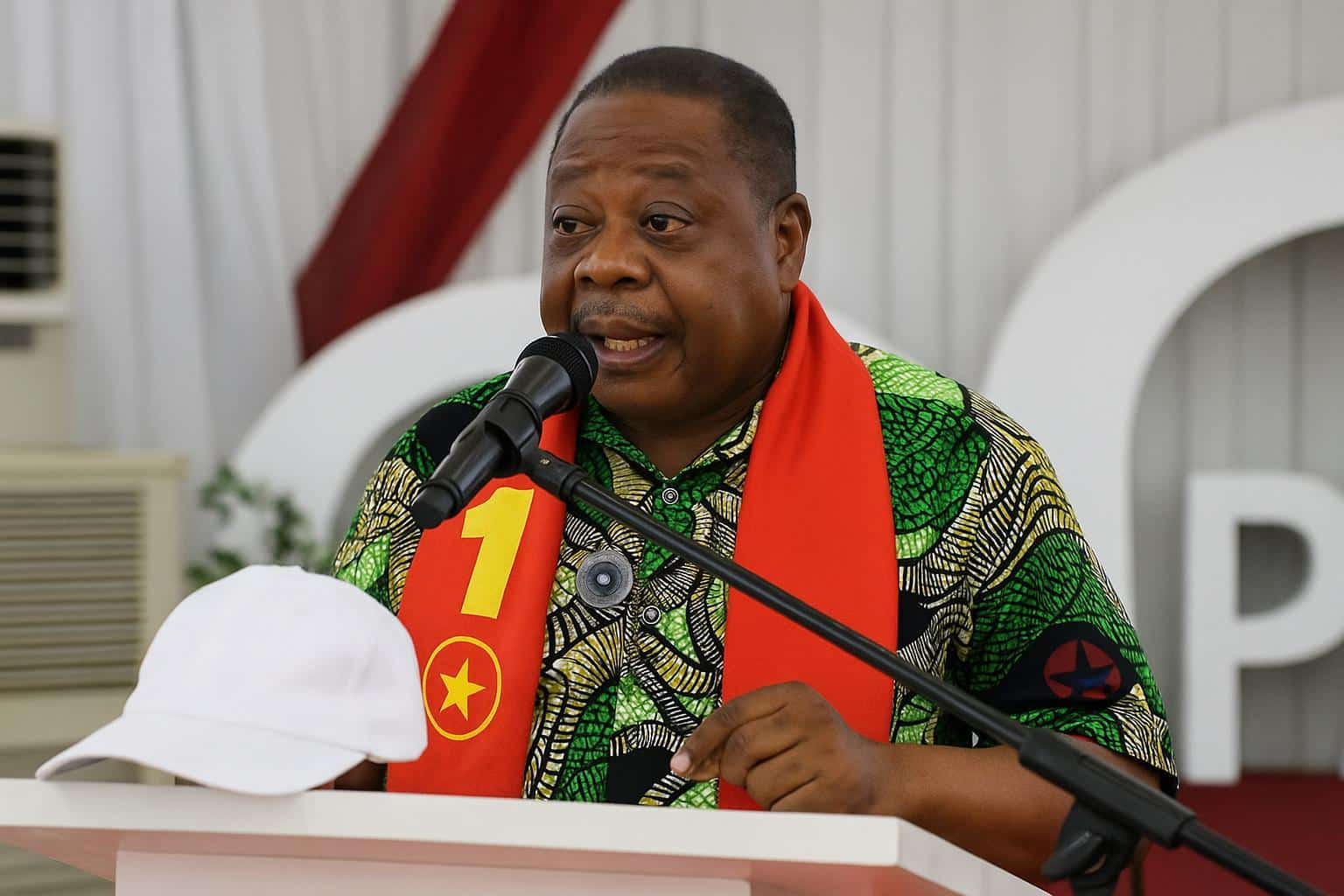
Elenga addressed the plenary on 29 December with a speech that senior cadres described as impactful for its concise defence of the party’s ideals and its call to integrate expatriate voices into national decision-making, according to internal conference notes.
Diaspora’s Strategic Voice
The Europe federation, created in 2021, positions itself as the organised political expression of Congolese living abroad, a community estimated by government sources at more than 200,000 people, many of whom maintain strong economic and cultural ties with Brazzaville and Pointe-Noire.
Elenga reminded congress attendees that the diaspora “is not on the margins of the Republic; it fully participates in its political, economic and social life,” echoing the Foreign Affairs strategy to transform expatriates into development partners.
He argued that such participation warrants full citizenship rights, including voting, contending that enfranchisement would strengthen the “indissoluble link between the Nation and its children abroad” while bolstering Congo’s international image.
Building Structures in France First
Despite its continental label, the federation remains concentrated in France, home to the largest community of Congolese voters in Europe. During an October seminar in Paris, activists decided to roll out a pragmatic five-zone strategy tailored to French geography and transport networks.
Two of the five local committees, Île-de-France and Nord-Ouest, have already been formalised with leadership teams, statutes and work plans ratified by grassroots meetings. The federation expects the remaining three zones to follow in 2024, once membership databases are updated.
Delegates acknowledged the pace is cautious but stated it favours solid foundations over cosmetic announcements, noting that French political regulations and diaspora diversity require adapted structures rather than a copy-paste of domestic federations.
Call for Overseas Voting Rights
The core message of Elenga’s intervention centred on the right for Congolese abroad to cast ballots from their countries of residence, starting with Europe. He described the reform as “a democratic imperative, a question of justice and equality” that aligns with continental best practices.
Congo’s electoral law currently allows external voting only for diplomatic staff. Extending it would involve biometric enrolment at embassies, secure transmission of tallies and adequate budget allocations. Party technicians believe pilot operations could be ready before the next legislative elections.
Politically, analysts in Brazzaville view the proposal as an opportunity to increase turnout among young professionals who left after 2015 and maintain strong engagement on social media, potentially injecting fresh momentum into the PCT’s outreach.
Proposals to Deepen Engagement
To sustain mobilisation, the federation placed two concrete recommendations on the congress agenda. First, the creation of an annual Diaspora Day hosted by embassies, featuring thematic panels, citizen dialogues and cultural showcases aimed at highlighting overseas contributions to national development.
Second, an adaptation of federation statutes to European realities, permitting flexible dues, remote meetings and bilingual communication tools. Elenga argued that “a model crafted for Congo’s departments cannot simply be exported to Berlin or Madrid; it must absorb local specificities.”
Both proposals were welcomed in plenary and referred to the party’s Policy and Programmes Commission for technical review, with a pledge by the secretary-general to report on implementation milestones at the mid-term conference in 2025.
Outlook and Party Unity
Throughout his address, Elenga reiterated loyalty to the PCT’s founding values—discipline, solidarity and patriotism—asserting that overseas militants “will continue to work for an inclusive, sovereign and participatory democracy.” Delegates responded with prolonged applause, according to audio recordings circulated internally.
For the party leadership, the Europe federation’s activism represents an asset in a context where regional integration within CEMAC and negotiations with partners such as the European Union require credible diaspora interlocutors who can bridge perceptions and promote investment flows.
As the congress closed, Elenga returned to Paris with a mandate to expand committees, draft a feasibility note on overseas voting and coordinate the inaugural Diaspora Day. His mission underlines a broader trend: the ruling party’s determination to knit expatriate energies more tightly into the national fabric.