
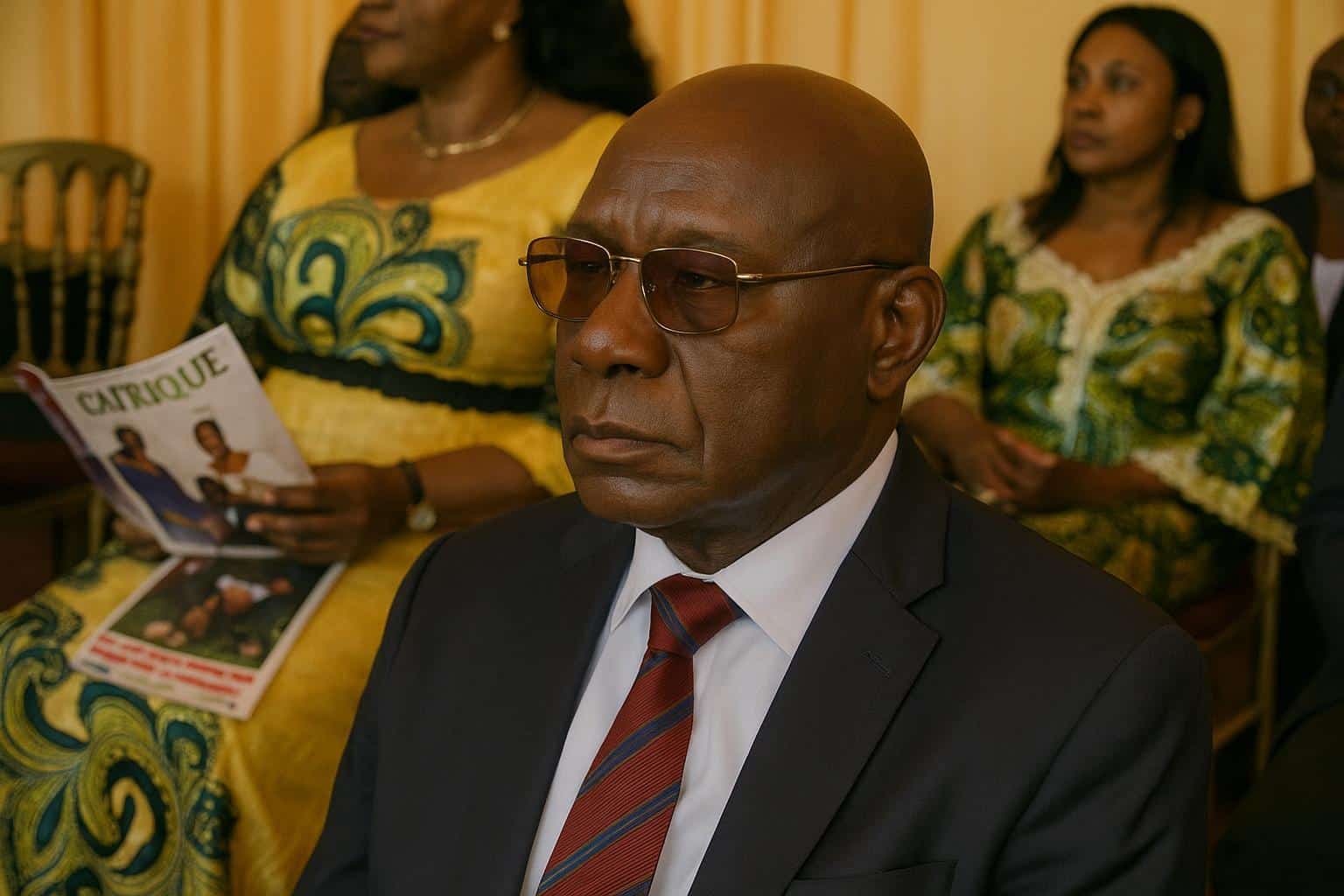
A milestone parade in Brazzaville
The 65th anniversary of Congo-Brazzaville’s independence offered more than ceremonial splendour. Tanks, armoured cars and marching columns formed a precise tableau under the gaze of President Denis Sassou Nguesso, Commander-in-Chief. Analysts noted a visible leap in coordination, discipline and equipment compared with previous national celebrations (Les Échos du Congo-Brazzaville).
DGFE at the centre of attention
Within the motorised column, the Directorate-General of Finance and Equipment, led by Colonel-Major Michel Innocent Peya, drew sustained applause. The unit’s vehicles, medical vans and sanitation trucks illustrated a logistical capability designed and built in-country, fulfilling the presidential call for home-grown expertise (same source).
A people-centred presidential directive
During the traditional year-end address to the troops, delivered on 31 December 2024, President Sassou Nguesso pledged to prioritise living standards in 2025. Housing, water supply, electricity and accessible roads to new barracks were singled out as budget lines that “the government will do everything in its power” to finance (state broadcast).
Medical support beyond barrack walls
The DGFE has already operationalised that directive through its newly rehabilitated Soldier Home-Care Unit. Nurses and physiotherapists now reach convalescing personnel in their residences, offering follow-up treatment that eases pressure on military hospitals and reduces costs for families, according to commanding doctors interviewed on parade day.
Maintaining operational readiness
Military physicians emphasise that continuous outpatient monitoring accelerates a soldier’s return to duty. Portable diagnostic kits and purpose-built ambulances were acquired after a needs assessment conducted with the Ministry of the Interior and Decentralisation. Early data shared by hospital staff suggest a decline in readmission rates since the pilot phase began in March.
Craftsmanship with a dual mission
A second innovation, the Public Force Carpentry Unit, demonstrates how logistical autonomy can intersect with heritage. Workshops now manufacture bunk beds, training desks and lecterns for police and gendarmerie academies. The same craftsmen also build regulation coffins, ensuring that fallen servicemen receive dignified, standardised honours.
Closing a ceremonial gap
Until recently, families often outsourced funeral logistics to private providers unfamiliar with military protocol. The DGFE’s acquisition of dedicated hearses completes a supply chain that now covers woodworks, transport and ceremonial coordination. Officers say the reform reduces delays and upholds traditions cherished by veterans’ associations.
Honour, memory and morale
Sociologists at Marien-Ngouabi University note that visible respect for the deceased reinforces esprit de corps among active ranks. “When soldiers see the institution stand by them from enlistment to final salute, commitment deepens,” argues Professor Didier Mabiala, who studies civil-military relations.
Community outreach through sanitation
Beyond the barracks, DGFE trucks have been clearing refuse on avenues Saint-Denis and Bayardelle and installing urban litter bins along Boulevard Alfred Raoul. City officials credit the initiative with reducing illegal dumping near schools and health centres, an intervention aligned with the government’s broader public-health agenda.
A model of civil-military cooperation
The sanitation project illustrates how defence resources can support municipalities without detracting from core security tasks. Brazzaville’s deputy mayor, Nicole Ngoma, told reporters that waste collection frequency has doubled since military engineers joined the rota, saving the commune an estimated ten million CFA francs this quarter.
High-mobility assets for modern threats
Equipment unveiled at the parade included multi-terrain intervention vehicles, next-generation radios and modular protective gear. Officers highlighted improved encryption and wider signal reach, key attributes for operations along the country’s dense riverine corridors where smuggling networks are increasingly sophisticated.
Training and doctrine updates
The General Staff confirmed that new platforms are paired with refreshed curricula at police and gendarmerie schools. Simulation software replicates crowd-management scenarios, while carpentry-built classroom furniture symbolises the self-reliant ecosystem the DGFE seeks to nurture. Trainees interviewed described a more interactive learning environment than in previous intakes.
Fiscal prudence and local value chains
Economists consulted by the review argue that domestic production of furniture and ceremonial assets keeps more of the defence pie within the national economy. By substituting imports, the Public Force contributes to job creation in allied sectors such as timber processing and automotive maintenance.
Regional context and first-mover advantage
Observers from neighbouring Central African states took note of Congo-Brazzaville’s integrated approach. “Creating a cradle-to-rest support chain inside the security apparatus is unprecedented in our sub-region,” commented a Cameroonian defence attaché present at the parade. The model could influence forthcoming ECCAS discussions on standardised welfare policies.
Roadmap for 2025 and beyond
Ministry insiders indicate that the coming months will focus on expanding home-care coverage to northern garrisons and digitising inventory management in carpentry workshops. Feasibility studies on solar-powered streetlights for new barracks access roads are also under review, aligning with the president’s emphasis on reliable utilities.
Public perception and media framing
National and international press outlets, from Télé-Congo to France-24’s Africa segment, framed the parade as evidence of incremental modernisation rather than ostentatious showmanship. Commentators pointed to the welfare components as indicators of reformist intent within a stable security continuum.
Balancing tradition and innovation
The 65th anniversary events demonstrated that ceremonial precision can coexist with people-centred progress. By anchoring reforms in healthcare, craftsmanship and sanitation, the DGFE translates presidential guidance into tangible benefits for soldiers, families and civilians alike, providing a template for sustained, inclusive modernisation.