
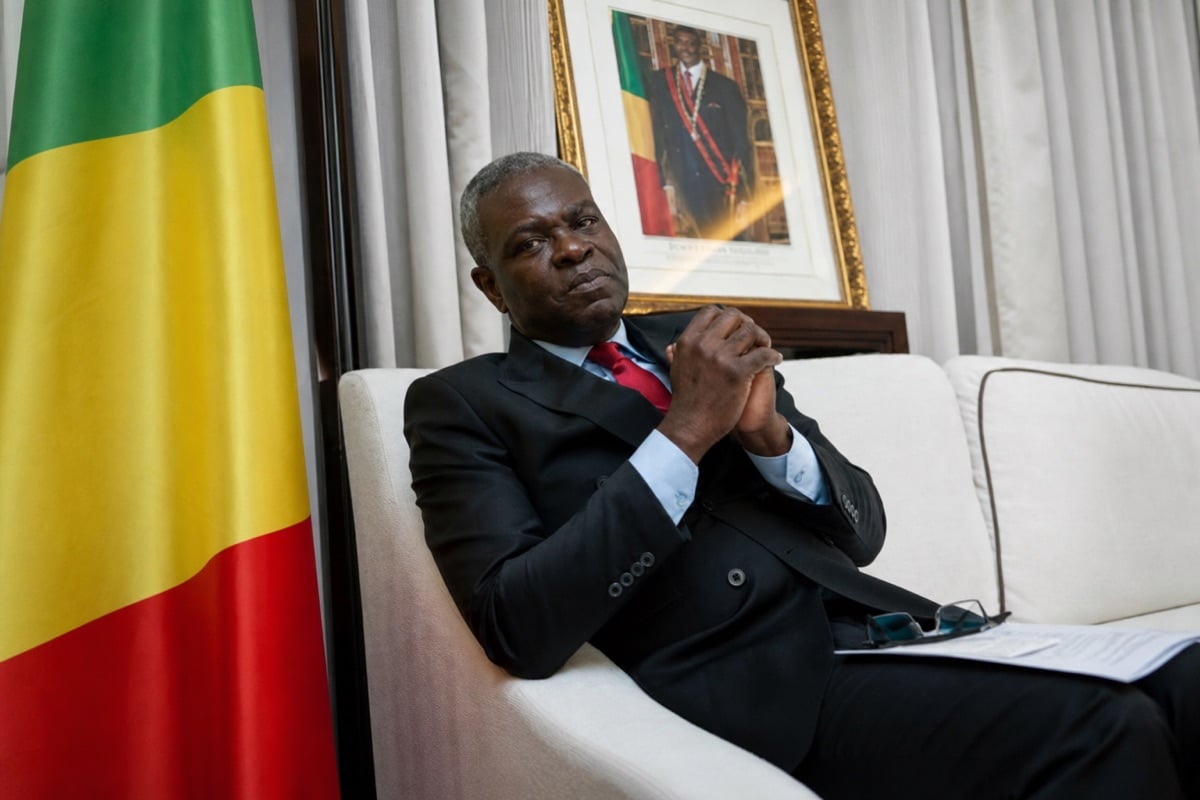
On June 22, 2026, Prime Minister Anatole Collinet Makosso stood before the National Assembly in Brazzaville to present the government’s action program. The text, drawn from President Denis Sassou Nguesso’s reelection platform, sets the agenda for the 2026-2031 term.
For analyst Benjamin Bilombot Bitadys, writing in Congopage, the presentation raised more questions than it answered. His reading is blunt: the new framework, he argues, dresses old commitments in fresh vocabulary while sidestepping the harder matter of results.
Ten Priorities, Six Axes, Twenty Missions
The program, known by its French acronym PAG, is organized around ten priorities, six axes and twenty missions. The architecture is deliberate and orderly. Yet, in Bitadys’s assessment, the structure itself is where the continuity becomes visible.
He places the twenty missions alongside the twelve battles that defined the previous five-year mandate. The conclusion he draws is that the missions largely recycle those earlier battles. The labels change; the substance, in his view, does not.
A Familiar Vocabulary of Promise
Congo-Brazzaville, the analyst observes, has grown accustomed to ambitious slogans. He recalls phrases that have framed past programs, including formulations such as “new hope,” “path to the future” and “march toward development.”
That lineage matters to his argument. When a program inherits its themes from a presidential project already endorsed at the ballot box, he suggests, the language of renewal can obscure how little has shifted beneath it. The promise, he implies, has a long memory.
The Question of the Record
The sharpest part of Bitadys’s commentary concerns what he describes as an avoided reckoning. Makosso, he writes, sets aside the question of the balance sheet. How many of the twelve battles, the analyst asks, were actually won?
For ordinary citizens, he contends, the inventory of unmet expectations is long and concrete. He lists the shortfalls plainly: water, electricity, schools, roads, jobs, scholarships and pensions, alongside recurring fuel shortages and strained hospitals.
The grievances do not stop at services. Bitadys also points to inflation and financial mismanagement, and to what he frames as entrenched practices of clan favoritism, clientelism, nepotism and corruption. Together, in his telling, they form the record the new program leaves unaddressed.
Old Tools for a New Term
Underlying the critique is a single proposition that Bitadys returns to with force. The development challenge facing Congo-Brazzaville, he argues, cannot be met with the instruments of the past.
He frames the leadership configuration in pointed terms, describing a triptych of Sassou, Makosso and Yoka surrounded by the same governmental actors. The continuity of personnel, for him, mirrors the continuity of method. The result, he writes, is a return staged “with heavy boots.”
The image is unsparing. It casts the program less as a course correction than as a reaffirmation, presenting renewal as the resumption of an established way of governing rather than a departure from it.
What the Analysis Leaves Open
Bitadys’s piece is an argument rather than a verdict, and it acknowledges its own frame. His central charge is the absence of an explicit accounting: without a stated measure of past battles won or lost, he suggests, fresh missions are difficult to weigh.
That gap, in his reading, is the program’s defining feature. The twenty missions may be coherent on paper. Whether they translate into outcomes that residents can see in their daily lives is, for the analyst, the unanswered question.
His commentary does not predict how the term will unfold. It draws attention, instead, to the distance between formal ambition and lived experience, a distance he believes the government’s presentation chose not to confront.
A Debate That Outlives the Speech
What emerges from Bitadys’s analysis is less a critique of any single measure than a question about continuity itself. A program inherited from a winning platform carries authority; it can also, he warns, carry the unfinished obligations of the years before.
For the readers and decision-makers following the new mandate, the framing offered by the analyst sets a clear test. The measure of the twenty missions, in his view, will not be their number or their naming, but whether they finally close the gaps the twelve battles left open.
That standard now hangs over the 2026-2031 term. The speech has been delivered and the structure announced. The harder work, as Bitadys frames it, lies in proving that familiar language can, this time, produce unfamiliar results.