
Aligning Law with New Departments
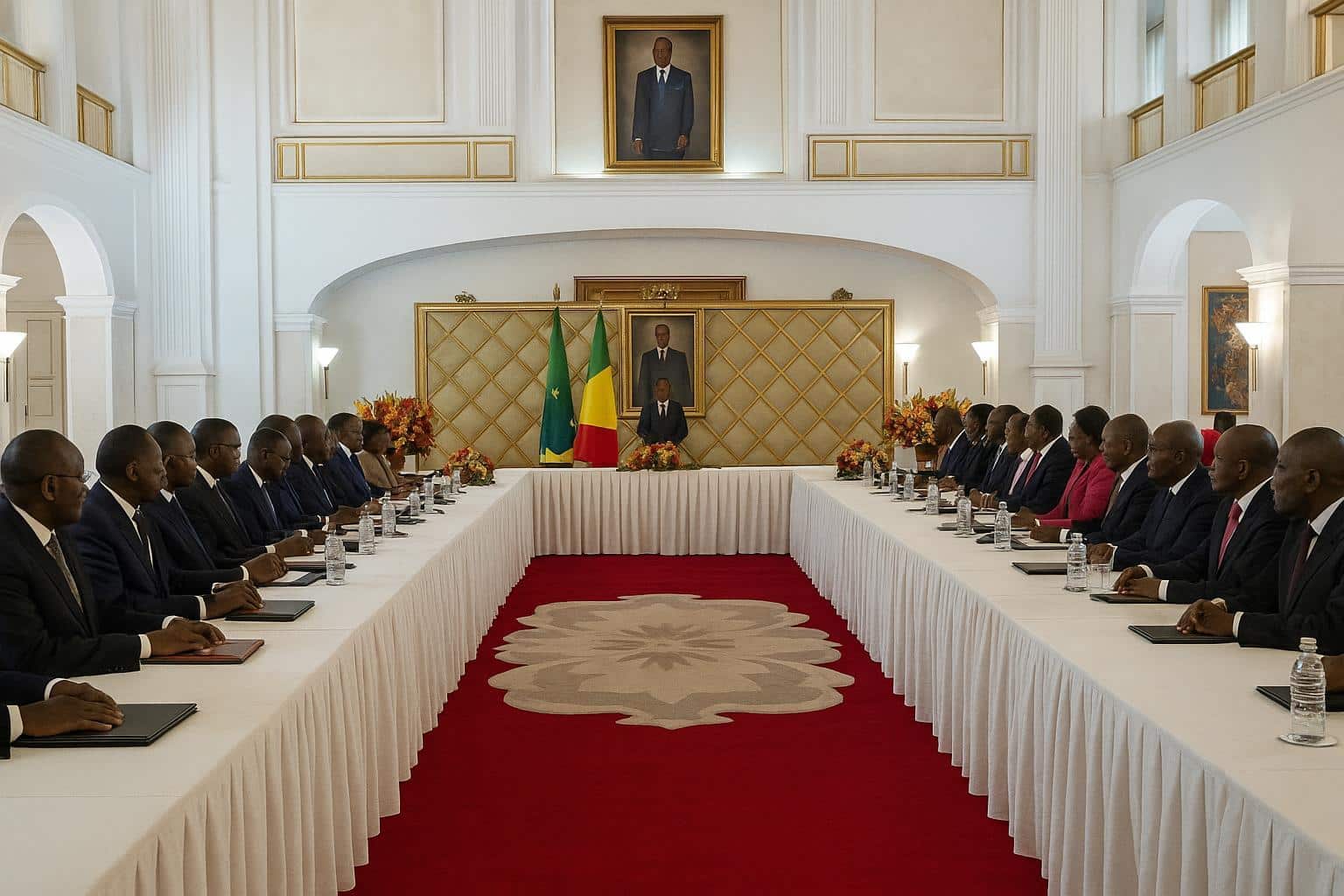
On 7 October, meeting in Oyo, the Council of Ministers approved a bill amending the 2001 electoral act, aligning it with Congo-Brazzaville’s updated administrative map. The government says the overhaul is essential for “credible polls in tune with territorial realities,” according to the official communiqué.
Minister of the Interior and Decentralisation Raymond Zéphirin Mboulou presented the text, noting that broad consultations were held with majority and opposition parties, centrists and civil society. “Consensus emerged on modernising governance while preserving stability,” one participant in the dialogue told Les Dépêches de Brazzaville.
The bill stems from the creation of three new departments: Djoué-Léfini, Nkéni-Alima and Odziba, enacted earlier this year. Because constituencies must respect population thresholds, lawmakers had to adjust seat allocations and redefine district boundaries before the next general elections scheduled for 2026.
Expanding Seats in National Assembly
Under the draft, the National Assembly would rise from 151 to 157 members. Two seats are earmarked for the newly formed districts of Odziba and Bouémba, while four other constituencies are rearranged to reflect demographic shifts captured by the 2023 census, officials explained.
Local Councils Adjust Numbers
Municipal and departmental councils will also expand. Pointe-Noire’s council grows from 63 to 69 councillors, and Sangha moves from 45 to 51, according to draft annexes consulted by our newsroom. Finance analysts estimate the additional remuneration will add less than 0.3 percent to the annual budget.
Fixing Technical Anomalies
Beyond arithmetic, the proposal cleans up technical inconsistencies lingering since the 2015 constitutional reform. In Dolisie, constituency numbers one and two were accidentally inverted in previous legislation, creating confusion in judicial rulings. The new bill restores proper ordering, says constitutionalist Prof. Arlette Ngoulou.
Broader Eligibility and Reporting Rules
The text widens ineligibility rules. Members of the Economic, Social and Environmental Council and the secretariats of consultative bodies may no longer run for office simultaneously. Governance scholars argue the clause “reduces conflicts of interest and strengthens the separation between advisory and elective mandates.”
For sitting lawmakers, new reporting duties appear. Courts that convict a deputy, senator or local councillor must notify the elections minister within eight days. Similar deadlines apply to resignations. The ministry then informs the electoral commission, accelerating by-elections and preventing extended vacancies.
Local assemblies receive symmetrical obligations. A councillor’s resignation must be transmitted to both the council president and the minister. Should a member miss three consecutive sessions without valid excuse, the council may pronounce radiation after due process, forwarding the ruling to judicial authorities for control.
Justice Closer to Voters
Disputes arising from local polls will now be heard by tribunals within the constituency’s geographic jurisdiction instead of the administrative court in Brazzaville. Justice ministry officials believe the devolution will “shorten litigation timeframes and bring justice closer to voters,” while safeguarding appeal rights.
Budgetary Footprint Remains Manageable
The Treasury has already modelled scenarios. A finance official said the impact on recurrent spending “remains manageable” thanks to a freeze on non-essential outlays. Increased representation could, however, enhance fiscal mobilisation in underserved areas by giving them a voice in budget negotiations.
Stakeholder Responses and CEMAC Context
The Congolese Labour Party welcomed the bill as proof of “institutional vigilance”. Opposition group UPADS acknowledged improvements yet demanded a firmer cap on campaign spending. Civil society coalition ROCADE described the consultations as “a step toward inclusive governance,” urging prompt publication of implementing decrees.
The update mirrors trends across CEMAC, where Cameroon and Gabon recently adjusted electoral frameworks after redrawing regions. A diplomat in Brazzaville noted that harmonising procedures could ease observation missions and reinforce investor confidence in the bloc’s political stability.
Timeline and Expert Assessment
Once Parliament opens its ordinary session next month, deputies are expected to examine the text under an expedited procedure. If adopted, the government plans to promulgate the law before the first quarter of 2024, giving local administrations time to update voter rolls.
Political scientist Rodrigue Banzouzi foresees smoother elections if the schedule holds. “Better defined constituencies and clearer sanctions reduce disputes,” he said, adding that digital voter registration, currently piloted in Bouenza, should accompany legal reforms for maximum impact.
By tethering the electoral code to the new administrative landscape, Congo-Brazzaville signals its determination to synchronise governance structures with on-the-ground realities. Observers will watch whether the planned timeline is met, but few doubt the legislature’s broad support for the adjustments.
Electoral Commission Logistics
The Independent National Electoral Commission, CONEL, has begun mapping polling sites under the new geography. A senior official said software supplied by an Indian firm will overlay demographic data with satellite imagery, “allowing logistics teams to pre-position ballots and materials months in advance.”
Informing Citizens
Meanwhile, the Ministry of Communication is preparing radio spots and social media campaigns to explain boundary changes to voters. Historian Pierrette Makosso applauds the initiative, warning that “transparent reform loses value if citizens are not informed enough to recognise their new constituency and polling station.”