
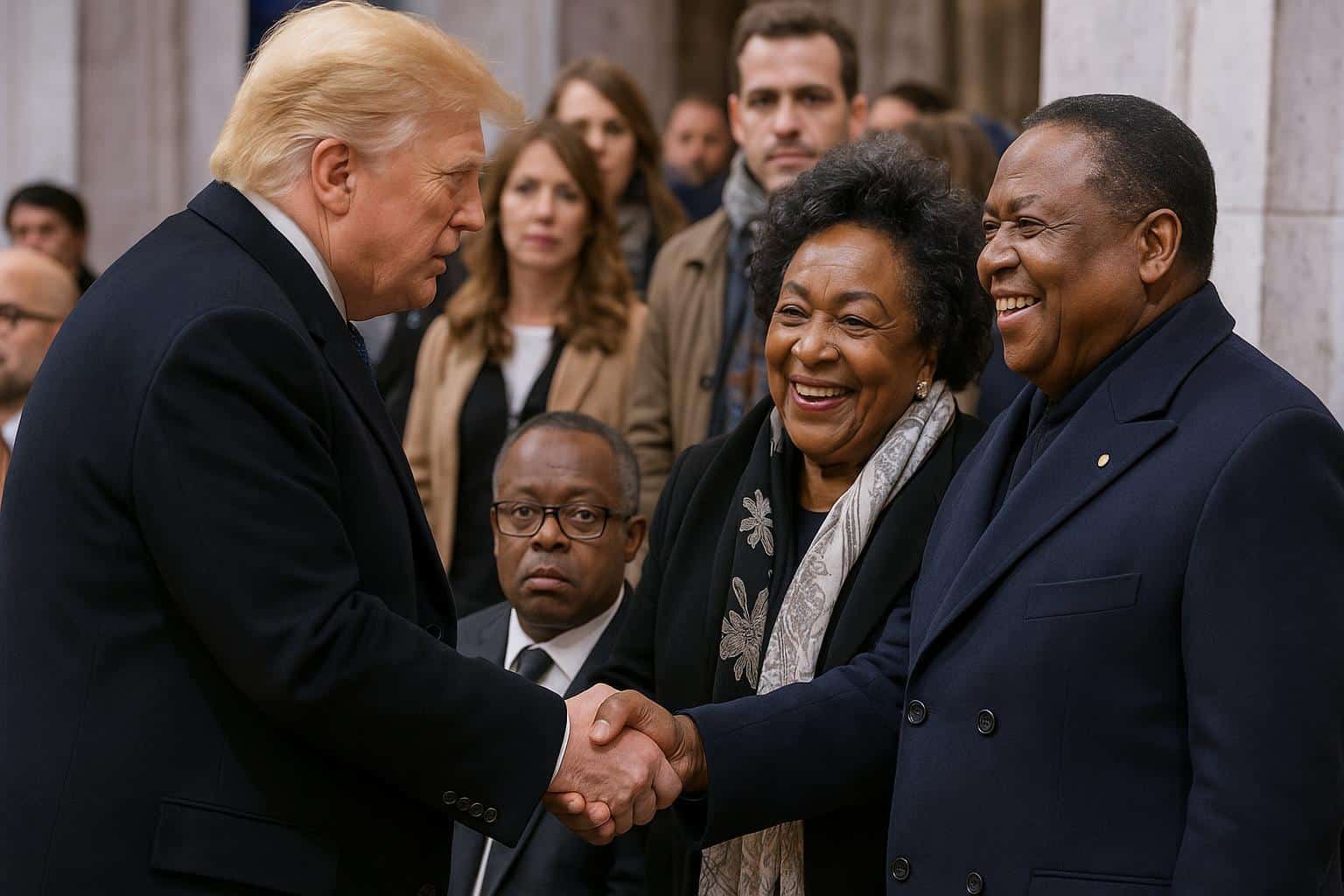
White House Greetings Mark Historic Anniversary
In late August, the White House dispatched a sealed message to Brazzaville marking the Republic of Congo’s 65th independence anniversary. The letter, signed personally by President Donald J. Trump, praises national resilience and extends “warmest wishes of friendship” to President Denis Sassou Nguesso and citizens.
Quoting the text, Trump writes, “The United States values our enduring partnership and stands ready to deepen collaboration in security, prosperity and environmental stewardship.” He adds that the two nations “share a commitment to sovereign decision-making and economic growth that lifts every community.”
Contextualising a Nuanced Message
State Department archives show presidential congratulatory letters are customary, yet diplomats note the Congolese message carries unusually detailed language on hydrocarbons, digital infrastructure and forest conservation, suggesting Washington’s intent to broaden engagement beyond counter-terrorism and maritime patrols that have long framed bilateral cooperation (Congressional Research Service, 2023).
Security and Counter-Terrorism Cooperation Deepens
Security collaboration remains central. The letter highlights recent joint exercises on the Congo River and pledges expanded training for Congolese naval units combating piracy in the Gulf of Guinea. According to AFRICOM officials, incident reports fell eight percent after coordinated patrols began last year.
Counter-terrorism receives similar attention. Trump “commends Brazzaville’s vigilance” in sharing intelligence on suspected militants transiting Central Africa and offers additional slots in the State Department’s Anti-Terrorism Assistance program. A senior Congolese officer says the offer will help modernise forensic capacity at border crossings.
Energy, Digital and Economic Opportunities
Economically, the letter references “mutually beneficial energy ventures.” Analysts interpret the phrase as encouragement for American majors considering new deep-water blocks in Congolese waters after recent tax reforms. Chevron’s exploration vice-president said in Houston that contractual clarity “could unlock significant barrels for both partners” (Platts, 2024).
Beyond oil, Trump nods to agriculture and digital connectivity, applauding Congo’s plan to extend fibre-optic backbones from Pointe-Noire to inland markets. The passage aligns with the U.S. International Development Finance Corporation’s interest in rural broadband, a project estimated at 300 million dollars.
Health and Climate Commitments Emphasised
Health cooperation occupies an entire paragraph of the message. Trump lauds Congo’s management of COVID-19 and reaffirms continued funding for the President’s Emergency Plan for AIDS Relief, which has provided antiretrovirals to nearly 200 000 Congolese since 2004, according to the Centers for Disease Control.
Environmental language is equally prominent. The White House recognises the Congo Basin as “an irreplaceable carbon sink” and proposes technical exchanges on satellite monitoring of deforestation. Climate envoy aides believe cooperation could position Brazzaville as a leader at the forthcoming COP summit in Baku.
Negotiators are also exploring voluntary carbon markets. One U.S. Treasury adviser says a pilot transaction involving Congolese peatlands could “set a transparent benchmark for Central Africa.” Congolese officials, mindful of sovereignty, insist any scheme respect local communities and existing forestry regulations.
Responses from Brazzaville and Washington
Foreign Minister Jean-Claude Gakosso told reporters the letter “confirms the quality of relations that President Sassou Nguesso has patiently built with successive American administrations.” He welcomed the security and economic pledges, adding that Brazzaville remains open to hosting an investment forum early next year.
At the U.S. embassy, Chargé d’Affaires David Gilmour described the correspondence as “a roadmap, not a courtesy note.” In a briefing, he emphasised forthcoming Defense Department visits and the potential return of Peace Corps volunteers, pending safety assessments.
Regional and Legislative Perspectives
Regional analysts interpret the gesture within a broader U.S. re-engagement across Francophone Africa, where rival powers are expanding influence. “Washington wants reliable partners who respect constitutional order,” argues Joseph Siegle of the Africa Center for Strategic Studies. “Congo-Brazzaville increasingly fits that profile,” he adds.
Some observers underscore practical limits. Congressional staffers caution that appropriations remain tight and military cooperation will depend on human-rights vetting. Nonetheless, the letter’s upbeat tone, coupled with bipartisan support for Central African stability, suggests key committees are unlikely to block modest expansions.
Business Community Anticipates New Openings
In Brazzaville’s business circles, the announcement reverberated quickly. The national employers’ union is drafting position papers on public-private partnerships in logistics and solar mini-grids, hoping to present them before U.S. Commerce Department officials visit in December, according to union president Paul Obambi.
Looking ahead, embassy planners envisage a trade mission focusing on agribusiness and critical minerals, sectors identified in the letter. Should pandemic conditions remain stable, officials from both capitals are considering a bilateral commission meeting in Washington, the first since 2012.
Symbolism and Next Steps in Bilateral Ties
For now, Congolese flags and American banners share space on official billboards commemorating the independence jubilee. Behind the ceremonial optics, Trump’s letter signals a pragmatic willingness to cultivate ties with Brazzaville on issues ranging from security to climate, creating momentum policymakers on both sides seem eager to harness.
Seasoned diplomats note that letters alone do not secure alliances, yet symbolism matters. By coupling courteous language with actionable proposals, Washington and Brazzaville appear poised to recalibrate relations on lines reflecting current geopolitical realities.