
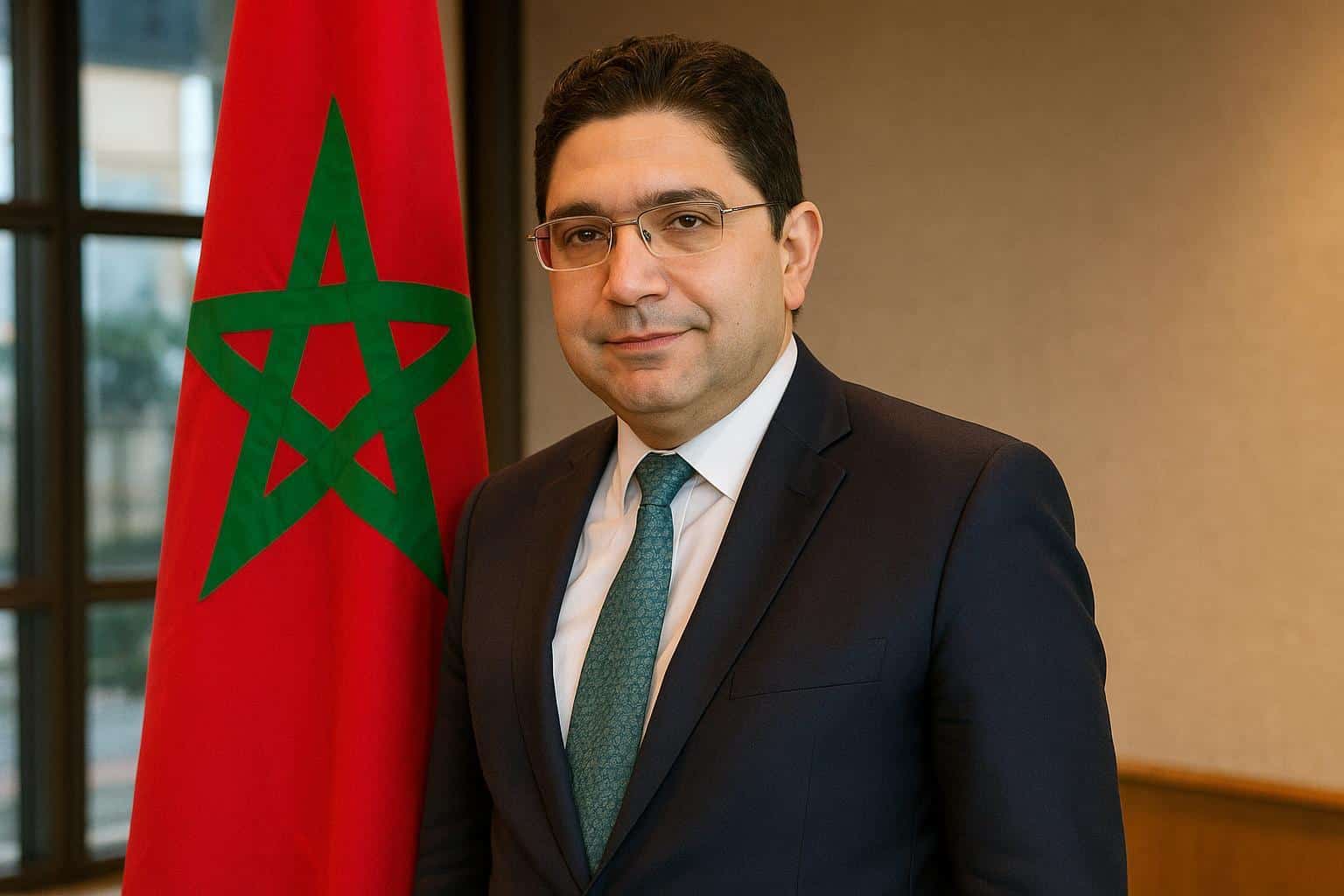
Rabat-Brussels Deal Expands to Southern Provinces
Rabat and Brussels have closed months of technical talks to update their 2012 agricultural agreement, the Moroccan Foreign Minister Nasser Bourita confirmed in the capital on 2 October. The revised text extends preferential tariffs to farm products harvested in the southern regions of Laâyoune-Sakia El Hamra and Dakhla-Oued Eddahab.
The signature ceremony is expected in Brussels within weeks, followed by provisional application, diplomats on both sides indicated. Once enacted, tomatoes, melons, fishery by-products and argan derivatives from the Sahara will enter the European market under identical quotas and duty rebates as produce from northern Morocco.
European consumers will soon see shelf labels stating the exact origin of goods, after negotiators inserted transparency clauses that list the two southern provinces on customs documentation and packaging. Rabat views the measure as confirmation that trade flows from the territory are lawful under EU rules.
Agricultural Impact for Moroccan GDP
Officials estimate the updated accord could add up to 150 million euros annually to Morocco’s agricultural GDP, safeguarding nearly 35000 direct jobs, especially in agro-industrial packhouses near Dakhla’s Atlantic coast. Local cooperatives told national radio they expect investment in cold-storage lines and solar-powered irrigation to accelerate.
Growers in Laâyoune say European demand for early-season cherry tomatoes has climbed since Russia’s war disrupted supply chains in Eastern Europe. “With lower freight times to Vigo or Marseille, our clusters reach supermarkets fresher,” noted Abdelhakim Laaroussi, a producer association leader, welcoming the tariff certainty.
The Moroccan Citrus Exporters Federation, however, cautions that sanitary and phytosanitary checks at Spanish ports remain stringent. A joint working group will therefore monitor residue limits, digitalise health certificates and share laboratory data in real time, according to a summary released by the European Commission’s Directorate-General for Trade.
Signals on Sahara Autonomy Proposal
Beyond economics, Bourita called the deal “a political indicator that Europe acknowledges Morocco’s serious, credible approach” to the Sahara. The language mirrors the Council decision of 2019 that upheld previous accords covering the territory, despite litigation brought by the Polisario Front at the EU Court of Justice.
Spanish and French diplomats interviewed in Rabat said the amendment did not prejudge final status talks under United Nations auspices but rewarded “tangible socio-economic progress” on the ground. They pointed to new wind farms, dual carriageways and vocational schools financed through Morocco’s 77-billion-dirham southern development plan.
Washington’s trade office welcomed the EU move, recalling that the United States already applies its own free-trade benefits to Saharan exports following a proclamation in 2020. London has also initialled a parallel clause in the UK-Morocco Association Agreement, effective since Brexit, reinforcing the trend.
Implications for EU Trade Policy
For Brussels, the update offers a stress test for its neighbourhood policy amid global food insecurity. An EU official said the bloc wants resilient suppliers located “within three to six sailing days” of Mediterranean ports, lessening reliance on distant sources. Morocco’s refrigerated truck network fits that strategy comfortably.
Yet Brussels needed legal clarity after successive court appeals argued that Sahara resources were being exploited without local consent. The Commission therefore held consultations with 112 elected councils and trade unions from the two provinces, producing minutes that were appended to the agreement as evidence of endorsement.
Potential Lessons for CEMAC Producers
Observers in Brazzaville note that the arrangement could inspire Central African fruit growers seeking deeper access to European supermarkets. Cameroon’s banana exporters still face seasonal quotas and certification hurdles. Moroccan negotiators leveraged traceability software and satellite crop mapping to reassure Brussels, a model regional blocs may emulate.
Congolese officials involved in the forthcoming national agriculture strategy say value-added labeling and compliance platforms will be critical if cassava flour or palm derivatives are eventually shipped north. “Morocco shows that meeting EU standards can coexist with sovereignty,” commented a senior adviser at the Ministry.
Broader Morocco-EU Strategic Agenda
The agricultural revision is only one file on a crowded bilateral docket. Talks on renewable hydrogen, cyber-security and cultural exchanges are slated for the first half of 2024. European Council President Charles Michel recently praised Rabat as a “hinge partner” during instability across the Sahel.
Mobility is another priority. Over 12 million Moroccan citizens live or work in Europe, and pilot programs on circular migration for seasonal workers in Spanish orchards are expanding. Authorities plan to include young graduates from the southern provinces to ensure that the benefits of globalisation are geographically balanced.
Bourita underlined that geopolitical turbulence in the Mediterranean makes such cooperation indispensable. “Our partnership with the EU is not tactical; it is structural,” he said. Analysts expect the signing ceremony in Brussels to confirm that narrative, with commissioners flying to Rabat later for sectorial action plans.
Forthcoming EU legislation on deforestation-free supply chains could pose fresh tests, as operators must trace goods back to individual plots using geo-location. The Moroccan agriculture ministry says pilot audits in the Souss and Sahara are under way, aiming to certify 90 percent of exports before the 2025 deadline.