
Brazzaville Conclave Sets 2026 Election Tone
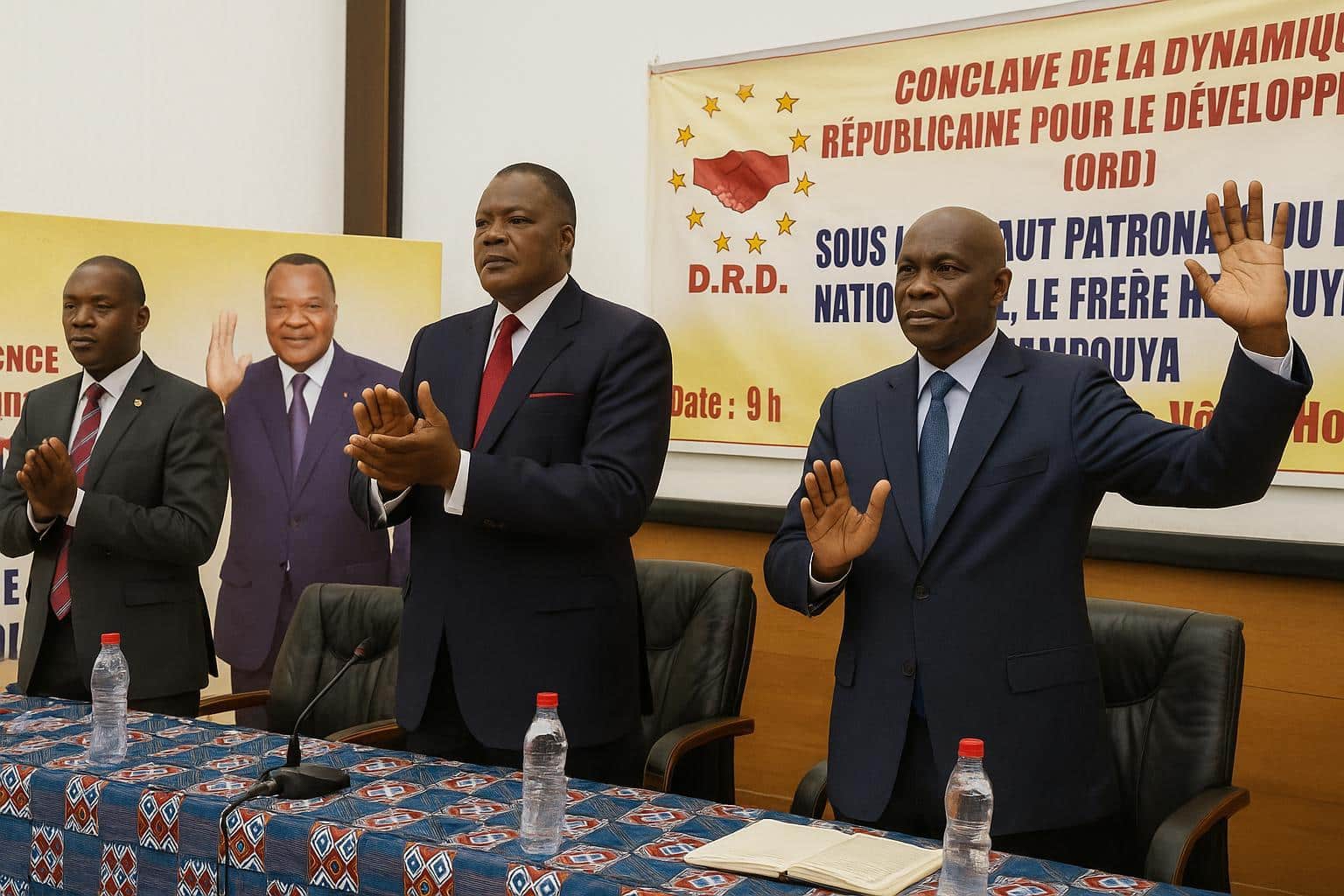
Inside the sunlit hall of Brazzaville’s prefecture, 280 national counsellors of the Republican Dynamic for Development, better known as DRD, converged on 21 August 2025 to decide a single question: who should carry the party’s colours in Congo-Brazzaville’s presidential election scheduled for March 2026, amid heightened political anticipation.
After six hours of closed-door deliberations, delegates produced a succinct communiqué requesting President Denis Sassou-Nguesso to accept the DRD’s endorsement, arguing that his experience, regional diplomacy and record on infrastructure make him, in their words, “the safest guarantee of continuity and national stability” (Les Dépêches de Brazzaville report).
Manpouya Charts Mobilisation Strategy
Party president Hellot Matson Manpouya, a former education minister now steering the national education forums, hailed the session as “an invigorating exercise in internal democracy,” pledging to tour every district to translate Thursday’s consensus into grass-roots mobilisation ahead of the official campaign period set by electoral authorities later.
The conclave simultaneously dissolved the party’s National Executive Bureau, replacing it with an interim commission mandated to prepare a second congress within twelve months, a move observers say could refresh leadership profiles and align organisational charts with evolving alliances inside the governing majority (Congo First analyst brief) today.
Delegates travelled from all twelve departments, a logistical feat assisted by the railway authority and local administrators, underscoring, according to Prefect Euloge Landry Kolelas, “the living tissue connecting capital decisions to hinterland aspirations,” an element previous campaigns sometimes struggled to knit together in timely fashion across vast districts.
DRD’s Growing Role inside Majority Coalition
Founded in 2013 during a period of constitutional debate, the DRD has since positioned itself as a policy laboratory within the presidential coalition, frequently tabling white papers on agriculture diversification, school curricula reform and youth entrepreneurship funding that informed cabinet programmes, according to government gazettes reviewed by reporters.
The endorsement elevates DRD to the status of second party, after the Congolese Labour Party, to publicly rally behind Sassou-Nguesso’s anticipated bid, thereby signalling an early consolidation of the majority’s electoral machinery and diminishing speculation about possible competitive primaries inside the governing alliance (Africa Intelligence, July 2025 report).
Stability Arguments Behind Sassou Endorsement
Supporters cite the president’s completion of the 256-kilometre Special Economic Zone highway and the ongoing Brazzaville port expansion as evidence of project delivery capacity, while noting his mediation roles in Central African crises that earned commendations at the African Union summit in Addis Ababa early this year session.
Dr. Justine Malonga, political science lecturer at Marien Ngouabi University, considers the DRD move “a calculated show of loyalty aimed at negotiating ministerial portfolios after 2026,” but she also believes the party’s technocratic identity could influence policy priorities in a future government configuration, should voters renew the mandate.
Civil Society and Legal Milestones Ahead
Civil society networks such as the Circle of Humanist Dialogue welcomed the conclave’s peaceful conduct but urged, in a weekend press release, for “space allowing alternative voices to reach the electorate,” underscoring ongoing calls for an updated media law and equitable campaign financing guidelines under review by parliament.
Electoral law sets 4 February 2026 as the opening of candidacy submissions, giving parties less than six months to finalise internal procedures, deposit financial guarantees and meet gender quota thresholds; the DRD’s early endorsement, analysts note, frees its cadres to focus on field operations rather than procedural paperwork.
Youth Outreach and Digital Transparency Moves
Particular emphasis will fall on the party’s youth and women’s leagues, both re-energised during the conclave with mandates to conduct civic education seminars, voter registration caravans and social-media townhalls in Lingala, French and Kituba, languages considered pivotal for reaching first-time urban voters according to data from Afrobarometer 2024.
Manpouya told reporters the organisation will deploy a new digital platform to crowd-source programme suggestions and publish expense ledgers in real time, an initiative he argues will “demonstrate modern governance principles” and counter scepticism among diaspora bloggers who frequently question party financing practices on encrypted channels these days.
Economic and Regional Context
The endorsement unfolds against a macroeconomic recovery marked by 4.3 percent projected growth for 2025, buoyed by new oil off-take agreements and agricultural exports, figures outlined in the recent International Monetary Fund staff report, which nonetheless advises rigorous debt management to sustain social spending trajectories in coming years.
Regional diplomats contacted by the Washington Post-style review note that Congo’s orderly electoral timeline contrasts with uncertainties in several neighbouring states, a factor the Economic Community of Central African States plans to highlight at its upcoming security council, where domestic stability figures into joint infrastructure investment decisions agenda.
Looking Beyond the Ballot
With the DRD congress tentatively pencilled for mid-2026, shortly after election day, insiders anticipate the party will formalise a policy platform focusing on education, digital economy and climate resilience, positioning itself as a forward-looking ally ready to support whichever roadmap emerges from the anticipated new mandate for Congo.