
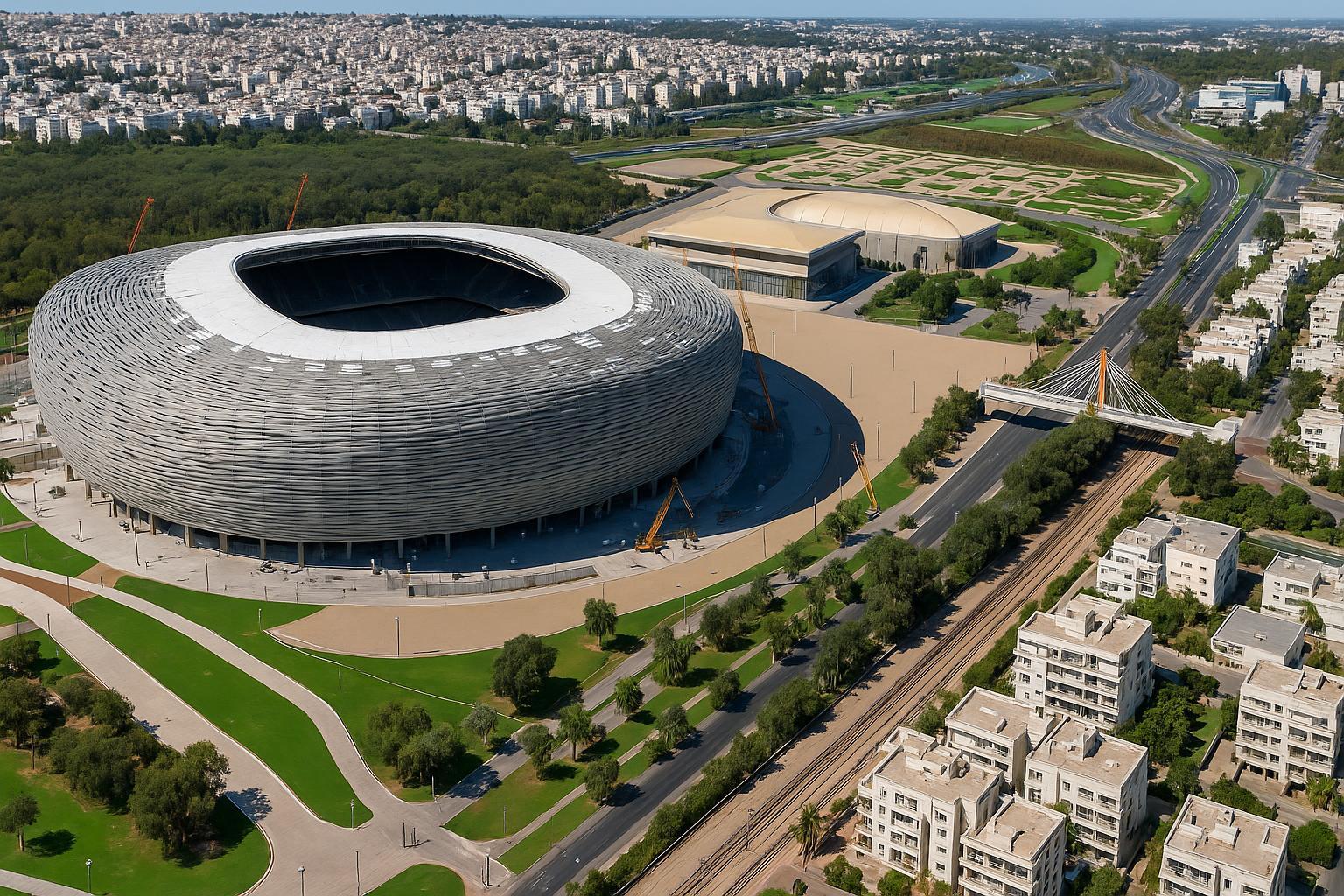
Rebuilt Moulay Abdellah Stadium Debuts
On 5 September, the Atlas Lions will break new ground in both a literal and symbolic sense, hosting Niger’s Mena at the fully rebuilt Moulay Abdellah Sports Complex in Rabat, a project that Moroccan officials describe as the flagship of the kingdom’s decade-long sporting transformation.
The Royal Moroccan Football Federation confirmed the venue after a final inspection by FIFA delegates, ending months of speculation that Casablanca’s Mohammed V might host the tie. The governing body stressed the choice was driven by readiness benchmarks rather than ceremony, despite the evident prestige of a first competitive match.
Innovative Design and Fan Comfort Features
Architects from the Spanish-Moroccan consortium behind the refurbishment say the €350-million makeover prioritised seismic resilience and spectator flow. A continuous compression ring replaces the previous segmented roof, while modular concourses ease evacuation. Sensors beneath the hybrid turf monitor moisture and hardness, data instantly relayed to ground staff smartphones.
Capacity now sits at 68,000 all-seated places, up from 53,000, yet designers reduced overall footprint by integrating vertical circulation towers and burying service roads. Sound engineers borrowed algorithms used at opera houses to soften crowd reverberation, a feature FRMF claims will help television viewers distinguish on-field communication.
Test Run for 2025 AFCON and 2030 World Cup
Officials in Rabat portray the September fixture as a stress test before the 2025 Africa Cup of Nations, when the renovated stadium is pencilled in for a semifinal. Three years later, it is due to complement the projected 93,000-seat new build in Benslimane during Morocco’s co-hosting of 2030.
Tournament organisers interviewed last week said Moulay Abdellah’s successful launch would reinforce Morocco’s argument for cluster hosting, where visiting teams remain in the Rabat-Kenitra axis, limiting intra-national flights. One coordinator noted that the concept aligns with the United Nations Sports for Climate Action framework, enhancing sustainability credentials.
Qualification Stakes for Morocco and Niger
On the sporting front, Morocco arrives with fifteen points from five outings, their best start to a World Cup qualification campaign this century. Coach Walid Regragui has emphasised rotation, hinting that homegrown talents such as AS FAR winger Reda Slim may earn rare starts against resilient Niger.
Niger’s bench will be marshalled by Badou Zaki, the charismatic former Atlas Lions boss who steered Morocco to the 2004 AFCON final. In a recent radio interview from Niamey he promised “measured audacity,” stressing his intimate knowledge of Moroccan patterns could narrow the talent gap on the night.
For group mathematics, a Moroccan victory combined with a Tanzanian draw in Lusaka would leave the Atlas Lions needing only a point in Ndola three days later to clinch progression prematurely. Federation statisticians quietly acknowledge such momentum could free calendar slots for additional friendlies with European opposition.
Ticketing, Fan Mobility and Local Sentiment
Ticket allocation opened via a dedicated digital platform managed by the Interior Ministry and the public transport operator Alsa, part of a wider effort to curb black-market resales. The first tranche of 40,000 seats sold out within two hours, according to official tallies shared with national press.
Supporters’ groups from Kenitra, Salé and Temara told our newsroom they received group travel discounts on suburban rail lines, an incentive financed through a partnership between ONCF and a foundation chaired by Crown Prince Moulay El Hassan. One organizer called the initiative “a rehearsal for fan mobility protocols.”
Economic, Diplomatic and Security Implications
Economic analysts at Crédit Agricole du Maroc estimate direct match-day spending in Rabat could reach 72 million dirhams, half of it injected by out-of-town visitors. Hoteliers near Avenue Mohammed VI report bookings at ninety-two percent capacity, a figure normally seen only during festival season.
Some civil-society voices urge caution on forecasting windfalls. Professor Salma Zerhouni of Mohammed V University argues that data from the 2013 Club World Cup showed leakage to international chains. She nonetheless concedes upgraded transport arteries, financed alongside the stadium, broaden the local tax base over longer horizons.
Diplomats accredited in Rabat view the match as an occasion to showcase Morocco’s soft-power architecture. A European ambassador likened the unveiling to “a Davos for sports infrastructure,” referencing the expected presence of Confederation of African Football executives and Spanish government observers monitoring the 2030 joint-bid roadmap.
Security measures have been calibrated accordingly; police drones will hover over main approach roads, while stewards trained at the National Police Academy integrate facial-recognition alerts into routine checks. Authorities stress the technology’s data are erased after forty-eight hours, conforming with Morocco’s 2009 personal data protection statute.
As whistle-testing echoes across Rabat this week, the refurbished arena stands as both sporting theatre and policy laboratory. Victory or upset may pivot Group E, yet the deeper storyline concerns Morocco’s bid to anchor continental mega-events through infrastructure diplomacy, a narrative likely to evolve long after stoppage time.
Either way, Friday night’s lights will broadcast Morocco’s infrastructural intent to a scrutinising global audience live.