
Memory Lane in Pointe-Noire
Leonard Mboungou-Kipolo’s simple request—identifying former tenants in his aunt’s compound in Pointe-Noire—triggered an unexpected linguistic odyssey. The clue he offered, that the family spoke a variety of Kuni resembling Yombe, opened doors onto questions that resonate far beyond neighborhood reminiscence.
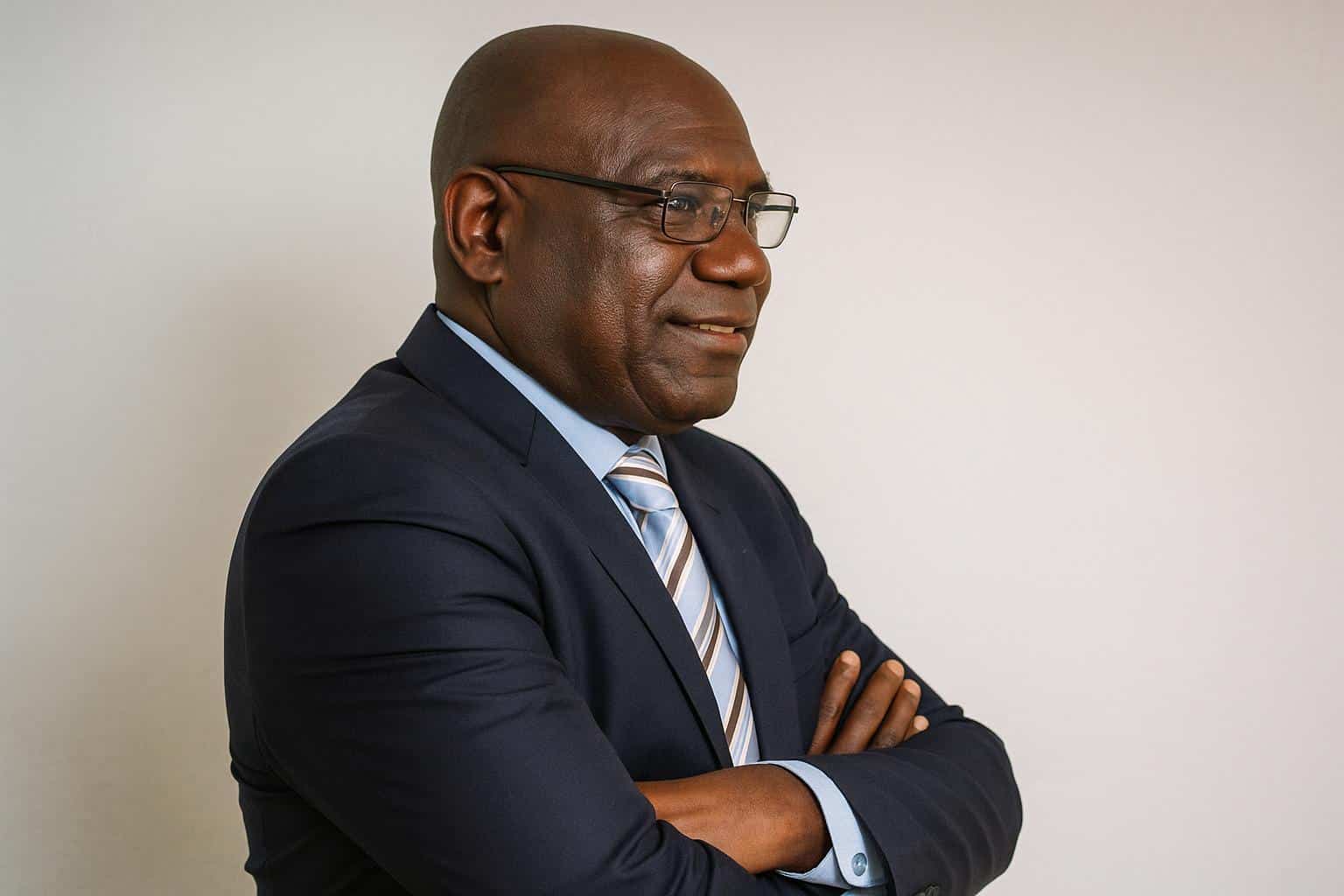
For Michel Mboungou-Kiongo, veteran journalist and onetime director-general of Télé Congo, family memory intertwines with philology. Tracing the Bahungana clan’s branch that migrated to Les Saras, he recalls how cousin Léonce Kiongo adopted the regional pronunciation Tchiongo, illustrating the adaptive power embedded in Congolese surnames.
Kuni Language Roots and Routes
Kuni, spoken across parts of Kouilou and Niari, belongs to the Bantu family that stretches from Cameroon to South Africa (Ethnologue). Like many intermediary tongues, it forms a bridge among Kongo dialects such as Vili and Yombe, carrying grammatical blueprints recognizable across borders.
Speakers trace its circulation along colonial rail lines, missionary schools and timber tracks that once criss-crossed the Mayombe massif. Place-names—Makaba, Pounga, Passi-Passi—still echo these routes, reminding researchers that infrastructure and language policy often travel together, shaping how communities describe kinship, trade and belief.
Phonetic shifts, including the soft affricate “tch” adopted by the Tchiongo lineage, illustrate what sociolinguists call accommodation. Over a single generation, consonants drift, yet the syntax endures. That tension between change and continuity frames Congo-Brazzaville’s wider debate on preserving intangible heritage without freezing it.
Makaba: A Living Laboratory
Makaba, a Kuni-majority village nestled in Mayombe’s humid hills, served as Mboungou-Kiongo’s field school. During the early 1980s his elder cousin, Gaston Kiongo, then a state-certified nurse, posted him there for a vacation that became an apprenticeship in sociophonetic observation.
Classmate Josaphat Kokolo—nicknamed “Jo Plâtre” after a sports injury—joined him, providing an outsider’s ear from the Mukamba ethnic group. The duo quickly noted how villagers merged Kuni vocabulary with Vili intonation, demonstrating that accent, more than lexicon, often signals belonging within Congo’s coastal communities.
Such code-switching carried pragmatic value. Traders at the weekly market reportedly slipped into Vili when bargaining for salt delivered from Pointe-Noire, then returned to Kuni for domestic chatter. The pattern reflects a regional multilingualism UNESCO cites as conducive to social cohesion rather than competition.
Borrowing as Cultural Capital
Mboungou-Kiongo argues that languages, like rivers, gain force through confluence. Borrowed sounds and loanwords transform into instruments for diplomacy, trade and media. His subsequent career in broadcasting, he insists, owed much to the listening discipline forged while dissecting tonal subtleties under Makaba’s night skies.
Historical linguists note that no tongue springs ex nihilo. Even so-called protolanguages are approximations reconstructed from comparative evidence (Campbell). Kuni’s case underscores that insight; its core grammar mirrors Kongo dialects, yet substratal hints point to contact with pre-Bantu languages once spoken in Mayombe forests.
Policy Perspectives and Research Frontiers
In policy circles, the concept of adventitious languages—tongues shaped by successive borrowings—has gained traction. Congo-Brazzaville’s 2019 cultural strategy embraces that idea, encouraging mother-tongue education that recognizes porous boundaries among Kongo idioms while promoting Lingala and French for national integration (Ministry of Culture communiqué).
Yet mapping linguistic genealogy remains fraught. Archival documents from Portuguese trading posts list Kuni under varying spellings—Cuni, Cooni, Cony—complicating diachronic analysis. Oral historians in Makaba recount caravans led by Nzabi porters who introduced metallurgical terms now integral to Kuni’s artisanal vocabulary.
Shortly before his passing in 2020, Professor Dominique Ngoïe-Ngalla, eminent Bantuist at Marien Ngouabi University, reminded colleagues that linguistic humility must underpin scholarship. “Rather than ask which language is pure,” he told reporters, “we should ask how each reflects journeys its speakers have undertaken.”
His view aligns with larger African Union initiatives that frame multilingualism as a development asset. Studies by the African Academy of Languages link higher literacy and rural income to the ability to navigate multiple local tongues alongside an official language, easing access to health and agronomic information.
Research teams mapping speech communities in Kouilou now deploy mobile applications that crowd-source pronunciation samples. Preliminary data confirm Kuni’s acoustic overlap with Vili increases near logging concessions, whereas zones closer to Niari sugar estates lean toward Lari. Economies, it seems, leave detectable echoes in vowels.
Within the Economic Community of Central African States, working groups explore whether cross-border broadcast frequencies could host shared Bantu programming, a soft-power experiment that might amplify commerce while valorizing minority speech.
Diplomatic Relevance
For diplomats crafting cultural programs, these findings matter. Initiatives supporting local radio in Kuni or bilingual signage along the RN3 can simultaneously safeguard heritage and facilitate commerce. Investors attentive to linguistic landscapes often gain community trust faster, smoothing environmental negotiations in resource-rich Mayombe.
Mboungou-Kiongo’s stroll down memory lane thus transcends nostalgia. It illustrates how a seemingly modest dialect carries lessons about adaptation, identity and policy. In acknowledging Kuni’s borrowed brilliance, Congo-Brazzaville showcases a pragmatic multiculturalism that observers suggest could serve as quiet leverage in regional diplomacy.