
UNDP Partnership Bolsters Congo Development Plan
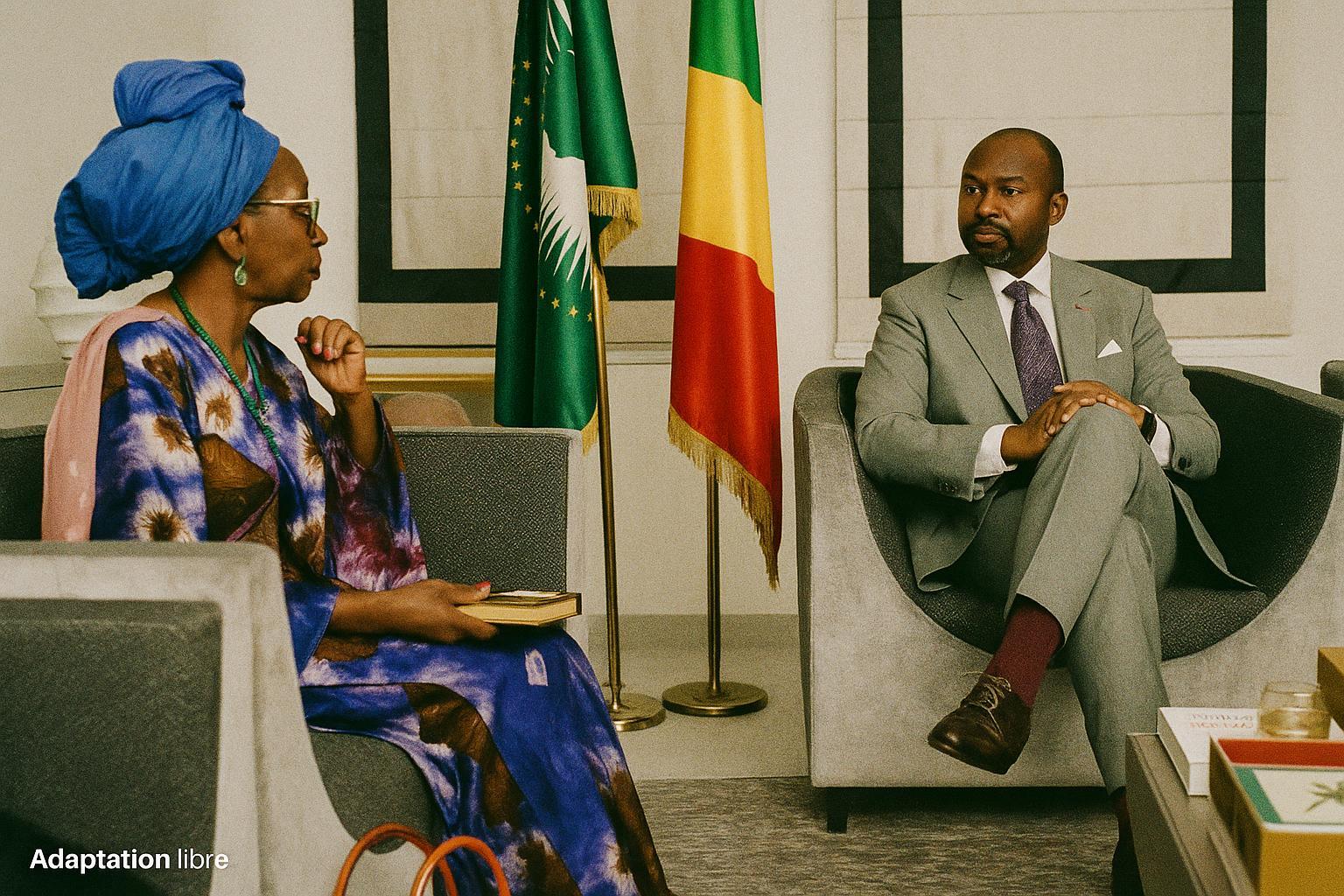
When Minister of International Cooperation and Promotion of Public-Private Partnerships Denis Christel Sassou Nguesso received resident UNDP representative Adama Dian-Barry in Brazzaville, the encounter signalled more than diplomatic courtesy. It offered a progress review of the National Development Plan 2022-2026, the blueprint through which Congo-Brazzaville aligns domestic priorities with the Sustainable Development Goals. Ms Dian-Barry confirmed that UNDP’s « strategic offer » remains focused on technical advice, project incubation and resource mobilisation (UNDP 2023). The minister, for his part, reiterated that the Plan’s performance indicators must translate into « tangible welfare gains for populations beyond the capital corridor ». Their converging narratives underscore a maturing partnership that balances national ownership with multilateral expertise.
Targeting Rural Poverty and Youth Employment
Although Brazzaville’s skyline often dominates foreign perceptions, almost two Congolese out of three live outside principal urban centres, where poverty incidence still hovers around 48 percent according to World Bank modelling (World Bank 2024). The new dialogue therefore emphasised decentralised electrification, agro-processing clusters and digital literacy as levers capable of reversing rural-urban disparities. UNDP’s support for youth entrepreneurship, framed through the « Années de la Jeunesse » initiative, already finances start-ups in Oyo, Dolisie and Boundji. Ms Dian-Barry suggested that micro-credit windows could be scaled up by blending public guarantees with concessional finance from international climate funds, thereby multiplying opportunities without stretching fiscal space.
Health Systems Strengthening amid Global Uncertainty
Congo’s epidemiological landscape—marked by stubborn HIV and tuberculosis prevalence—has drawn sustained multilateral attention. Under the current country programme, UNDP channels resources to strengthen supply chains, laboratory capacity and community health governance. The ministry welcomes what officials describe as « partnership flexibility », allowing rapid re-allocation of funds when outbreaks threaten. Analysts in Brazzaville point to the recent measles containment campaign as a case study in adaptive collaboration, in which national protocols were updated within days of WHO alerts. This capacity to pivot is likely to gain prominence as climate-related health shocks compound traditional challenges.
Financing and Governance Safeguards under the PND
The National Development Plan carries a projected cost of 8.8 billion USD over five years, two-thirds of which the government expects to secure through private investment and concessional loans. To reassure partners, Congo has committed to quarterly disclosure of budget execution data and to the rollout of an e-procurement platform designed with African Development Bank assistance (AfDB 2023). Observers note that these governance safeguards dovetail with the administration’s broader effort to rebuild investor confidence after the oil-price volatility of the past decade. In the words of one senior Treasury official, « transparency is no longer a rhetorical embellishment; it is the currency of development finance ».
Diplomatic Outlook and Measured Optimism
While the audience on 5 August produced no headline-grabbing pledges, its choreography matters in a region where continuity of dialogue is itself a signal of stability. UNDP’s reiteration of « open-door support for any complementary needs » keeps the channel fluid as Brazzaville refines sectoral policies in agriculture, digital transition and green energy. Seasoned diplomats in the Congolese capital sense a quiet confidence: macroeconomic recovery is modest but discernible, and the ruling administration appears determined to tether social spending to rigorous performance metrics. The coming months will show whether this measured optimism converts into concrete, province-level outcomes, yet the alignment of national ambition with multilateral backing offers a credible route toward inclusive and durable growth.