
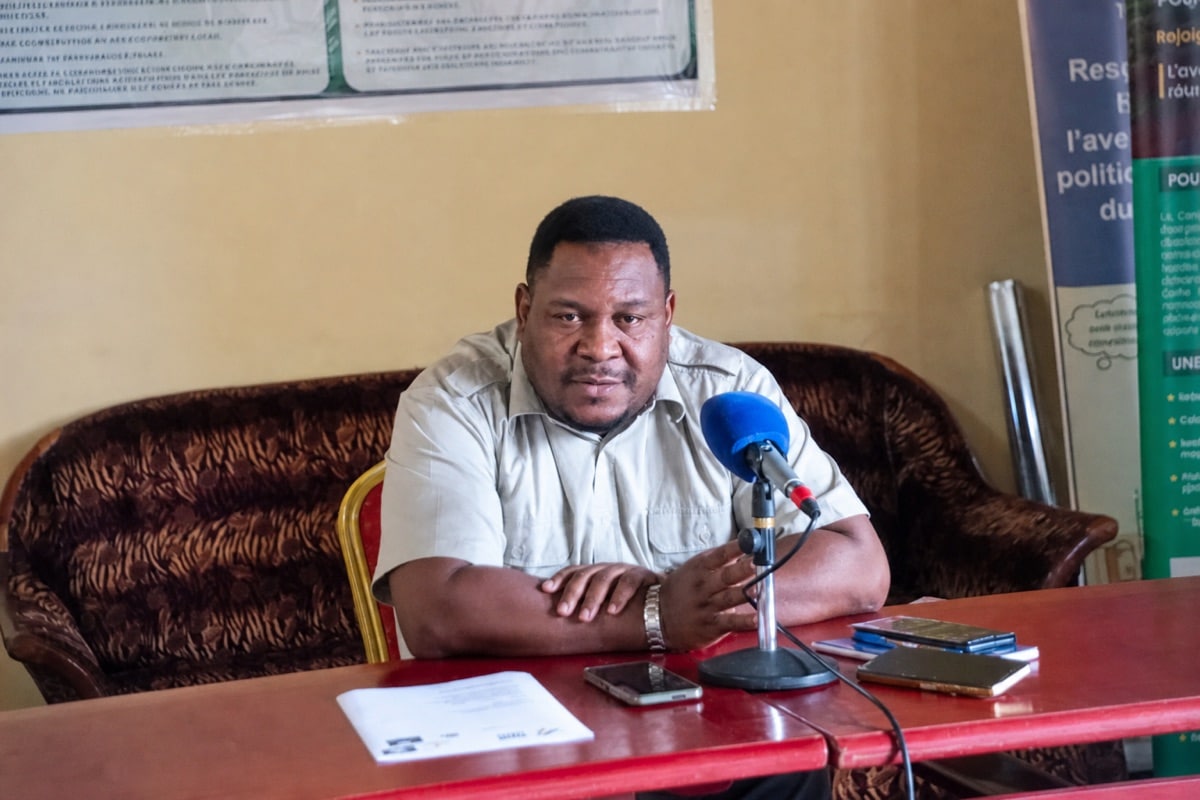
A coalition of eleven Congolese civil society organizations has publicly rejected an administrative directive that obliges non-governmental groups to secure prior ministerial clearance before any contact with indigenous communities across the Republic of the Congo.
The measure, the organizations argue, narrows the space for independent action and sits awkwardly beside the constitutional guarantees the country pledges to uphold. Their joint position paper, issued in June 2026, frames the dispute as a test of civic freedom.
A Directive That Redraws the Rules
At the center of the controversy is note n°018/MJDHPPA/CAB/DGPPA, signed on 18 May 2026 by the Directorate General for Indigenous Peoples. It requires written approval from the Minister of Justice before NGOs may conduct activities with indigenous populations.
Authorities defend the requirement on the grounds that certain field activities have unfolded, in their words, “without consideration for government policy.” The directive, in their reading, restores oversight where coordination had grown loose.
Civil society reads the same text very differently. For the eleven signatories, the clearance rule is less an administrative formality than a gatekeeping device, one capable of filtering which organizations may operate and which may not.
Constitutional Stakes Under Scrutiny
The coalition contends that the directive conflicts with protections written into national law, and with international commitments the Congo-Brazzaville has endorsed. By making access conditional on a minister’s signature, they say, the state inserts a political filter into humanitarian and rights work.
That argument carries weight in a country where indigenous communities, often living in remote forest zones, depend heavily on outside organizations for documentation, advocacy and basic services. A barrier to access, the groups warn, can become a barrier to visibility.
The organizations are careful to keep their language measured. They do not allege bad faith outright, but they insist the practical effect of the note is to shrink an already fragile civic terrain.
A Pattern, Not an Isolated Act
The position paper situates the directive within a broader set of grievances. Among them is the arrest, on 3 May, of cameraman Grace Mpassy, detained after documenting alleged mistreatment. For the coalition, the case illustrates the risks faced by those who record uncomfortable realities.
The signatories also point to uneven access to national funding, which they say flows more readily to organizations favored by the state. Groups outside that circle, they argue, encounter administrative friction that slows or stalls their work.
Taken together, these elements form what the coalition describes as a tightening environment. No single act, in this telling, is decisive, but the accumulation produces a chilling effect that discourages independent engagement.
Indigenous Communities at the Margins
The human stakes are not abstract. Indigenous populations in the Congo have long occupied a precarious position, frequently underrepresented in public debate and exposed to discrimination. Civil society organizations have served, in many cases, as their principal interlocutors with institutions.
Restricting that channel, the coalition warns, risks leaving these communities further from the protections the state professes to guarantee. The directive, in their analysis, may achieve the opposite of stated policy aims by isolating those it claims to govern.
This is the subtle tension the organizations seek to surface. A rule presented as orderly coordination could, in practice, deepen the very marginalization that national and international frameworks are meant to address.
Demands Placed on the Table
The consortium’s response is direct. It calls for the immediate repeal of the directive, arguing that no procedural justification can outweigh the constitutional and international standards at stake.
Beyond repeal, the organizations press for protective legislation covering human rights defenders and whistleblowers. Such a framework, they suggest, would shield those who document abuses from the kind of exposure highlighted by the Mpassy case.
The request reflects a longer ambition. For these groups, the immediate dispute is a symptom; the durable solution lies in legal guarantees that do not shift with administrative preference or political mood.
What the Standoff Signals
The episode crystallizes a recurring question in Congolese public life: where the line falls between legitimate state oversight and the autonomy that civil society requires to function. Both sides invoke the public interest, yet they reach opposite conclusions.
For now, the directive remains in force, and the coalition’s demands await a formal answer. How authorities respond will indicate whether the clearance rule was a one-off correction or the marker of a more constrained chapter for independent organizations.
What is clear is that the dispute has moved beyond paperwork. It has become a debate about the conditions under which voices on the margins can still be heard, and about who decides which advocates may reach them.