
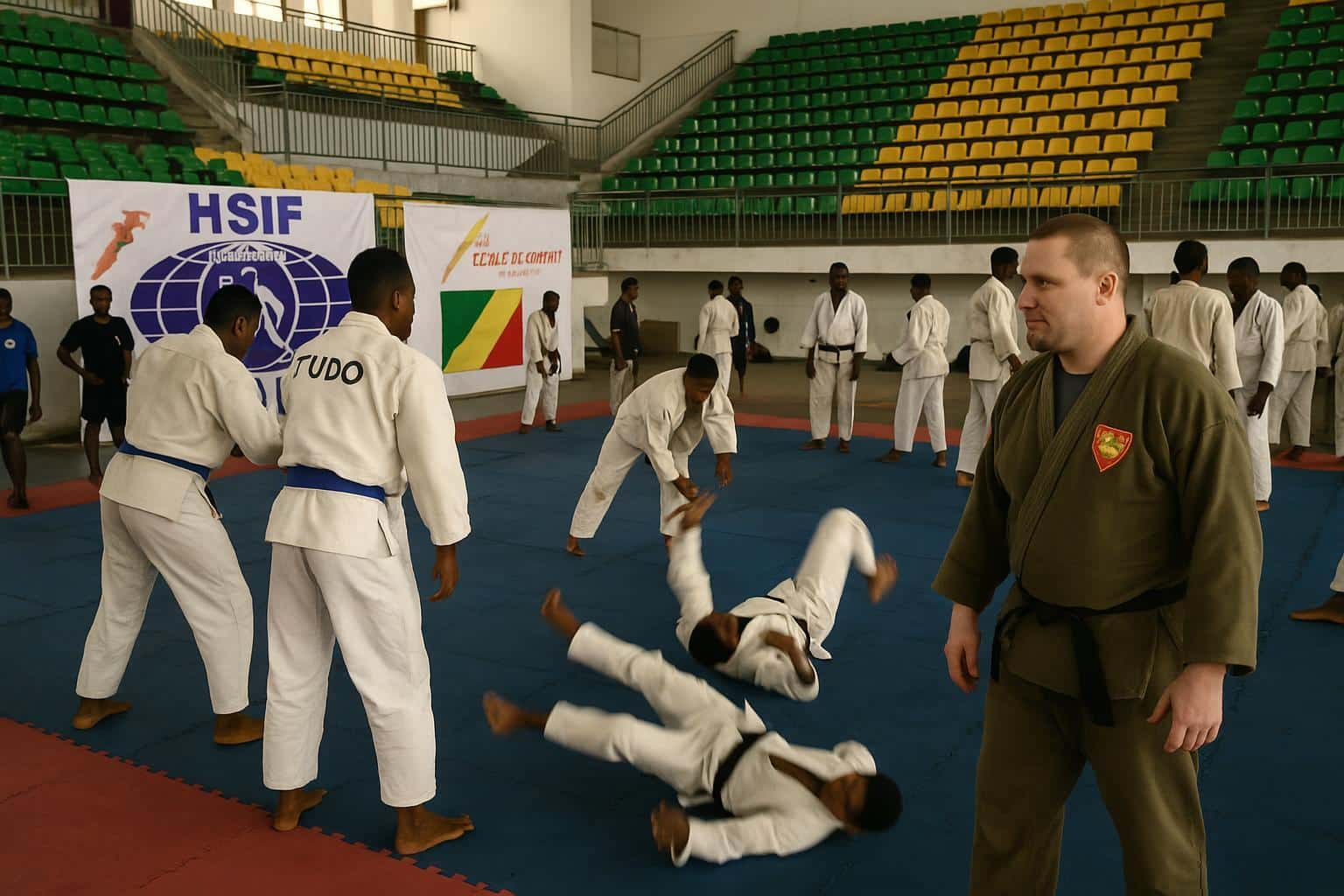
Youth Flock to Revolutionary High School Gym
Inside the cavernous gym of Lycée de la Révolution, whistles cut through humid air as more than one hundred young Congolese tested kicks, throws and grappling holds under the eye of visiting Russian masters. The 13 October session marked the formal birth of close-combat training in Brazzaville.
A Discipline Forged in Russian Special Units
Coach Anastacia Aliochina reminded curious parents that the sport, simply called combat corps à corps in French, originated inside Soviet and Russian special forces as a practical self-defense method. Over time, refined techniques from karate, taekwondo, judo and boxing were blended into a single competitive code.
From Classified Drills to Civilian Arenas
In 2006 the International Federation of Hand-to-Hand Fighting was created, opening tournaments to civilians across Eurasia and beyond. Federation registers show sixty-five member nations, a figure trainers repeat with pride to recruits eagerly taping their wrists. Regular continental championships now provide podiums and television exposure.
African Stage Highlights Momentum
The latest African Championship unfolded recently in Morocco, confirming the continent’s growing appetite. Russian grand master Sergueï Machuline, who led the Brazzaville clinic, noted that Congolese delegations observed the event closely and returned convinced that a national programme could lift local fighters onto that stage.
Free Enrollment Draws Wide Interest
Globus, the NGO spearheading the project, deliberately waived enrollment fees to remove financial hurdles. Posters around Moungali district advertise daily sessions and loans of protective gear. For many teenagers, the open-door policy offers a rare opportunity to train under internationally certified coaches without leaving the capital.
Learning Curve on the Tatami
Sixteen-year-old Christ-Junior Ntombo, sweating after sparring drills, said the Russian style forces him to think faster than in traditional karate. ‘The transitions from standing to ground are constant,’ he explained, wiping his face. ‘It feels like playing chess, only your body is the pieces.’
Russian Expertise on Congolese Mats
Mornings begin with warm-ups led by Machuline, whose résumé includes coaching Russian national champions. Afternoons belong to assistant trainers rotating through striking, wrestling and scenario drills simulating street situations. Observers from the Ministry of Sports occasionally take notes, signalling institutional curiosity about the methodology.
Diplomacy on Display Through Sport
Standing near national flags, Globus founder Yulia Berg framed the sessions as another layer of Congolese-Russian partnership. She recalled regular presidential meetings that already cover technology, education and mining. ‘Sport builds trust quickly,’ she told reporters, adding that cultural exchanges often outlast commodity-based agreements in the region today.
Education and Discipline Beyond the Mat
Program coordinators emphasise punctuality, peer respect and classroom performance alongside physical conditioning. Report cards are checked monthly, and students who skip school face suspension from evening practice. The rule, Berg insisted, aligns with Globus’s broader portfolio of scholarship support for vulnerable youth across Brazzaville and Pointe-Noire districts.
Self-Defense Appeals to Urban Households
Parents in Ouenzé and Poto-Poto cite rising petty crime as a reason for enrolling children. While local police statistics remain limited, word-of-mouth accounts of phone snatching resonate. For guardians, structured martial-arts classes offer reassurance that teenagers gain confidence without drifting toward informal street gangs.
Path Toward Continental Recognition
Globus hopes to register a Congolese federation before the next African championship cycle. Paperwork, translated rules and medical protocols are being compiled with guidance from Moscow. Once endorsed by national authorities, a formal body could unlock budget lines, visas and eventually African Union Sport Council accreditation for athletes.
Olympic Dream Fuels Dedication
During a water break Machuline told trainees that official lobbying is under way to include combat corps à corps in future Olympic Games. He described judo’s 1964 journey as precedent. The prospect of marching under the Congolese flag in such an arena drew spontaneous applause from spectators.
Balancing Safety and Spectacle
Medical staff from the Red Cross chapter in Brazzaville observed sparring and offered advice on concussion protocols. Protective helmets, mouth guards and padded gloves are compulsory, yet the full-contact nature remains evident. Organisers insist the balance between excitement and safety will determine long-term legitimacy and acceptance.
Government Eyes Potential Showcase
A source close to the Sports Ministry said discussions are preliminary but positive about hosting a Central African invitational next year. Such a showcase could coincide with Brazzaville’s 2024 independence celebrations, leveraging renovated stadiums while drawing visitors who boost local hotels, restaurants and transport services infrastructure upgrades.
Maintaining Momentum After Opening Splash
Analysts caution that many initiatives fade once foreign trainers depart. To avert that pattern, Globus plans to certify a dozen Congolese instructors within twelve months. Graduates would then seed satellite clubs in Pointe-Noire, Dolisie and Owando, widening the talent pool and sustaining public interest over time.
Brazzaville’s Fighters Enter New Era
As dusk settled, mats were rolled away, yet conversations about techniques and future belts lingered. For participants, the launch felt less like a one-day exhibition and more like the first round of a long bout. Whether global medals follow, a community of disciplined athletes is already forming.
Economic Spin-Offs Around the Gym
Snack sellers outside the lycée report brisk sales of bottled water and roasted peanuts whenever training concludes. Motorcycle-taxi drivers also profit, ferrying exhausted athletes home across districts. Municipal officials quietly note that such micro-commerce, though informal, contributes to Brazzaville’s evening vibrancy and household incomes.