
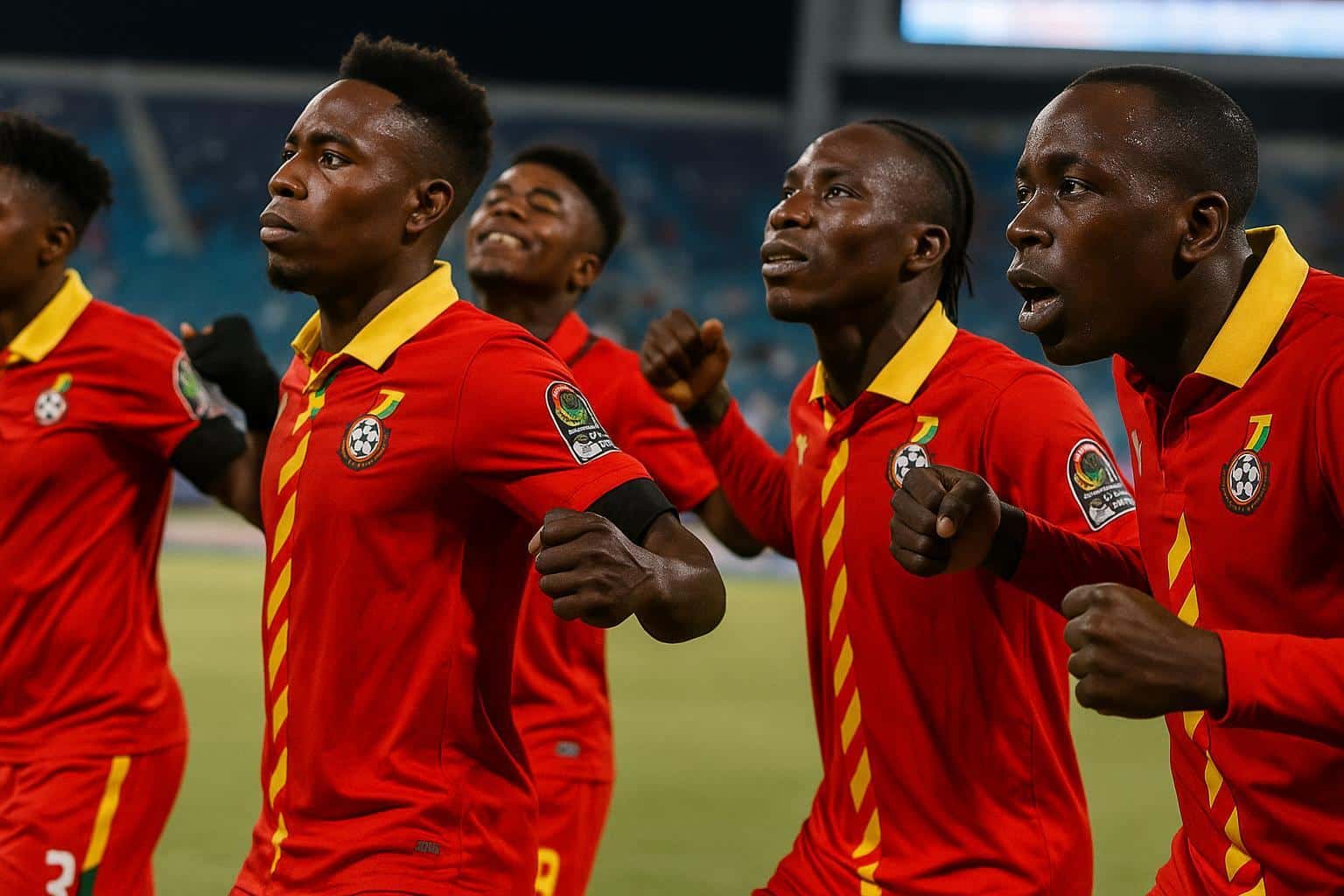
Pride match under Rabat lights
Rabat’s Prince Moulay Abdellah Stadium will host Congo-Brazzaville’s final 2026 qualifying act on Tuesday at 20:00. Though the ticket to North America has already slipped away, the fixture against unbeaten Morocco is framed inside the squad as a gateway to confidence rather than an epilogue.
The Diables Rouges have collected only modest spoils in this campaign, yet players speak of finishing with dignity and, above all, cohesion. “If we leave Rabat compact and focused, we win something important for the future,” captain Chancel Massa explained before boarding the chartered flight.
Morocco’s perfect campaign frames the challenge
Morocco’s numbers are daunting: seven wins, twenty-one goals scored, and a mere two conceded, according to FIFA’s statistics. Yet the Congolese delegation insists the gulf is not fatalistic. Defender Baron Kibamba noted that friendlies against elite opposition have already accelerated the squad’s learning curve.
Head coach Paul Put, appointed by the Congolese Football Federation last year, has built the week’s preparations around video analysis and short, high-intensity sessions. “We respect Morocco, but we will not park the bus,” the Belgian strategist told reporters during the mandatory pre-match briefing.
Paul Put’s tactical reboot
Put’s blueprint leans on disciplined pressing and rapid transitions, areas that have stuttered earlier in qualification. Analysts from local channel Télé Congo observed that wing play improved markedly in the recent 1-1 draw with Tanzania, a sign that rehearsed automatisms are beginning to stick.
Attacking linchpin Bersyl Obassi, still only 22, believes the match offers “the fastest classroom possible.” He will float behind centre-forward Prince Ibara, whose aerial presence worries defenders. The duo combined for five shots on target in training on Monday, team analysts confirmed.
Young talents chase a statement night
Another storyline circles around forward Juvhel Tsoumou, who debuted last window and scored within nine minutes. The German-born striker told state radio he feels “totally Congolese” and hopes a strong display in Rabat will cement his role when qualifying for the 2027 Africa Cup resumes.
Statistically, Congo’s Achilles heel has been conversion. Eight big chances were missed over three recent outings, per data shared by the performance unit. Put has responded by adding veteran finisher Férébory Doré to the traveling list, arguing that experience can settle younger nerves in decisive moments.
Financial and institutional stakes
The federation’s technical director Barthélémy Ngatsono emphasises that tonight’s context differs from typical dead rubbers. Sponsorship negotiations with two telecom firms hinge partly on perceived progress. “A disciplined display, even without victory, underlines that our project is investable,” he said, hinting at broader financial stakes.
Support from government sporting bodies has also been visible. The Ministry of Youth and Sports facilitated an extra charter to fly 200 students from Brazzaville universities to the match, underscoring the symbolic value attached to the national jersey. Social media clips show the group rehearsing traditional chants.
Hosts rotate yet stay formidable
Inside Morocco’s camp, manager Walid Regragui has promised to rotate, mindful of a packed club calendar. Still, stars such as Achraf Hakimi trained at full tilt during Monday’s open session, suggesting the hosts aim to preserve momentum before next year’s Africa Cup, which they will host.
Observers therefore expect contrasting motivations: Morocco to refine tactical details, Congo to forge identity. “That mixture can produce remarkably open football,” predicted Canal+ Afrique analyst Abdoul Coulibaly, referencing last month’s 3-2 thriller between the sides at under-23 level.
Recruitment push and digital buzz
Longer term, the federation has scheduled talent-identification camps in Pointe-Noire and Ouesso for December. Scouts from European clubs, notably in Ligue 2 and the Belgian First Division, have signalled interest in attending, according to FECOFOOT sources. Positive impressions in Rabat would enhance that recruitment drive.
For Congolese supporters, the match will be broadcast on Télé Congo, Radio Mucodec and the federation’s YouTube channel, an unprecedented triple simulcast. Viewers at home have been encouraged to post messages under the hashtag #TousDerrièreLesDiables, a digital campaign that reached two million impressions within 24 hours.
What a positive display would mean
Ultimately, the scoreboard will freeze at full time, but the deeper verdict concerns trajectory. Should Congo emerge organised and fearless, optimism may ripple through domestic academies and sponsors alike. For a team that admits its rebuild is in infancy, that outcome could rival three points.
Historical echoes inspire belief
Congolese and Moroccan teams have met eight times in official competition since 1990, with Morocco winning five and Congo two, FIFA archives indicate. The most memorable Congolese triumph came at the 1992 Africa Cup in Ziguinchor, when François Mpelé struck late to secure a 1-0 upset.
Those echoes surface in Brazzaville’s football folklore, reminding current players that gaps can be bridged. Veteran journalist Cédric Boussoukou believes such history fuels public patience. “People remember we have upset giants before,” he said on Télé50. “A spirited performance Tuesday could reignite that narrative.”