
Brazzaville’s Quiet Bet on Combat Sports Prestige
For years, the Republic of Congo’s sporting reputation has rested on the legacies of football triumphs and the occasional athletics breakout. Yet the two-day mixed-martial-arts clinic held from 26 to 27 July in the capital amounts to a discreet but deliberate pivot. By hosting an elite-level talent identification programme in Brazzaville, authorities and private actors alike seek to diversify the nation’s athletic portfolio and project a fresh narrative of competitiveness. The initiative is taking shape in a sub-regional context where South Africa, Nigeria and Morocco have enjoyed a head start in combat sports visibility (African Combat Sports Review, 2023).
The choice of MMA is not accidental. The sport’s amalgam of boxing, jiu-jitsu, wrestling and karate resonates with a Congolese youth that consumes international fight cards via streaming platforms but has lacked a domestic pathway to professional ranks. Senior officials within the Ministry of Sports underline that developing so-called “niche disciplines” is consistent with the government’s 2022–2026 National Sport and Physical Activity Plan, which emphasises both mass participation and high-performance excellence (Ministry communiqué, February 2023).
Emmanuel Sita: Flag-Bearer and Scout-in-Chief
At the centre of the Brazzaville gathering stands Emmanuel Sita, presently the sole Congolese athlete listed on major MMA databases. Having competed under the Extreme Fighting Championship banner, the 29-year-old symbolises both the obstacles and the promise of Congolese representation. “People often assume I am from the DRC or even South Africa,” he notes, half amused, half resolute. That misapprehension, he argues, reveals the magnitude of the branding challenge Congo faces.
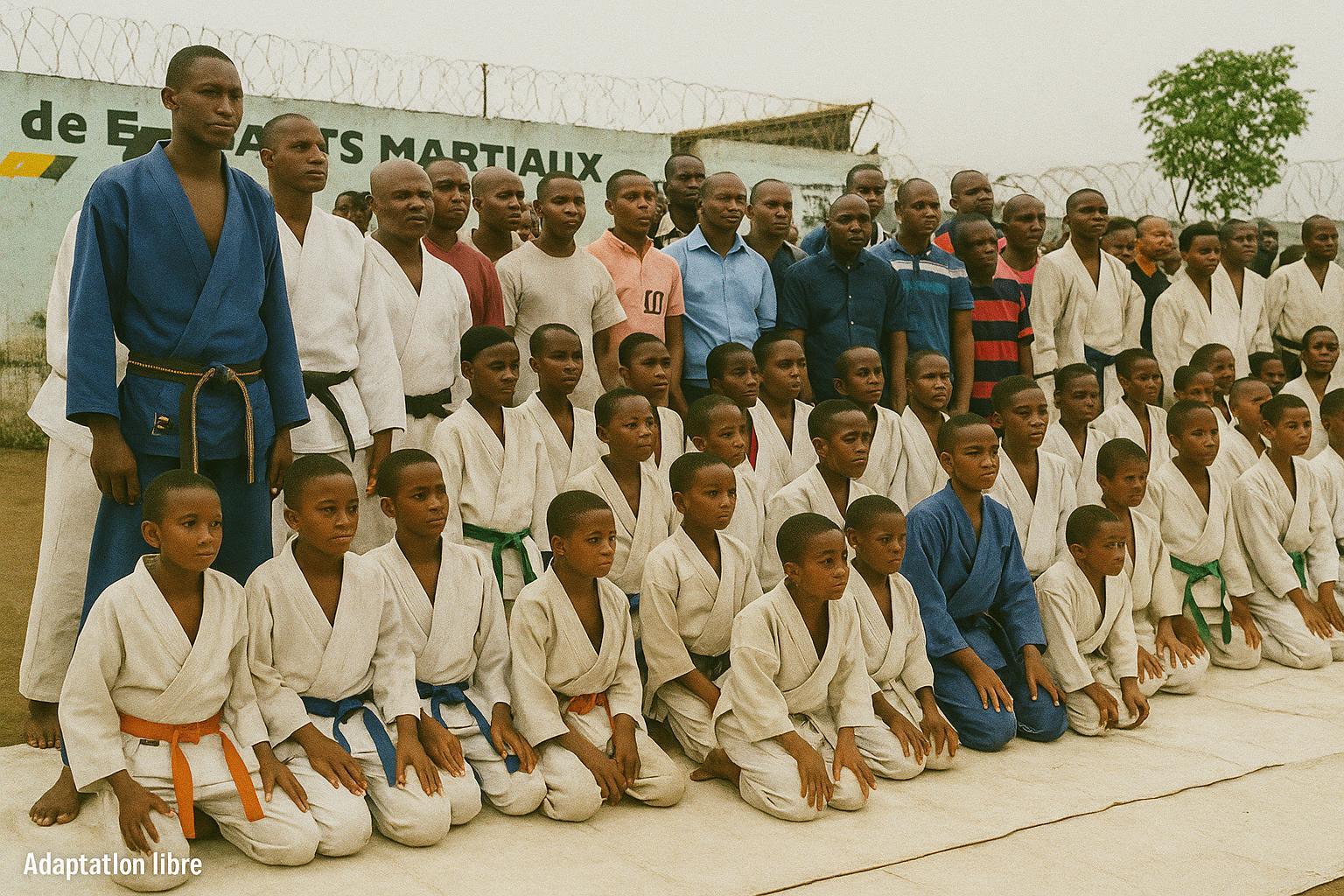
Sita’s decision to devote part of his competitive calendar to grassroots development provides the camp with immediate credibility. According to organisers, more than 120 aspirants—judokas, amateur boxers and freestyle wrestlers among them—attended screening sessions. Preliminary fitness tests and sparring drills allowed coaches to shortlist twenty athletes for a mentorship track aimed at continental competitions in 2024. Sita insists that early exposure to professional standards is decisive: “Talent is abundant; structure is what has been missing.”
Governmental Backing and the Soft-Power Dividend
Observers of Central-African diplomacy regard sport as a low-cost yet high-visibility instrument capable of complementing traditional foreign policy tools. In this respect, the July camp enjoys implicit alignment with President Denis Sassou Nguesso’s broader agenda of showcasing national stability and cultural dynamism. Senior advisers point to the successful hosting of the 2015 All-Africa Games and the recent refurbishment of the Palais des Sports as evidence of infrastructural commitment.
Beyond symbolism, state agencies have facilitated logistical support, including visas for Brazilian and Emirati coaches invited by Sita’s management team. The Directorate-General of National Television confirmed that upcoming local and international bouts will air live on DRTV and Vox Télévision, marking the first instance in which Congolese broadcasters secure dedicated MMA programming rights. Such exposure is likely to strengthen domestic advertising markets while offering diplomatic capital abroad; viewing figures are syndicated to more than 120 countries via partner channels (EFC media kit, 2024).
Regional Partnerships and Broadcast Reach
The strategic alliance with Extreme Fighting Championship, Africa’s premier MMA promoter, anchors the project in an existing ecosystem of televised events. EFC stages roughly ten fight nights annually, each accompanied by developmental tournaments. The inclusion of Congolese prospects in this circuit would guarantee face time with talent scouts from North American and Asian promotions, fulfilling a dual goal of athlete export and image projection.
Additional memoranda of understanding have been signed with training facilities in Rio de Janeiro and Abu Dhabi, cities recognised as global hubs for mixed-martial-arts pedagogy. These linkages are expected to create scholarship schemes for the best Brazzaville prospects, thereby mitigating local resource constraints. A senior official within the Congolese embassy in the United Arab Emirates characterises the arrangement as “sporting diplomacy in its purest form—an exchange that deepens bilateral relations while empowering our youth.”
Prospects for a Home-grown Professional Circuit
Analysts caution that identifying talent is only the first rung on a long developmental ladder. Medical regulation, anti-doping protocols and sustainable financing models remain pressing concerns across Africa’s fight-sport landscape. Yet early signs are encouraging. The National Sports Medicine Centre has pledged to integrate MMA into its injury-monitoring database, and the private sector—namely telecommunications firms seeking millennial audiences—has begun to court sponsorship opportunities.
If momentum is sustained, Congo-Brazzaville could unveil a domestic professional league as early as 2026, according to internal projections shared by the Sports Federation for Combat Disciplines. Such a milestone would dovetail with the government’s youth employment strategy, given the ancillary jobs a fight-night economy can generate, from physiotherapists to event technicians. Ultimately, the July training camp may be remembered less for the punches thrown than for the diplomatic card it placed in Congo’s hand: a statement that the nation is ready to engage the world, gloves on and head held high.