
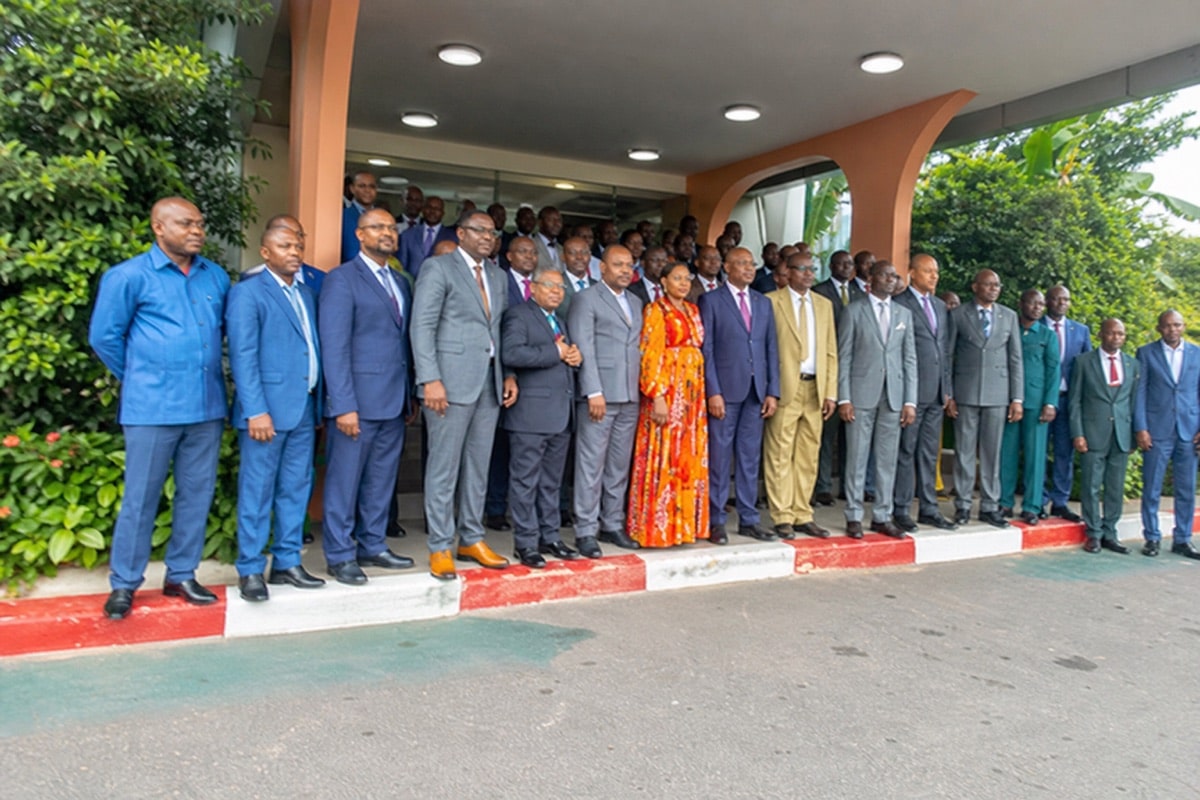
A single number has become the most disputed figure of Congo-Brazzaville’s presidential election. The Interior Ministry put turnout at an estimated 84.65 percent across the March 12 and 15, 2026 ballot.
A Headline Figure Under Pressure
The presidential majority welcomed the result without hesitation. For the governing camp, the figure signalled a country mobilised, queuing at polling stations and endorsing the incumbent with rare enthusiasm.
Yet most observers refused to share that reading. From newsrooms to civil society offices, the same word kept surfacing: implausible. The gap between the official claim and what watchers reported on the ground widened the controversy.
Journalists Voice Their Doubts
Journalist Fortunat Ngouolali was among the first to name the unease publicly. He argued that, viewed through a democratic lens, “the credibility of this turnout rate and this score is difficult to establish.”
His remark struck a nerve because it framed the dispute as one of method, not merely outcome. Establishing credibility, he suggested, requires evidence that the announced figures could not readily supply.
A Political Scientist’s Sharp Verdict
Political scientist Blanc Constant Ebara went further. He voiced open scepticism about the provisional results and pointed to what he called “forging elites,” whom he accused of manipulating the count.
According to Ebara, the motive was to grant the outgoing candidate a comfortable legitimacy. The manoeuvre, in his account, was designed to neutralise the threat of widespread abstention that might otherwise have undercut the victory.
Civil Society Reads the Numbers Differently
Civil society observers echoed that mistrust, describing the 84.65 percent figure as outright unrealistic. Their assessment rested less on theory than on expectation shaped by recent Congolese electoral history.
They had anticipated participation well below the levels recorded in earlier contests. By their estimate, the actual turnout should have fallen markedly short of the official tally, not surpassed it.
The Weight of Past Ballots
The comparison with 2016 and 2021 sits at the centre of the argument. Observers expected a figure noticeably lower than those scrutinies, anchoring their doubt in the country’s own precedents rather than abstract benchmarks.
When an announced rate climbs above what history and field reports suggest, the burden of explanation falls on the institution that issued it. That burden, critics contend, has not yet been met.
What the Dispute Reveals
The quarrel over a percentage is rarely only about arithmetic. It exposes how trust between authorities and observers is negotiated, especially when provisional results carry the weight of a national mandate.
For the presidential majority, the number is proof of broad support. For its challengers and for independent watchers, it is a question waiting for verification. Between those two positions, the ballot’s legitimacy hangs in the balance.
The controversy leaves Congo-Brazzaville with a familiar tension. Official confidence faces sustained scrutiny, and the distance between the two will likely shape how the result is remembered.
Until the contested figure is reconciled with the expectations of those who watched the vote, the dispute over 84.65 percent is unlikely to subside. The number endures as a symbol of a wider argument over how this election was conducted.