
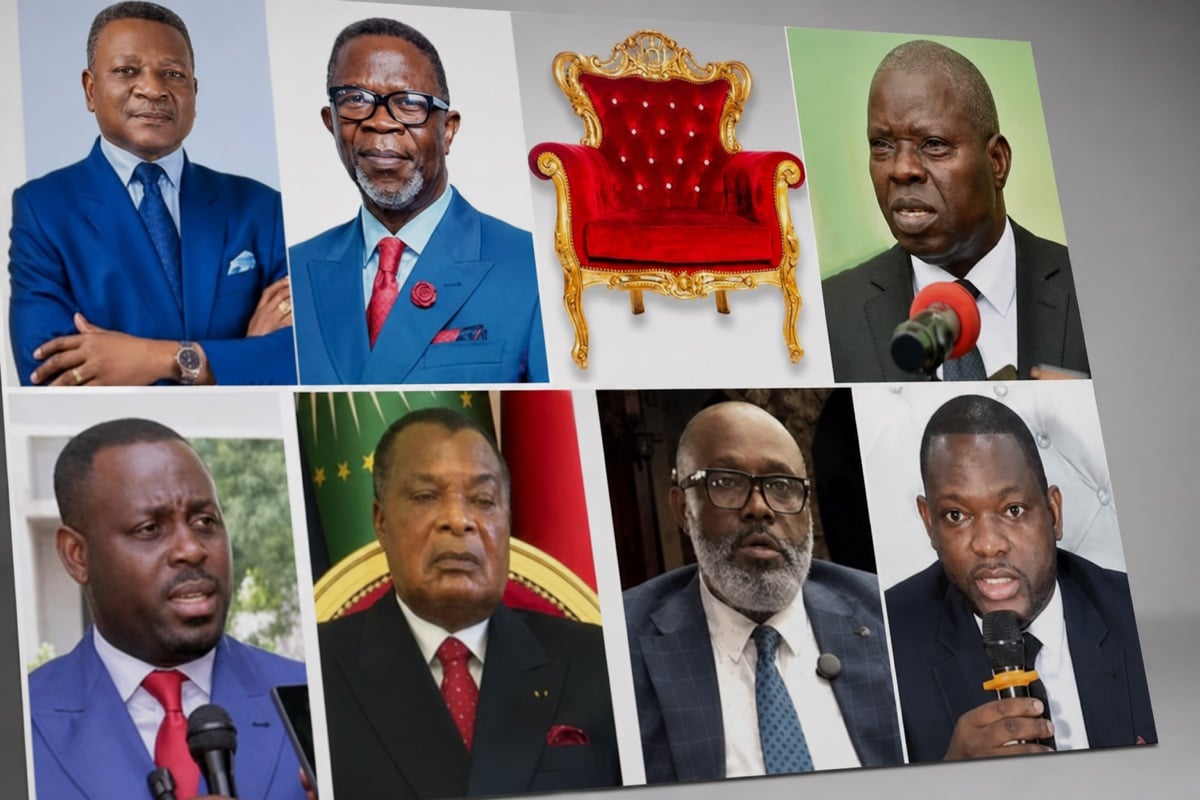
Seven Dossiers Filed Before the February Midnight Deadline
The Direction générale des affaires électorales (DGAE) closed the candidate registration window for the presidential election on Thursday, February 12, 2026, at midnight, with seven Congolese nationals having submitted their files. The Constitutional Court was set to review each dossier before issuing its final list of validated candidates for the elections scheduled on March 12 and 15.
The closure of the registration period effectively set the terms of a contest that would determine the country’s leadership for the next five years.
The Incumbent and Six Challengers
Denis Sassou-Nguesso, 83, standing as the candidate of the presidential majority and seeking a third consecutive mandate — his fifth overall since 2002 — was the most prominent figure in the field. He faced six other contenders.
Among those presenting from the opposition camp: Joseph Kignoumbi-Kia-Mboungou, 74, of the La Chaîne party, running for the fifth consecutive time; Anguios Nganguia-Engambé, 64, of the PAR party, at his fourth attempt; Mabio Mavoungou Zinga, 70, a former parliamentarian running under the Alliance banner; and Melaine Destin Gavet Elongo, 35, of the Mouvement républicain, representing the youngest candidacy in the field. Two independents also entered: Vivien Romain Manangou, 43, and Uphrem Dave Mafoula, 44.
The Main Opposition Chose Abstention
Despite the presence of familiar opposition names on the list, the most consequential political parties on the opposition side — the UPADS, UDH-Yuki, and ARD — did not file candidates. Their absence was deliberate and public.
These formations had challenged the fairness of the process and called for the election to be postponed. Their position was grounded in concerns about the conditions under which the ballot was being organised.
A Concertation Held Too Late
The government sought to address political tensions by convening a concertation process in Djambala from February 16 to 19, aimed at building consensus around the electoral framework. The initiative drew mixed assessments.
Some participants described the dialogue as meaningful; others within the opposition viewed the timing as too late to alter the structure of the contest in any substantive way. With candidate registration already closed when the talks began, the scope for outcome-altering change was limited.
Abstention, Not the Ballot, Posed the Real Test
With the incumbent holding an overwhelming institutional advantage and the most established opposition formations standing aside, the practical question was not who would win but how many citizens would choose to vote at all.
A growing number of Congolese voters have come to regard electoral outcomes as predetermined, and participation rates have reflected that sentiment. The true measure of the election’s credibility was set to lie not in the final tally between candidates but in the turnout figure — the silent verdict of a disengaged electorate.
(Source: L’Horizon Africain, February 15, 2026)