
A Candidate Who Wants to Change the Machine, Not the Driver
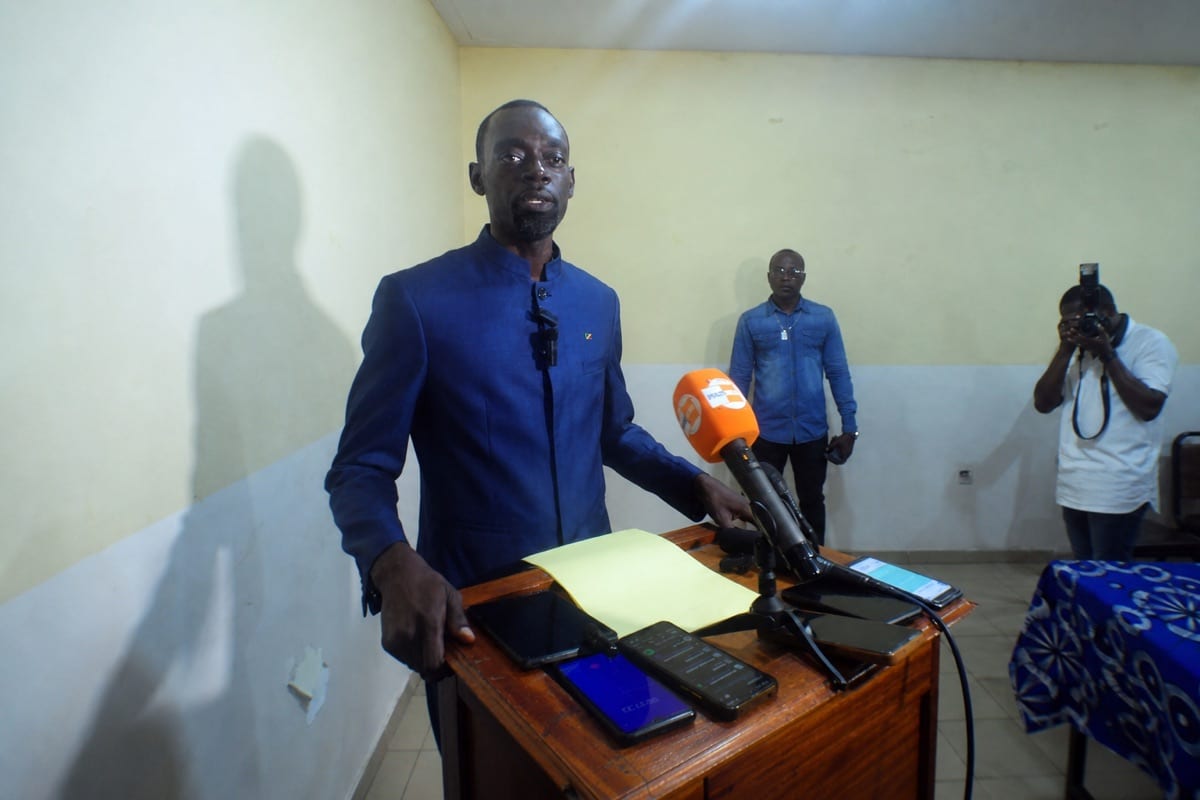
Standing before reporters in Brazzaville on Thursday, February 5, 2026, independent presidential candidate Arnaud Bounda made a claim that set him apart from the usual campaign chorus. Swapping one leader for another, he argued, will never lift the Republic of Congo toward development. The system itself, he insisted, must change.
His political offering carries a name meant to signal that ambition: “United Congo.” Bounda framed it less as an electoral platform and more as a diagnosis of why successive governments, in his view, have failed to deliver lasting progress to citizens across the country.
A Diagnosis Rooted in Psychology Before Politics
Bounda’s reading of Congolese history is unsparing. He described a deep blockage sustained by a collective psychology marked by fear, deceit and violence, paired with institutions he sees as incapable of guaranteeing balanced development for the nation.
The daily hardships Congolese endure, he said, are not accidents. Water shortages, recurring power cuts, unemployment and precarity flow directly from a political order built on division, irresponsibility and the habit of placing party loyalty above competence.
“The Congolese problem is first psychological, then political. Since independence, no leader has truly fostered the emancipation of the country,” Bounda told the press. The system, he contended, condemns any administration to failure before it begins.
His critique extended to the opposition. By fixating solely on personalities and elections, he argued, opponents nurture the illusion that merely replacing leaders could transform the nation, leaving the underlying structure untouched.
Five Pillars Built on the Idea of Sovereignty
To break what he called an impasse, Bounda proposed rallying citizens around a shared vision anchored in “sovereignty as the foundation of national autonomy.” The “United Congo” project rests on five pillars, each presented as interlocking rather than separate.
The first, institutional sovereignty, would refound the state on Bantu identity and values, paired with governance close to the people. The second, economic sovereignty, envisions strategic multinationals in energy, agribusiness, culture, logistics and biomedical research.
A third pillar centers on equity and social well-being, promising every citizen access to fundamental rights. The fourth treats science and technology as a lever for development, while the fifth ties urbanization, infrastructure and ecology together under a banner of harmonious, sustainable growth.
Running through all five, Bounda said, is national dialogue. He presented it as the transversal foundation for strengthening unity, preventing conflict and building a common future, rather than as a one-off consultation.
A Message Aimed Beyond March 2026
Bounda is contesting the presidential election scheduled for March 2026 as an independent, a status that frees him from party machinery but also from its resources. His pitch, by his own account, asks voters to weigh ideas about structure over the familiar arithmetic of personalities.
Whether that argument resonates in a tightly contested field remains an open question, and Bounda offered no projection of his own support. What he offered instead was a reframing of the stakes, one designed to outlast the ballot itself.
He closed with the line that anchors his campaign. “Changing Congo is not about changing leaders. It is about changing the system itself,” he declared, returning to the theme that had opened his remarks.
For an electorate accustomed to promises of renewal, the distinction Bounda drew is subtle but deliberate. He is betting that Congolese fatigue with recurring crises has matured into appetite for structural change, not just a change of faces.