
Congo launches UNESCO bid offensive
Brazzaville has launched an energetic diplomatic swing through Latin America to garner support for Firmin Édouard Matoko’s bid to become director-general of UNESCO in 2025. Minister of State Pierre Mabiala leads the mission, carrying a personal message from President Denis Sassou Nguesso to regional heads of state during the two-week lobbying tour.
The itinerary starts in Chile, continues to Paraguay and finishes in Argentina, reflecting a deliberate outreach to Spanish-speaking members of the UNESCO Executive Board. According to senior officials, the trio of visits was selected after careful mapping of voting patterns at recent multilateral elections to secure decisive backing.
Media rollout underscores experience narrative
Campaign messaging was previewed on 5 September at a press conference in Brazzaville branded ‘The Congo Choice, the Experience Choice’. Government spokesman Thierry Lézin Moungalla underscored Matoko’s thirty-year career inside UNESCO, calling him “a seasoned insider able to bridge global priorities and Africa’s aspirations” before international reporters and civil society observers.
Claudia Lemboumba Sassou N’Guesso, special adviser in charge of communication at the presidency, flanked the minister and stressed the importance of gender-balanced leadership in the campaign structure, noting that “effective storytelling often decides tight multilateral races.” Her remarks framed the delegation’s forthcoming engagements with parliamentarians and private-sector media professionals.
Chile meeting highlights South–South potential
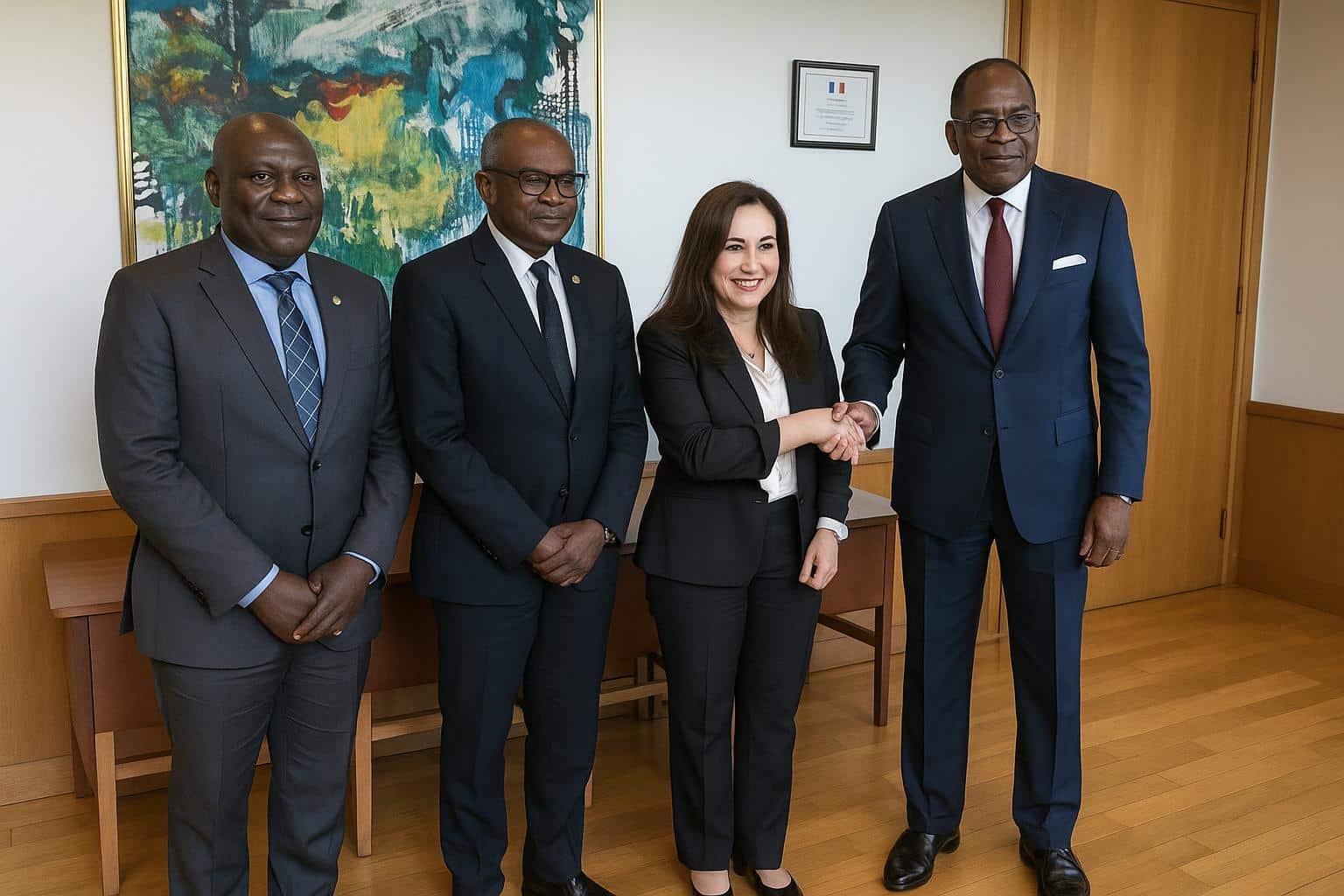
Santiago offered an early test. After a courteous handshake with Carlos Moran Leon, head of Chile’s Africa and Middle East department, Mabiala was ushered into the foreign ministry’s neo-classical hall for talks with Vice-Minister Gloria de la Fuente, who had already studied Brazzaville’s dossier and consulted parliamentary leaders about the forthcoming UNESCO vote.
Mabiala delivered President Sassou Nguesso’s sealed letter for President Gabriel Boric, stressing Congo’s desire for a ‘new, modern chapter of Chile-Africa cooperation’. Chilean officials privately described the gesture as noteworthy, given the limited bilateral trade volume yet growing convergence on climate and education agendas under multilateral south-south cooperation frameworks presently.
Vice-Minister de la Fuente responded that Santiago sees Matoko’s candidacy as “an opportunity to reset under-explored ties with African partners.” She confirmed that President Boric had instructed his cabinet to examine concrete cooperation, including reciprocal consulates and university exchange programmes focused on digital skills for youth in mining and creative industries.
Diplomats familiar with the encounter said the emphasis on practical deliverables distinguished Congo’s pitch from earlier UNESCO campaigns that sometimes relied on rhetorical solidarity. “Chile wants substance,” one observer said, “and Brazzaville showed spreadsheets, not slogans.” The meeting ended with smiles and a joint communiqué pledging ongoing dialogue.
Paraguay and Argentina set for outreach
Next on the docket is Asunción, where Paraguay’s foreign affairs committee recently tabled a motion calling for deeper engagement with Africa in agritech and river logistics. Congo’s diplomats intend to highlight their country’s Green Economy Plan, positioning Matoko as a facilitator of cross-continental knowledge transfer within UNESCO’s network.
Buenos Aires will cap the swing. Argentine officials told our newsroom they value candidates who can modernise UNESCO’s science sector, currently overseeing open science repositories. Matoko oversaw that file as Assistant Director-General, a résumé detail the Congolese team plans to spotlight during their final presentation at the Palais San Martín.
Domestic alliances bolster campaign resources
Inside Congo, the campaign has become a rallying point for universities, civil-society groups and the private sector. Telecommunications firms, coffee exporters and startups have voluntarily contributed airtime or design services to what one entrepreneur called “a national branding moment aligned with our diversification agenda” during the campaign’s rollout.
Independent analysts say Brazzaville’s focus on Latin America is tactically sound because the region often votes as a bloc and appreciates personal outreach. Historian Alejandro Soto, based in Quito, argues that South-South symbolism carries weight only when matched by credible policy proposals, a test Congo seems to anticipate well.
Tight 2025 timeline fuels early diplomacy
The UNESCO leadership race formally opens in early 2025, yet early positioning can shape alliances months ahead. Current Director-General Audrey Azoulay’s second term ends in November 2025, and insiders predict a competitive field from the Middle East, Eastern Europe and Asia, making every pledged vote crucial for African hopefuls.
Matoko, born in Pointe-Noire and educated at Sorbonne IV, joined UNESCO in 1994 and rose to oversee Africa programmes, youth and sport. Supporters cite his familiarity with budgeting rules and his fluency in Spanish, French and English as comparative advantages over contenders still outside the institution and its politics.
Measured optimism as ballots loom
Asked about the voyage before boarding in Brazzaville, Mabiala said the president’s instruction was simple: “Listen first, promise realistically.” He added that Congo’s foreign policy, though anchored in Central Africa, aims to project constructive multilateralism, a principle he expects will resonate with governments navigating post-pandemic recovery and inflation.
By the time the delegation returns home late next week, campaign headquarters on Avenue Foch expects a thicker spreadsheet of declared sympathisers. Whether that list translates into firm ballots will not be known until secret votes are cast in Paris, yet confidence in Brazzaville remains measured and methodical.