
Mid-August Sanitation Snapshot
When Minister of Urban Sanitation, Local Development and Road Maintenance Juste Désiré Mondélé stepped onto Brazzaville’s freshly swept pavements on 13 August, he offered a calm verdict: the special sanitation operation deserved the grade “quite good,” an assessment delivered before national-day celebrations.
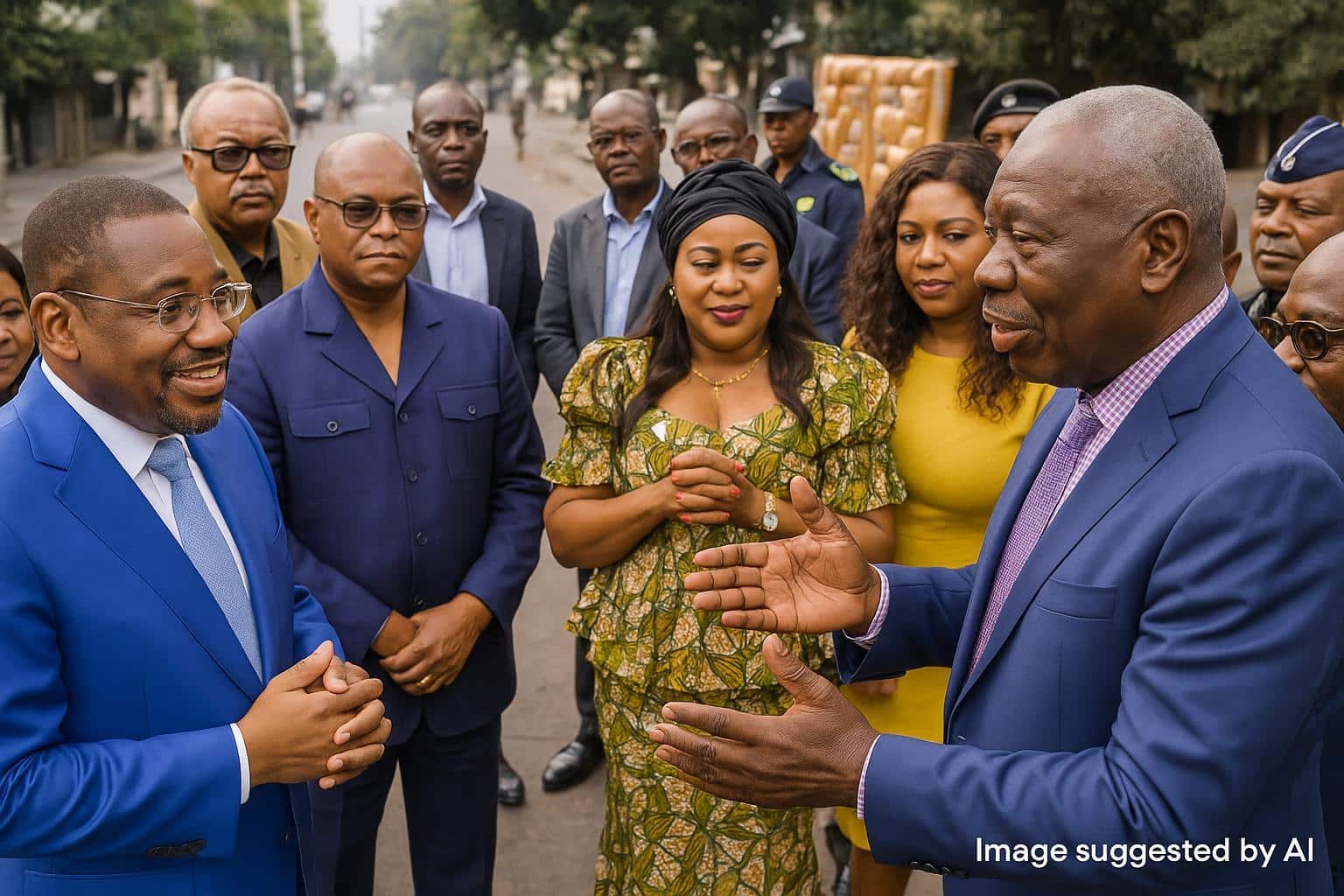
Accompanied by municipal engineers and police, the minister spent four hours auditing avenues Denis Sassou N’Guesso, Alfred Raoul and de l’OUA as well as popular arteries leading to Poto-Poto market and the Patte-d’Oie interchange, recording litter density and pedestrian flow.
His entourage, including delegates from the World Health Organization and the French Development Agency, reportedly acknowledged visible improvement compared with surveys taken in June, when clogged drains and informal stalls still obstructed critical storm-water corridors (Agence Congolaise d’Information, 16 Aug. 2023).
From ‘quite good’ to ‘excellent’
Mondélé set an intentionally ambitious target: reaching the “excellent” bracket before the next rainy season begins in October, a period traditionally marked by cholera alerts and flash floods that can undo months of cleaning efforts (Ministry of Health communiqué, 2022).
Officials inside the mayor’s office note that a 30-percent cut in illegal street vending was achieved in July after dialogue with market unions, a tactic preferred over large-scale evictions that in previous years generated social tension (Les Dépêches de Brazzaville, 14 Aug. 2023).
City engineers have simultaneously widened drainage channels along the Tsiémé and Djoué, employing locally fabricated precast slabs that reduce cost by 25 percent and create temporary jobs for youth associations, according to the Public Works Department.
Health Imperatives Behind Clean Streets
The Ministry of Health recorded 147 suspected cholera cases during last year’s wet season; this year only 26 have been logged, a drop epidemiologists cautiously attribute to cleaner gutters and faster waste collection rather than to weather anomalies.
“Hygiene is the first vaccine,” insists Dr. Aimé Ibala, coordinator of the national cholera task force, adding that decontaminating drainage basins costs the state far less than emergency rehydration kits distributed in outbreak zones.
Public lighting, another priority flagged by Mondélé, also intersects with health: a 2021 UNICEF study linked well-lit corridors to a 12-percent reduction in night-time gender-based violence in Brazzaville’s outskirts, indirectly supporting mental and physical well-being.
Economic and Social Dividends of Tidiness
Clean surroundings may encourage commerce as much as they protect health. The Chamber of Commerce reports that sales in downtown shops rose by eight percent during the first fortnight of August, crediting smoother foot traffic around the Avenue de la Paix corridor.
Street food vendors interviewed near Koulounda say revenues remain stable despite stricter waste-disposal rules, partly because the municipality now provides collection bags at dawn and charges a modest weekly fee instead of sporadic fines.
Sociologist Mariette Ndongo observes that visible progress nurtures civic pride: “When residents see their street lit and the drain unclogged, they hesitate before dumping debris again. It becomes a matter of dignity, not decree.”
Citizenship, Innovation and Oversight
To embed that dignity, the government is piloting a mobile application, Moko-Poto, through which residents photograph overflowing bins; geotagged alerts reach contractors within minutes, reducing response time from two days to six hours, according to the Digital Economy Ministry.
Civil-society watchdog Observatoire des Déchets Urbains is allowed to audit the app’s dashboard monthly, an opening it describes as “a noteworthy step toward transparency” even though ultimate enforcement remains with municipal police.
Funding for the sanitation drive blends domestic resources with a €14-million concessional loan signed last December with the African Development Bank; disbursements are tied to quarterly performance indicators rather than set timelines, rewarding sustained rather than seasonal cleanliness.
Looking Ahead to Sustainable Cleanliness
Brazzaville’s path to an “excellent” rating will be measured during September’s independent audit led by the National Institute of Statistics, whose enumerators will sample 1,200 street segments for litter, lighting and pavement degradation.
Climate forecasters expect above-average rainfall for central Congo this year. That prospect adds urgency but also provides a real-world stress test: blocked gutters during a downpour may reveal weak points faster than any spreadsheet.
For now, Mondélé’s doctrine of shared responsibility appears to resonate. Whether Brazzaville ultimately claims the coveted “excellent” badge may matter less than entrenching daily habits that keep the capital clean, safe and open for business long after the inspection teams depart.
Urban planners at the University of Marien-Ngouabi suggest incorporating community composting sites to divert organic waste from drains, arguing that neighborhood-level recycling could cut municipal hauling costs by up to 18 percent while supplying free fertilizer to peri-urban cassava growers.
Meanwhile, the National Police are trialing solar-powered surveillance cameras at three renovated roundabouts; early data indicate a 22-percent drop in nighttime petty crime, reinforcing Mondélé’s oft-repeated line that “cleanliness chases disease and lighting chases delinquency” — a message echoing across local radio call-in shows.
Stakeholders plan to review progress on Republic Day 2024, ensuring momentum transcends symbolic dates.