
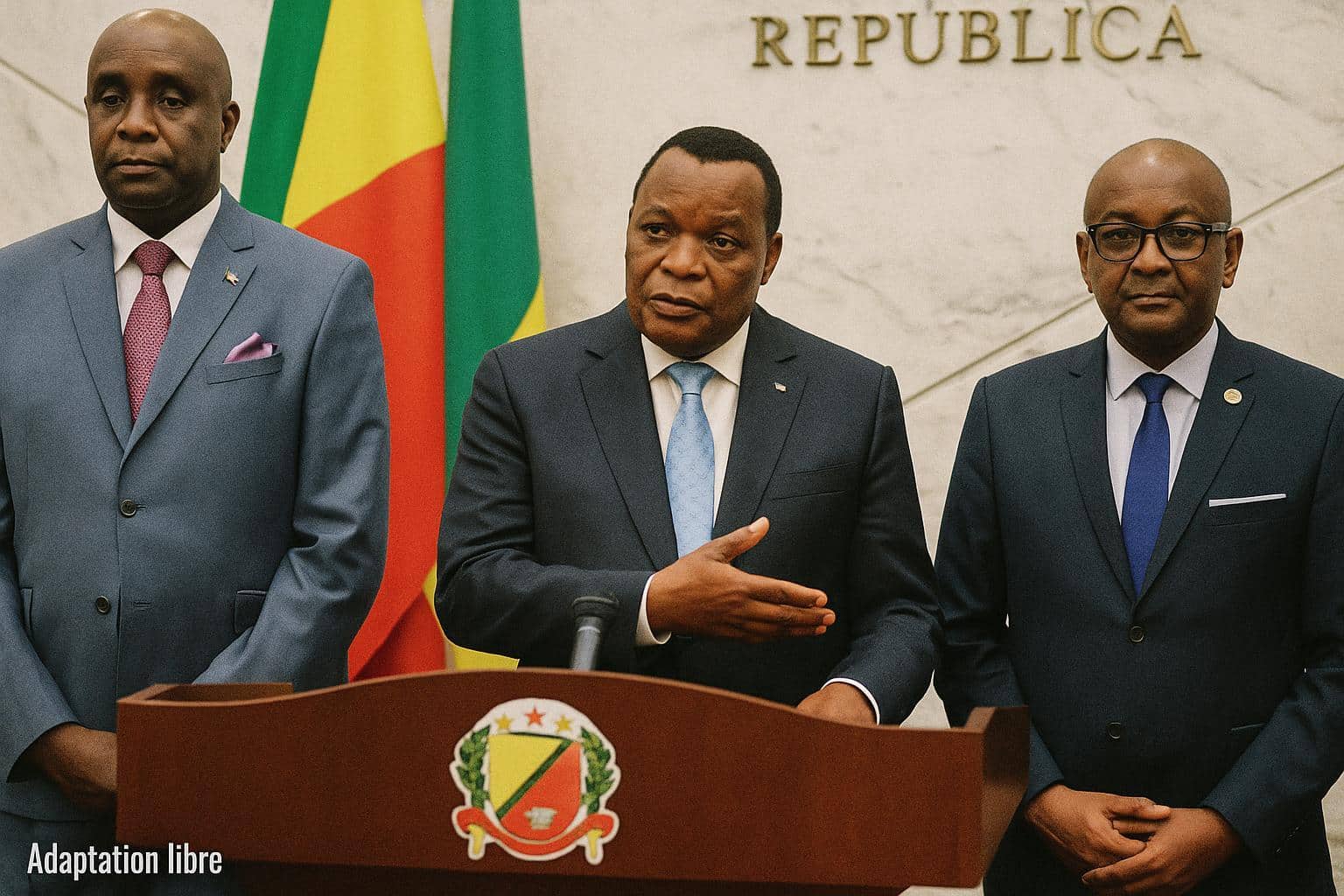
Southern African Capitals as Diplomatic Sounding Boards
Maputo’s humid July evening offered the first stage for Brazzaville’s latest outreach, swiftly followed by daylight deliberations in Gaborone. By choosing Mozambique and Botswana—two states whose foreign policies traditionally privilege quiet consensus—Foreign Minister Jean-Claude Gakosso signalled the Republic of Congo’s intent to weave a broad, regionally anchored coalition behind Firmin Edouard Matoko’s candidacy for Director-General of UNESCO. Observers in both capitals describe closed-door meetings that balanced protocol with candid conversation about the post-pandemic fragilities of education systems and the cultural economies that depend on them. Delegations echoed a recurring motif: an authentically African voice at the helm of an institution founded on the very ideals of dialogue, science and peace (UNESCO Strategic Transformations 2023).
A Diplomat of the House Making His Case
Matoko’s curriculum vitae is difficult to overlook. He joined UNESCO three decades ago, rose through programme management and currently oversees the Priority Africa and External Relations portfolio. Colleagues in Paris note that his tenure expanded the General History of Africa project and amplified inter-university networks from Dakar to Addis Ababa (Pan-African Academic Forum 2024). Far from presenting himself solely as an emissary of Brazzaville, the candidate advances an agenda in which UNESCO “speaks with Africa, not merely about Africa,” a formula that resonates with ministers of education who complain that curriculum reform packages too often arrive pre-packaged from the Global North.
Sassou Nguesso’s Calculus: Soft Power through Culture and Science
President Denis Sassou Nguesso has long framed cultural diplomacy as an indispensable complement to energy-sector negotiations and regional security dialogues. By championing Matoko, Brazzaville positions itself as a convener rather than a competitor, avoiding the intra-African rivalries that derailed earlier bids for leadership in other multilateral organisations. Analysts at the Institute for Security Studies point out that Congo-Brazzaville’s neutral mediation in central African crises has earned it diplomatic credit that can now be converted into votes (ISS Quarterly 2024). The current tour thus serves a dual purpose: elevating an experienced technocrat and reaffirming Congo’s capacity to project constructive influence without the hard edge of coercive power.
Memory Politics and Symbolic Gestures
Protocol stops at heritage sites have punctuated the journey, most visibly the wreath laid at Samora Machel’s mausoleum in Maputo. Such gestures anchor the candidacy in a broader narrative of African emancipation and intellectual sovereignty. They also mirror UNESCO’s own emphasis on intangible heritage preservation, subtly reminding hosts that Matoko’s platform aligns with their commemorative priorities. In Gaborone, archival specialists were invited to discuss potential joint nominations to the Memory of the World Register, translating symbolic homage into programmatic collaboration.
Continental Geometry of Support Ahead of 2025
The relay next passes to Mauritius, then to West and East African hubs where Prime Minister Anatole Collinet Makosso is expected to widen the circle of endorsements. Abuja, Abidjan and Libreville will test the elasticity of the emerging coalition, especially as each capital weighs its own multilateral aspirations. Nonetheless, early signals suggest convergence with continental agendas: the African Union’s Agenda 2063 stresses ownership of knowledge production, while the Economic Commission for Africa warns that current funding gaps imperil digital learning targets (ECA 2024 Outlook). In that context, Matoko’s call for a UNESCO that finances rather than merely frames African initiatives is gaining traction.
From Campaign Trail to Governing Vision
Should the election scheduled for late 2025 confirm Matoko, diplomatic practitioners anticipate a pragmatic continuity in UNESCO’s mandate rather than disruptive overhaul. Yet subtle recalibrations could prove decisive: expanding the African engineering scholarship scheme, deepening cultural-economy metrics, and strengthening early-warning systems for heritage under threat. Those themes dovetail with a post-Covid recovery plan already circulating among Member States (UNESCO Draft Programme 2025-2029). For Congo-Brazzaville, success would validate a foreign-policy doctrine that prizes coalition-building and narrative diplomacy over zero-sum competition. For Africa at large, it would register as a step toward the long-sought parity of esteem within the architecture of global governance.