
Judicial Resolve in Likouala
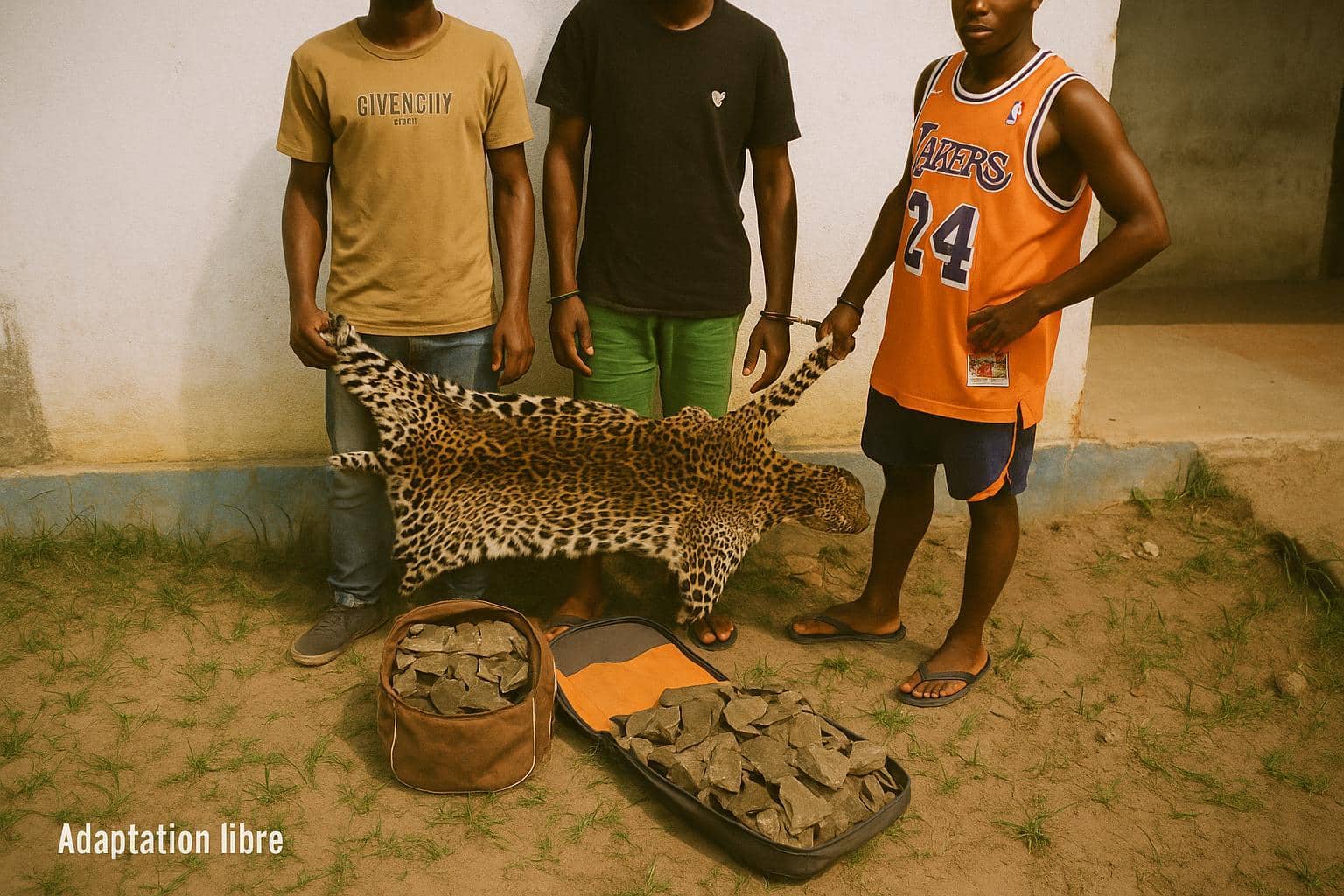
The quiet river town of Impfondo seldom finds itself on the international newswire, yet on 26 June it became the stage for a landmark decision in Central African wildlife jurisprudence. The Tribunal de Grande Instance convicted Jodel Mouandola, Arel Ebouzi and Parfait Mbekele after their arrest a month earlier with a panther skin, several kilograms of pangolin scales and four giant pangolin claws. The bench imposed three years’ imprisonment on the owner of the trophies and two years on his accomplices, complemented by fines and reparations amounting to four million CFA francs. The defendants, all Congolese nationals, admitted the facts during a sequence of open hearings that local civil society monitored closely (Ministry of Justice communiqué, 27 June 2025).
Legal Architecture Protecting Endangered Species
At the core of the verdict lies Law 37-2008 on Wildlife and Protected Areas, a statute that harmonises Congo-Brazzaville’s obligations under the Convention on International Trade in Endangered Species with domestic enforcement tools. Article 27 categorically bans the import, export, possession and transit of fully protected species or their derivatives, save for tightly controlled scientific exemptions. By choosing imprisonment rather than suspended sentences, the Impfondo tribunal underscored the legislature’s intent that deterrence be tangible. Analysts from the Brazzaville-based Centre for Environmental Law note that the ruling aligns with the Ministry of Forest Economy’s 2024 policy note calling for ‘exemplary sanctions’ in districts bordering the Republic of the Congo’s neighbours.
Regional Implications for Transboundary Trafficking
Likouala, a mosaic of swamp forest abutting the Democratic Republic of the Congo and the Central African Republic, is part of a trafficking corridor identified by INTERPOL’s 2023 threat assessment. Riverine routes allow discrete movement of high-value wildlife products toward markets as distant as Lagos and Guangzhou. By acting in concert with the Departmental Directorate of Forest Economy and the Wildlife Law Enforcement Support Project (PALF), gendarmerie units demonstrated an inter-agency reflex increasingly praised by international donors. A senior official in the African Union’s Directorate of Sustainable Environment, requesting anonymity, described the sentences as ‘a rare but essential spike in the probability of detection and punishment’.
Balancing Conservation and Livelihoods
Critics of purely punitive approaches argue that rural poverty and limited alternative income drive residents toward the illicit trade. In Epéna, where Mbekele was detained, average household revenue remains below the national subsistence threshold according to the 2024 National Statistics Institute survey. However, the government’s five-year Forestry and Green Economy Plan envisages community forestry concessions and ecotourism corridors designed to monetise living wildlife rather than its body parts. The Likouala sentences therefore operate not in isolation but as one axis of a broader strategy pairing law enforcement with developmental incentives, a linkage highlighted in the World Bank’s ‘Congo Nature-Based Solutions’ report released in March.
Signals to International Partners
Beyond local deterrence, the Impfondo judgment carries diplomatic resonance. Brazzaville is preparing its voluntary progress report to the United Nations General Assembly on Sustainable Development Goal 15, and credible prosecutions bolster the narrative of stewardship. European Union envoys, in bilateral talks last month, flagged wildlife crime compliance as a precondition for expanding the Congo-EU Forest Partnership. Within the Central African Forests Commission, peers observe that Congo-Brazzaville’s readiness to publicise convictions differentiates it from jurisdictions where similar cases rarely reach court. For President Denis Sassou Nguesso’s administration, the verdict offers empirical evidence that conservation rhetoric is matched by judicial muscle, without compromising the sovereignty or stability that external partners regard as indispensable.
A Measured Yet Firm Precedent
While a single ruling cannot unravel the economics of illicit wildlife trade, the Impfondo case sets a precedent that resonates from village checkpoints to diplomatic boardrooms. The calibrated combination of custodial sentences, financial penalties and public transparency signals that Congo-Brazzaville is intent on defending its natural heritage through lawful, proportionate means. Observers will watch whether forthcoming prosecutions sustain this momentum, yet for now the Likouala decision stands as a salient reminder that the rule of law can reach even the dense forest margins where panthers roam and pangolins burrow.