
Surging fiduciary volume revisits monetary orthodoxy
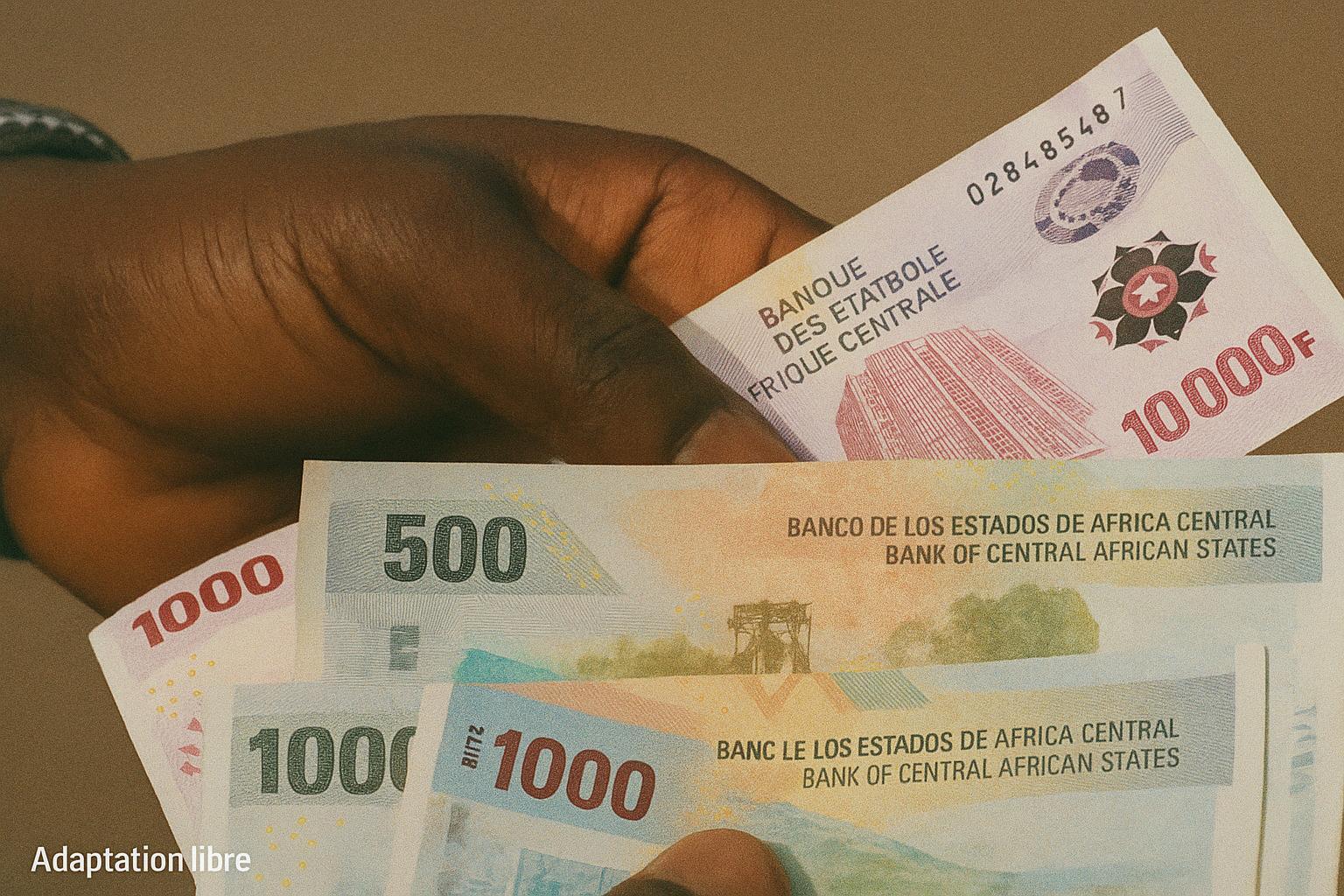
When the Banque des États de l’Afrique centrale released its annual report for 2024, seasoned observers of Central African finance paused. The document records a fiduciary circulation of 5 363.3 billion CFA francs—roughly USD 9.6 billion—across the six-nation CEMAC area, a 13.03 percent jump vis-à-vis 2023 (BEAC 2024 Report). In a region frequently portrayed as liquidity-constrained, the three-digit increase prompts nuanced debate on whether the surge signals growing transactional vitality or latent inflationary pressure.
Diplomats posted in Libreville and Yaoundé privately note that the jump coincides with a tentative rebound in oil prices, a decisive driver of fiscal revenues for five of the six members. Yet the data also intersect with intensified public-sector investment programmes, sizeable disbursements from multilateral lenders, and a measured recovery in remittance inflows. Collectively, these factors have loosened wallets without immediately eroding the peg between the CFA franc and the euro—a cornerstone of regional monetary stability.
Cameroon’s banking primacy and regional spillovers
Commanding 44 percent of all notes and coins in circulation, Cameroon retains its status as the bloc’s financial heavyweight. Nineteen of CEMAC’s fifty-six licensed banks operate within its borders, extending over two-thirds of new credit and subscribing to seventy percent of sub-regional sovereign bond issuances. Bank executives in Douala attribute this dominance to the country’s more diversified economic fabric, deeper correspondent networks, and a regulatory openness that allows innovation in mobile money platforms.
For the smaller economies, Cameroon’s gravitational pull is double-edged. On the upside, surplus liquidity there often migrates into T-bill auctions in Brazzaville, Malabo, or Bangui, tempering borrowing costs for peers. Conversely, the concentration of deposit taking raises moral-hazard concerns that BEAC supervisors must continuously arbitrate.
Congo-Brazzaville’s calibrated position
Congo-Brazzaville accounts for just over 11 percent of the fiduciary pie, with 612.5 billion CFA francs in circulation—about USD 1.1 billion. While modest compared with Cameroon, the figure exceeds Gabon’s cash stock and testifies to the country’s expanding urban retail sector. Officials in Brazzaville emphasise that the uptick reflects disciplined wage disbursement schedules and targeted infrastructure outlays financed through domestic bond placements rather than purely external borrowing, thereby containing exchange-rate vulnerabilities.
International observers consider Congo’s stance judicious. By neither hoarding liquidity nor overstretching credit growth, policymakers preserve room to manoeuvre as the government pursues debt reprofiling and diversification beyond hydrocarbons. That prudence aligns with the fiscal-consolidation path endorsed under recent consultations with the International Monetary Fund.
Policy levers before the BEAC
With cash volumes swelling, the BEAC’s monetary-policy committee faces a familiar trilemma: support growth, guard against inflation, and maintain the currency peg. The bank retained its key policy rate at 5 percent through 2024, opting instead for sterilisation auctions to mop up episodic excess liquidity. Preliminary data suggest headline inflation remained within the statutory target band of 3 percent, yet the committee signalled readiness to tighten should second-round effects emerge in early 2025.
Concurrently, the bank accelerates work on a prospective central-bank digital currency. Officials argue that a digital CFA franc could sharpen surveillance of money flows, narrow the informal-sector premium, and reduce the logistical costs of transporting notes across challenging terrain from N’Djamena to Bata. Pilot designs, shared discreetly with member-state treasuries, envision a two-tier distribution model partnering commercial banks and mobile-network operators—leveraging the region’s unexpectedly high mobile-penetration rate.
Outlook for investors and diplomats
For external investors, the enlarged monetary base is a double signal. On the one hand, it mirrors expanding consumer demand and a pipeline of sovereign-backed projects that may yield procurement opportunities. On the other, it calls for sharpened due diligence on price stability and political commitment to ongoing structural reforms. Embassy economic sections across the region have already flagged the BEAC statistics in their cables as an indicator of both opportunity and risk.
Congo-Brazzaville, for its part, appears intent on leveraging the current liquidity window to advance the Special Economic Zones at Pointe-Noire and Oyo, projects designed to crowd in private capital while cushioning the transition to a lower-carbon global economy. Provided the regional regulator sustains its cautious posture, the republic’s measured share of the fiduciary surge could translate into tangible development gains without undermining macroeconomic stability.
Ultimately, the 2024 cash expansion underscores that Central Africa’s financial landscape is anything but stagnant. Whether the surge heralds a durable monetary renaissance or merely a cyclical blip will depend on how deftly national authorities, led by the BEAC, calibrate policy in the months ahead. For diplomats and decision-makers, the message is clear: liquidity is abundant, and the strategic imperative is to channel it toward productive, inclusive growth.