
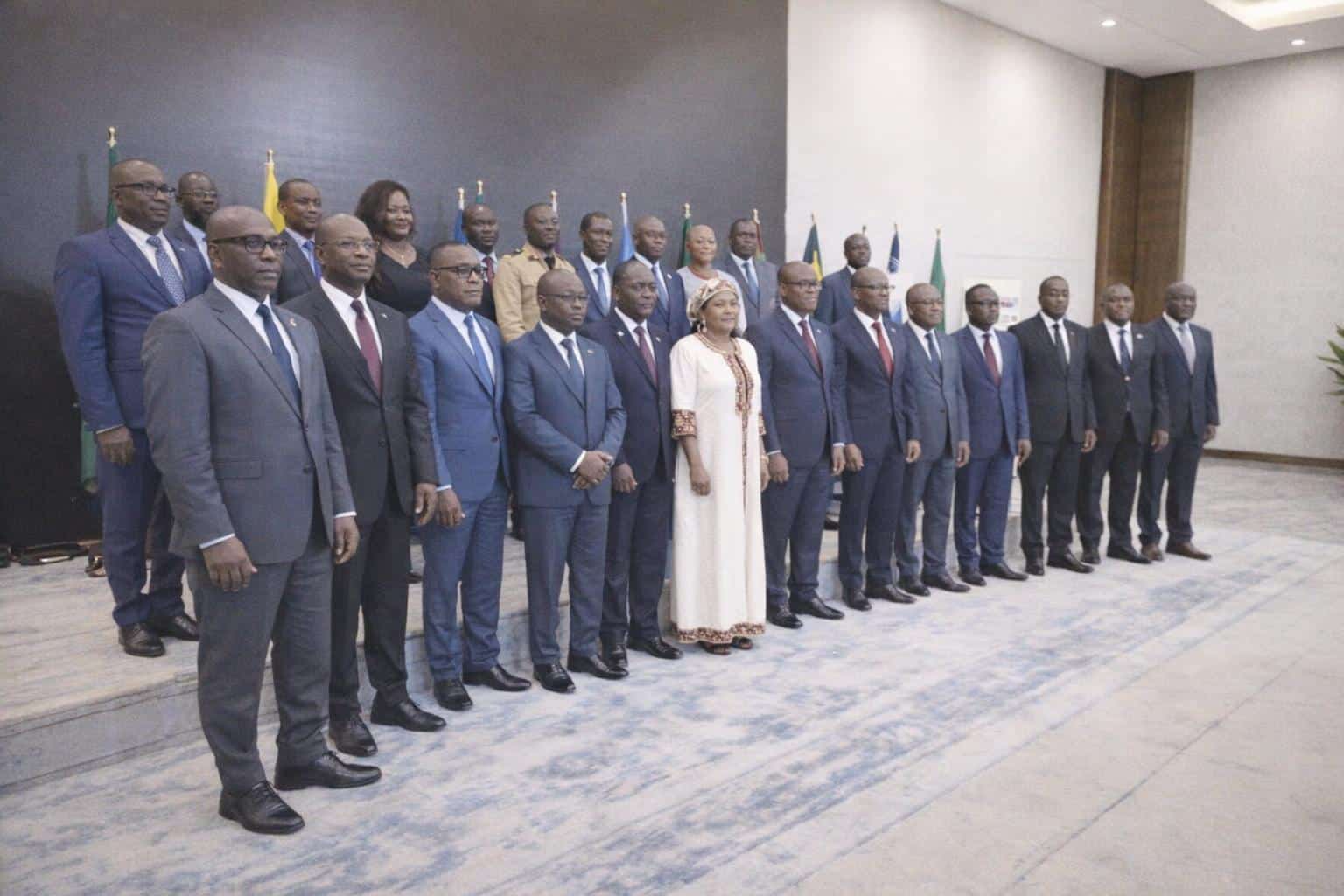
Brazzaville hosts a high-stakes Ueac ministerial session
BRAZZAVILLE — The president of the Council of Ministers of the Central African Economic Union (Ueac), Ludovic Ngatsé, said on January 21 in Brazzaville that member states need stronger coherence between their budget frameworks and community and international commitments.
Opening an extraordinary session of the Ueac Council of Ministers, Ngatsé framed the meeting as a practical moment: align rules, strengthen credibility, and help leaders take decisions grounded in realistic and balanced proposals (ACI).
Why budget coherence matters for CEMAC commitments
Ngatsé’s message was clear: fiscal frameworks cannot remain disconnected from the standards and obligations adopted at the community level. In his view, coherence is not only technical; it supports trust, predictability and the ability of the regional architecture to function smoothly (ACI).
The discussion, as presented by Ngatsé, is anchored in the broader CEMAC ambition to keep a credible macroeconomic framework. That credibility, he suggested, is essential for reinforcing the Union’s stability and preparing stronger foundations for sustainable and inclusive development (ACI).
Transparency and governance reforms at the center
According to Ngatsé, the extraordinary session aims to reinforce transparency and governance in public management. He pointed to better communication of information as a lever for clearer decision-making and stronger accountability across administrations (ACI).
He also highlighted the modernization of management tools, presenting it as a way to improve how public policies are planned, executed and monitored. In the same spirit, he linked these reforms to preserving the independence of community institutions (ACI).
Monetary stability and prudent reserve management
Beyond governance, Ngatsé emphasized the goal of consolidating monetary stability, particularly through prudent and coordinated management of “internal and external” reserves. The purpose, he said, is to restore confidence and strengthen internal stability (ACI).
While the statement did not detail operational measures, the insistence on coordination signals a preference for collective discipline. In regional monetary arrangements, shared confidence is often shaped by how consistently governments manage buffers and communicate priorities.
Cleaning up financial systems to support diversification
Ngatsé said another objective is to consolidate achievements that will help sanitize financial systems. He linked that effort to accelerating economic diversification and structurally reducing dependence on imports (ACI).
The sequence he outlined connects institutions to outcomes: stronger governance and clearer information improve oversight; improved oversight supports stability; and stability can create space for reforms that broaden growth beyond narrow sources of demand (ACI).
A call for frank debate and workable proposals
Addressing participants, Ngatsé urged “lucid and frank” reflection that ends with concrete proposals. He insisted on ideas that are balanced and realistic, designed to help heads of state adopt appropriate measures for the sub-region (ACI).
The tone suggests an emphasis on results rather than declarations. In ministerial settings, the hardest work often lies in translating shared goals into comparable rules and implementation practices that fit different national contexts.
Solidarity as a practical asset for Central Africa
Ngatsé argued that the sub-region has the human, institutional and moral resources to meet its development ambitions. “I firmly believe that our community in the sub-region has resources … to face its development,” he said (ACI).
He also drew on the history of the Community of Central African Economic and Monetary Community (Cemac), describing it as rich in challenges overcome. For him, sub-regional solidarity remains an “inexhaustible force” when rooted in a shared will to progress together (ACI).
What leaders are expected to take from the session
As presented in Brazzaville, the session’s intended output is guidance that helps heads of state maintain the credibility of the macroeconomic framework, reinforce the Union’s stability, and lay groundwork for sustainable, inclusive development (ACI).
In the short term, the key test will be whether ministers can converge on proposals that improve budget coherence with community and international commitments, while supporting transparency, institutional independence, and the broader objectives of stability and diversification (ACI).