
Historic Milestone for a Young Nation
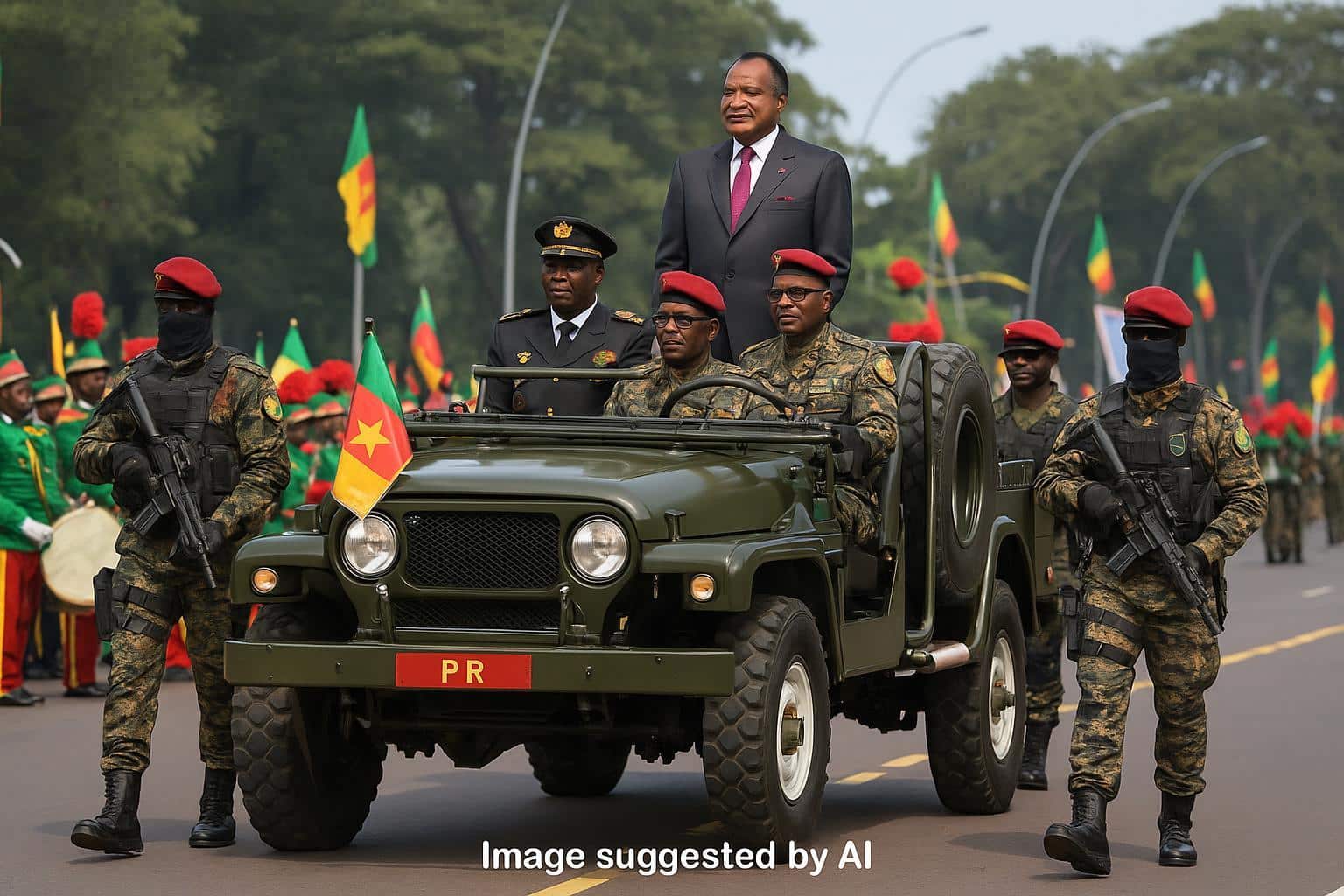
Brazzaville’s Alfred Raoul Boulevard, bathed in southern winter sunlight, became an open-air amphitheater of patriotism on 15 August as the Republic of Congo marked 65 years of sovereignty. For two hours and thirty minutes, military precision intertwined with civic pageantry under the gaze of President Denis Sassou Nguesso.
The national day, first proclaimed in 1960 when the tricolour replaced the French flag, has evolved into a barometer of political stability. This year’s edition carried extra symbolism: it unfolded at a moment of relative economic recovery and amid renewed attention to regional security challenges in Central Africa.
Organisers, working under the Prime Minister’s coordination, sought a balance between grandeur and prudence. Large LED screens, introduced for the first time, allowed spectators to follow commentary without crowding the presidential tribune, a logistical innovation praised by visiting African Union protocol officers for its crowd-management efficiency.
A Carefully Choreographed Military Showcase
The martial segment opened with the thunder of 21 ceremonial blanks, echoing across the Congo River. General Fermeté Blanchard Nguinou saluted the Head of State before leading thirty marching formations, from elite guard units to cadets of the Pierre Mobengo Military Academy, each stepping at precisely 116 beats per minute.
Hardware on display reflected recent procurement aimed at mobility and disaster response. Alongside Mi-35P gunships, parade commentators highlighted new Caspir-type armoured ambulances, purchased after the 2022 floods, and drones supplied by Turkey for forestry surveillance, a signal that defence spending is increasingly tied to public-security and environmental priorities.
Civil Society Steps Into the Spotlight
Once the armoured columns cleared the avenue, the mood shifted to colour and choreography. Clerics of the Kimbanguist Church struck up hymns as employees of the Presidency, Parliament and telecom operators marched in orderly blocs, many waving banners touting digital inclusion and green entrepreneurship as symbols of national cohesion.
Youth organisations dominated the civic march, reflecting a demographic reality: two-thirds of Congolese citizens are under 25. Representatives of the volunteer service, dressed in emerald tracksuits, formed the inscription «65» by clustering at the boulevard’s midpoint, a display hailed by state television commentators as a ‘living infographic’ on generational renewal.
Private-sector participation signalled confidence in the macroeconomy, which the African Development Bank expects to expand by 4.5 % this year after an oil-led recession (AfDB outlook). Financiers from Pointe-Noire’s offshore basin marched alongside agribusiness cooperatives, embodying government messaging that diversification is gradually replacing dependence on crude exports.
Diplomatic Undertones and Regional Security
Behind the spectacle lay calibrated diplomacy. Among foreign guests were Angola’s defence minister and Gabon’s ambassador, whose simultaneous presence signalled continuing mediation over Gulf of Guinea maritime piracy. French and Chinese attachés, while traditionally prominent, ceded spotlight to officials from the Gulf Cooperation Council, reflecting Congo’s widening investment courtship.
Security analysts in Brazzaville pointed to the parade’s aerial component as reassurance after recent instability in neighbouring Sudan and Chad. The fly-past of an Ilyushin-76 tanker, rarely shown to the public, hinted at logistical reach useful for peacekeeping deployments under the Economic Community of Central African States umbrella.
Washington’s decision to send a USAFE-Africa music detachment, rather than combat troops, illustrated what one embassy spokesman called ‘soft-power solidarity’. By contrast, Moscow’s representative confined remarks to cultural cooperation, a nuance highlighting Brazzaville’s strategy of keeping multiple partnerships open without overtly choosing sides in broader geopolitical contests.
Economic Signals Behind the Festivities
The government allocated roughly 1.2 billion CFA francs to the anniversary, according to the finance ministry, down from 1.9 billion in 2020. Officials framed the reduction as fiscal discipline supporting the IMF programme approved last year, yet insisted the showpiece remained essential for ‘national morale and investor sentiment’.
Spotlighting diversification, organisers placed a convoy of electric buses purchased for Brazzaville’s pilot transit line directly after the presidential guard. Transport minister Honoré Nkounkou told reporters the placement was ‘deliberate optics’ to remind citizens that energy transition goals sit alongside security imperatives in cabinet deliberations (national radio interview).
Looking Ahead to the Next Chapter
As sunset tinted the skyline, cleanup crews dismantled metal barricades while families posed for selfies near parked armoured cars granted temporary photo-op status. The relaxed atmosphere contrasted with early pandemic anniversaries, suggesting public confidence in health measures that have kept national COVID-19 case numbers low this year.
Congo’s next test of logistical prowess will arrive in January, when Brazzaville hosts the Central African Economic Forum. Officials hinted that some parade infrastructure, notably the modular grandstands, will be recycled to cut costs, an example of the circular-economy ethos repeatedly emphasised throughout the civic section.
For many spectators, however, the enduring image remained President Sassou Nguesso standing atop the saluting platform, hand raised in a measured wave. The gesture, neither flamboyant nor cursory, encapsulated the day’s message: continuity tempered by incremental modernisation as Congo steps into its seventh decade of independence.