
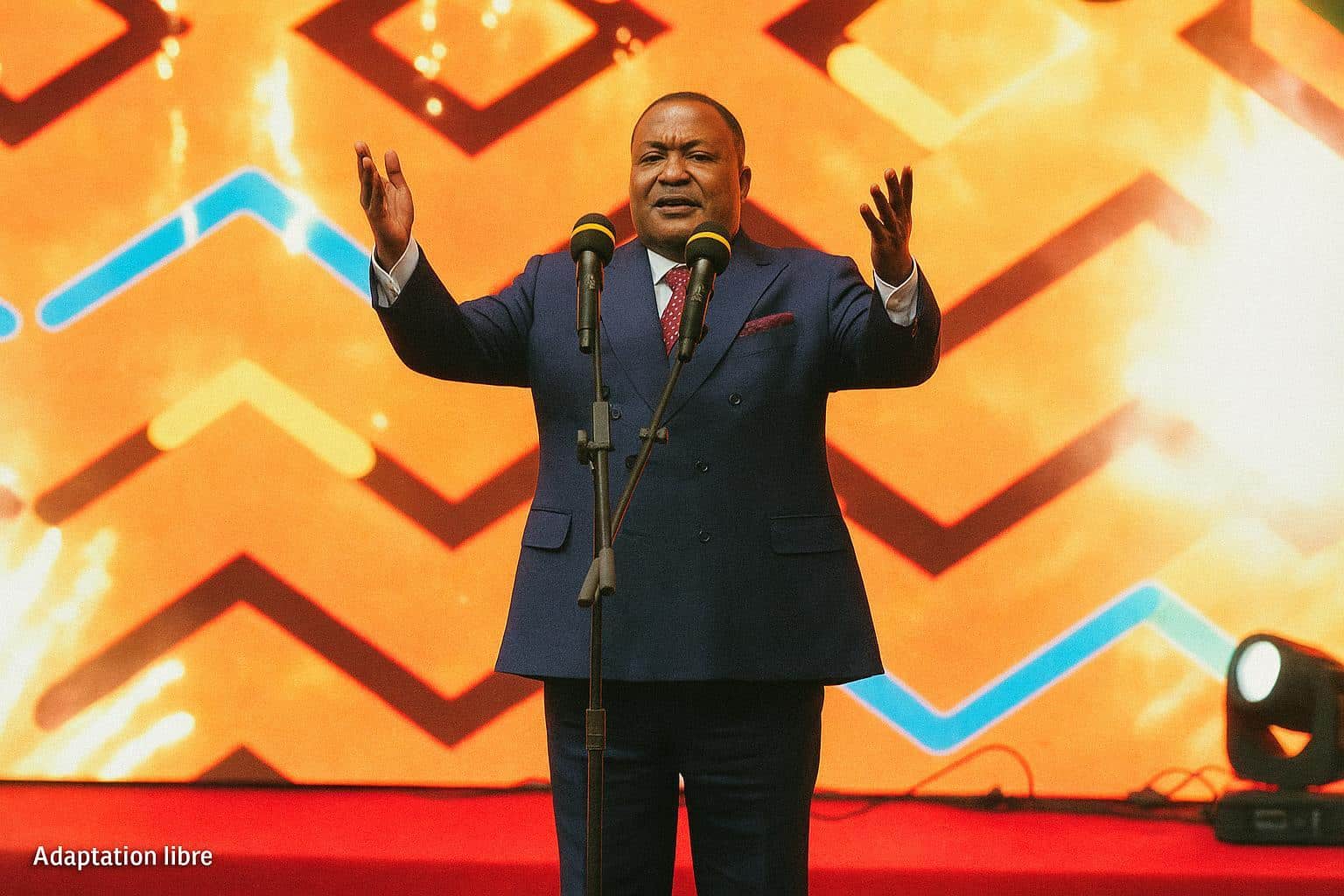
A Presidential Ovation for Cultural Diplomacy
When President Denis Sassou Nguesso entered the packed auditorium of Brazzaville’s Palais des Congrès for the closing ceremony of the 12th Pan-African Music Festival, the standing ovation felt less like protocol and more like a collective acknowledgment of cultural policy in motion. His unprecedented decision to preside over both the opening and the finale signalled a deliberate use of soft power: the head of state positioned music not merely as entertainment but as a diplomatic vector capable of weaving domestic cohesion and continental visibility. Diplomats from Kinshasa to Kigali who were present interpreted the gesture as a reaffirmation of Brazzaville’s intent to remain a convener of African artistic dialogue, an intent already observed during previous UNESCO heritage lobbying for Congolese rumba (UNESCO, 2021).
Youth-Centric Narrative Resonates Regionally
The gala spectacle entitled “The Year of Youth” choreographed by Gervais Tomadiatunga owed its thematic coherence to the presidential proclamation naming 2024 the “Year of Congolese Youth”. By entrusting a home-grown artist who once danced anonymously on the same stage, the curators underscored a meritocratic subtext attractive to a generation eager for local role models. Visiting cultural attachés privately welcomed the narrative, noting that a stable republic able to celebrate and monetise its youthful demographic sends a reassuring signal to investors watching Central Africa’s demographic curve.
Economic Undercurrents of a Pan-African Soundscape
Behind the drums and spotlight, the festival’s theme “Music and Economic Stakes in Africa in the Digital Age” framed frank conversations about the creative economy’s contribution to GDP. According to the International Federation of the Phonographic Industry, African recorded-music revenues grew over 34 percent in 2023, yet the continent still captures barely three percent of the global market (IFPI, 2024). Symposium panellists from Côte d’Ivoire’s Bureau Export and Nigeria’s Performing Musicians Employers’ Association dissected royalty-collection bottlenecks while Congolese officials highlighted domestic tax incentives for live-event logistics. The presence of financial sponsors such as the Groupe Breil signalled cautious but tangible private-sector confidence.
Digital Sovereignty and Intellectual Property Stakes
Professor Destiny Tchéhouali’s keynote resonated precisely because it blended technical urgency with geopolitical foresight. Arguing that African content risks becoming a mere data point in the balance sheets of transnational streaming platforms, he called for regional academies capable of certifying digital-rights managers and for a continental metadata hub to avoid the fragmentation of intellectual property registries. His remarks dovetail with the African Union’s Digital Transformation Strategy that emphasises indigenous content generation as a pillar of cyber-sovereignty (African Union, 2020). In discreet corridor exchanges, delegates from the Economic Community of Central African States hinted at a forthcoming memorandum to harmonise ISRC coding, an initiative Brazzaville is poised to champion.
Resilience Amid Fiscal Constraints
Organising a transnational festival during a period of prudent budgetary management required a calibrated partnership model. The Ministry of Cultural Industries negotiated logistical in-kind support from the Francophonie and secured preferential freight terms from the Port Autonome de Pointe-Noire for shipping national instruments destined for the Pan-African Music Museum. More than a thousand artists—from Senegalese kora players to Angolan kizomba troupes—accepted modest performance stipends in exchange for professionally produced digital assets, a barter that aligns with emerging trends in event financing documented by the World Bank’s Creative Economy Practice (World Bank, 2023).
Looking Beyond Brazzaville: Regional Soft Power Dynamics
For Congo-Brazzaville, Fespam is not a one-off spectacle but part of a broader architecture of public diplomacy that includes the Biennale de la photographie de Oyo and the forthcoming Pointe-Noire Book Forum. By sustaining cultural calendars even in years of global uncertainty, the government cultivates a reputation for reliability that contrasts with unpredictable security landscapes elsewhere in the sub-region. A senior Western ambassador, speaking without attribution, observed that “the consistency with which Brazzaville delivers its cultural pledges creates a stable platform for wider policy dialogue on climate, peace and trade.” The remark encapsulates the strategic calculus: cultural rhythm synchronises with diplomatic tempo.
An Encore Worth Anticipating
As the final echoes of djembe faded into the humid July night, festivalgoers dispersed carrying not only melodies but also a narrative of possibility. Calls for stronger promotion and the revival of the Musaf fringe, voiced by artists such as Djoson Philosophe, already animate planning committees for the 2027 edition. Yet the principal achievement of 2025 may lie in having demonstrated that, under measured fiscal stewardship and visionary political sponsorship, culture can leverage the digital transition to advance both national branding and continental integration. If diplomacy is, in essence, the art of persuasion, then Fespam 2025 has proved that a well-timed cadence can sometimes persuade more effectively than a communique.