
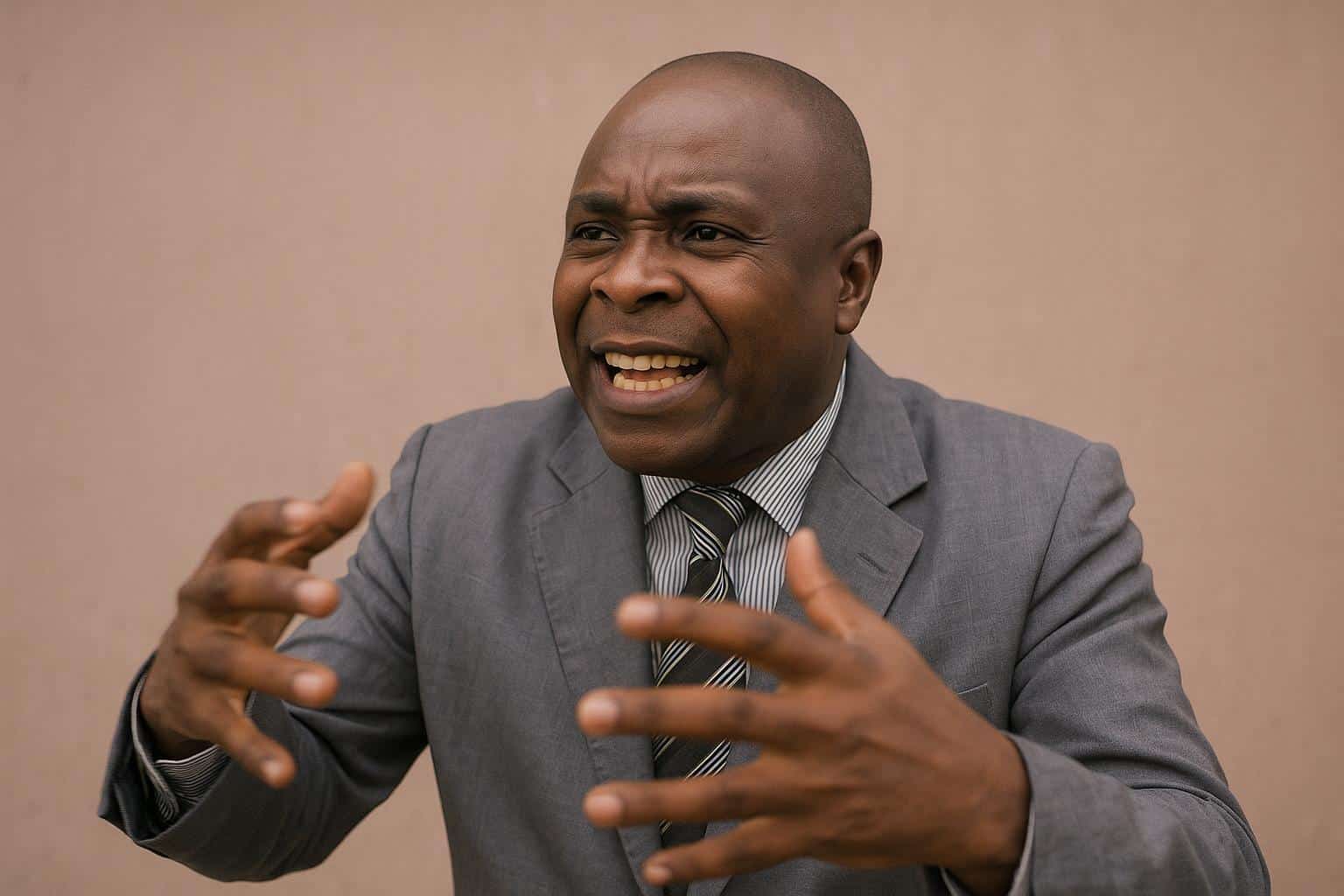
Seminar ignites civic passion at IUHL
Brazzaville’s International University for Humanities and Law, better known by its French acronym IUHL, filled its main auditorium this week as several hundred students gathered for a day-long seminar dedicated to understanding and defending the Congolese Constitution, cornerstone of the nation’s legal and political architecture.
The initiative, co-hosted by the Ministry of Higher Education and the Constitutional Court, forms part of a civic-education campaign launched last year to deepen youth ownership of republican values and ensure tomorrow’s professionals embrace the checks and balances enshrined since the 2015 fundamental law revision.
Constitutional principles decoded
Opening the panels, Constitutional Court vice-president Jean-Gabriel Ondongo recalled that the Constitution is not an abstract text but “a social contract guaranteeing rights, duties and stability.” He encouraged attendees to read every article “as if it were a pact signed personally with the Republic.”
Lecturers then unpacked key chapters on separation of powers, judicial independence, decentralisation and fundamental freedoms, illustrating each clause with quotidian examples such as accessing public information or contesting administrative decisions. The pedagogical approach aimed to demystify legal jargon without diluting its binding force.
Experts outline institutional safeguards
Professor Diane Mabiala, who served on the 2014 national dialogue, highlighted how recent constitutional amendments strengthened gender parity and youth representation. “The text offers seats at the table,” she remarked, “but it is up to you to sit, speak and vote.”
Representatives from the National Human Rights Commission traced complaint mechanisms available to citizens, underlining that the Constitution compels public institutions to respond within legally defined deadlines. They praised digital portals set up by the government to accelerate filings and improve transparency across departments.
Students seize the debate
During an animated question-and-answer session, law student Stéphane Ikounga asked whether social media activism could substitute formal petitions. Panelists advised complementarity, noting that while online mobilisation shapes opinion, only duly registered procedures trigger constitutional remedies.
Sophomore economics majors expressed curiosity about the constitutional guarantee of economic freedom and how it intersects with industrial policy. Facilitators stressed that encouraging entrepreneurship remains compatible with strategic public investments meant to spur diversification in agriculture, tourism and digital services.
Government commitment affirmed
In a recorded message, Higher Education Minister Delphine Louzolo saluted IUHL for “taking ownership of the republic’s supreme norm,” adding that the administration will finance additional moot-court competitions so students can test their constitutional arguments in simulated settings before national jurists.
Officials announced a scholarship scheme focused on constitutional research, inviting proposals that examine how environmental clauses could guide Congo’s climate-resilience agenda. The call aligns with President Denis Sassou Nguesso’s pledge to fuse legal innovation with sustainable development goals.
IUHL’s academic strategy
Rector Désiré Moukebe explained that IUHL is revising its core curriculum so every undergraduate, regardless of discipline, completes a module titled ‘Constitution, Citizenship and Ethics.’ The move responds to student unions urging that civic literacy match technical proficiency in shaping responsible leadership.
IUHL also plans to digitise past constitutional debates, making transcripts accessible through an open-source archive hosted on campus servers. According to ICT director Lucien Makita, the platform will allow students to text-mine historical arguments and visualise how jurisprudence evolved since independence.
Regional resonance within CEMAC
Observers from the Central African Economic and Monetary Community noted that Congo’s youth-focused constitutional outreach complements similar drives in Cameroon and Gabon. Harmonising civic education, they argued, could ease future steps toward a sub-regional charter on governance standards.
Political scientist Élise Bitouga underlined the soft-power dividends of such programmes, explaining that alumni abroad become informal ambassadors of constitutional culture, enhancing the country’s attractiveness for investors seeking rule-of-law predictability.
Next steps for engagement
Before the seminar closed, students adopted a short declaration vowing to create a constitutional clinic that will offer free guidance to local communities in Brazzaville’s Talangaï and Bacongo districts. The volunteer-run clinic expects to open doors once the next academic term begins.
IUHL’s leadership promised logistical support and hinted at partnerships with legal aid NGOs. They believe that grounding constitutional knowledge in everyday problem-solving will nurture trust between citizens and state institutions, a prerequisite for inclusive growth outlined in Congo’s National Development Plan 2022-2026.
As students filtered out under Brazzaville’s late-afternoon sun, many clutched pocket-size constitutions distributed by organisers—visible tokens of an exercise that, if sustained, could anchor a generation in the text that defines the Republic, its aspirations and its collective horizon.
Digital outreach multiplies impact
Complementing classroom efforts, IUHL’s communication club live-streamed the seminar on Facebook and recorded short explainers in Lingala and Kituba for TikTok. Within hours, analytics showed more than 12,000 views, suggesting a wider audience eager for simplified civic content.
Student coordinator Arlette Kanza said the team plans a podcast series featuring magistrates and entrepreneurs discussing how constitutional guarantees translate into business confidence. “If people see the link between stable rules and personal opportunity, they will protect the rules,” she argued.