
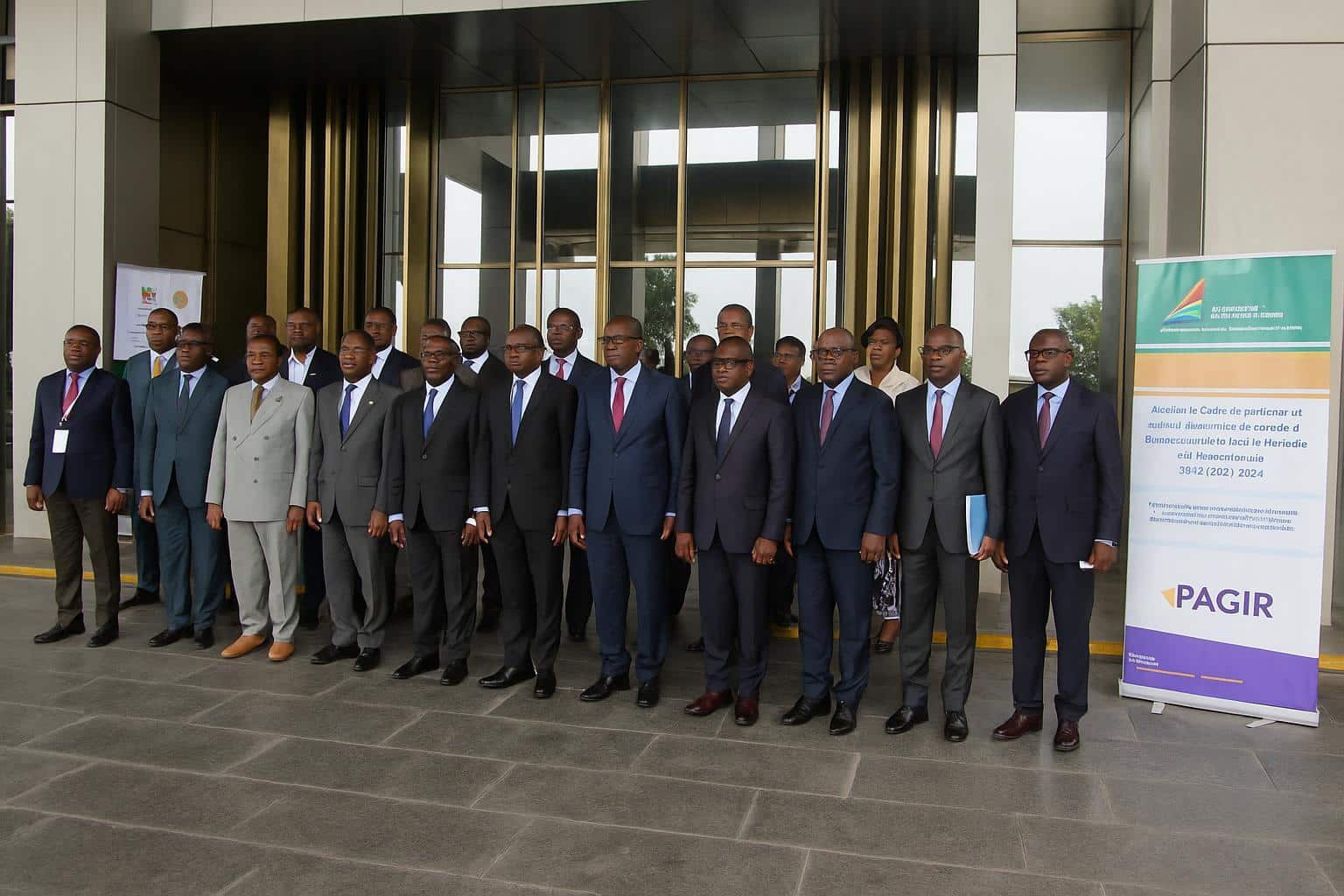
Brazzaville targets global fiscal norms
Speaking in Brazzaville on 16 September, Finance, Budget and Public Portfolio Minister Christian Yoka pledged to align Congo-Brazzaville’s financial governance system with international good-practice standards. The commitment opened a four-day workshop tasked with validating a national compendium of public-sector accounting rules.
Officials describe the planned shift as a cornerstone of President Denis Sassou Nguesso’s modernisation agenda, designed to make fiscal data clearer to citizens, investors and development partners while reinforcing Congo’s image as a reliable economic actor in Central Africa.
Public accounting handbook at the core
At the heart of the reform lies a comprehensive reference manual that details how state entities must value assets, recognise liabilities and record cash flows.
By adopting accrual-based methods, the government expects to curb revenue losses stemming from under-valued public holdings and to map expenditure more precisely against policy priorities.
Experts note that clearer balance sheets will inform debt management and help Congo meet the reporting requirements attached to multilateral and Eurobond financing.
Workshop gathers national and international experts
The workshop, scheduled to run until 20 September, gathered accountants from line ministries, auditors, lawmakers and civil-society observers alongside representatives of the World Bank and the International Monetary Fund.
It is held under the Accelerated Programme for Governance and Institutional Reforms, a World Bank-financed initiative known by its French acronym PAGIR.
Participants are scrutinising each article of the draft code to ensure compatibility with the regional OHADA framework and with International Public Sector Accounting Standards, IPSAS.
Expanded mandate for the supreme audit court
Once approved, the text will broaden the supervisory reach of the Cour des comptes et de discipline budgétaire, Congo’s supreme audit institution.
Minister Yoka told attendees that the court will be required to certify the regularity, sincerity and fair view of the national accounts, including a full set of financial statements, cash-flow tables and annexes.
Extending certification to central and local entities is expected to strengthen deterrence against misappropriation and foster a culture of evidence-based budgeting among public managers.
Fighting leakages to deliver social dividends
Government officials argue that tighter accounting controls will translate into tangible social dividends by preserving funds earmarked for health, schooling and infrastructure.
Yoka described the reform as “a formidable contribution to the fight against corruption and anti-values,” signalling a renewed call for accountability across state agencies.
Civil-society delegate Reine Ndinga welcomed the pledge, saying transparent numbers can “rebuild trust between taxpayers and the administration” while giving parliament stronger tools to oversee spending.
Legislative path and implementation timeline
The draft manual will now be finalised by a technical committee before submission to cabinet and, eventually, to lawmakers for adoption into the public-finance code.
If enacted within the envisaged 2024 timeline, Congo could begin publishing IPSAS-compliant statements from fiscal year 2025, placing the country among the transparency frontrunners of the CEMAC zone.
Regional integration and global benchmarks
Congo’s move dovetails with the Economic and Monetary Community of Central Africa’s convergence plan, which urges members to lower deficits below three percent of GDP and publish harmonised fiscal statistics.
Cameroon and Gabon began implementing IPSAS in 2019; by signalling the same intent, Brazzaville aims to avoid reputational gaps and to ease cross-border investment decisions.
The International Budget Partnership’s latest survey placed Congo in the “low transparency” bracket, but officials believe the forthcoming law could lift the score by at least 20 points.
Digital platforms underpinning the reform
A cloud-based integrated financial management system is being rolled out to link treasury, customs and tax directorates, allowing real-time exchange of ledgers and cutting manual reconciliations.
Training sessions for 600 accountants and IT officers are scheduled between October and December, funded through a five-million-dollar World Bank grant.
Signals watched by private investors
Port operators in Pointe-Noire said predictable reporting will help them structure port-fee securitisation deals, a financing tool floated to expand container capacity.
The Congolese Business Federation noted that transparent state accounts could accelerate the planned listing of national oil distributor SNPC on the regional stock exchange.
Scholars weigh benefits and risks
Professor Aimé Tchicaya of Marien Ngouabi University said the accounting overhaul “offers a rare opportunity to bridge the gap between macroeconomic projections and the day-to-day reality of hospital managers who need timely disbursements.”
He cautioned, however, that without sustained political backing “systems risk sliding back into old habits,” underscoring the need for annual reviews and public outreach.
Donor community’s expectations
World Bank country manager Cheick Kanté applauded the government’s “proactive stance,” stating that disbursements under existing development policy loans could be accelerated once the manual and its enforcement decrees are enacted.
An IMF technical mission expected later this year will examine whether the proposed classifications align with Government Finance Statistics 2014, a prerequisite for the next review of the Extended Credit Facility programme.
Diplomats from the EU delegation indicated informally that higher transparency could unlock budget-support discussions shelved since 2017, provided that quarterly execution reports are published online without delay.
Such timely publication would also aid credit-rating agencies assessing sovereign risk.