
Regulatory shift at CSLC
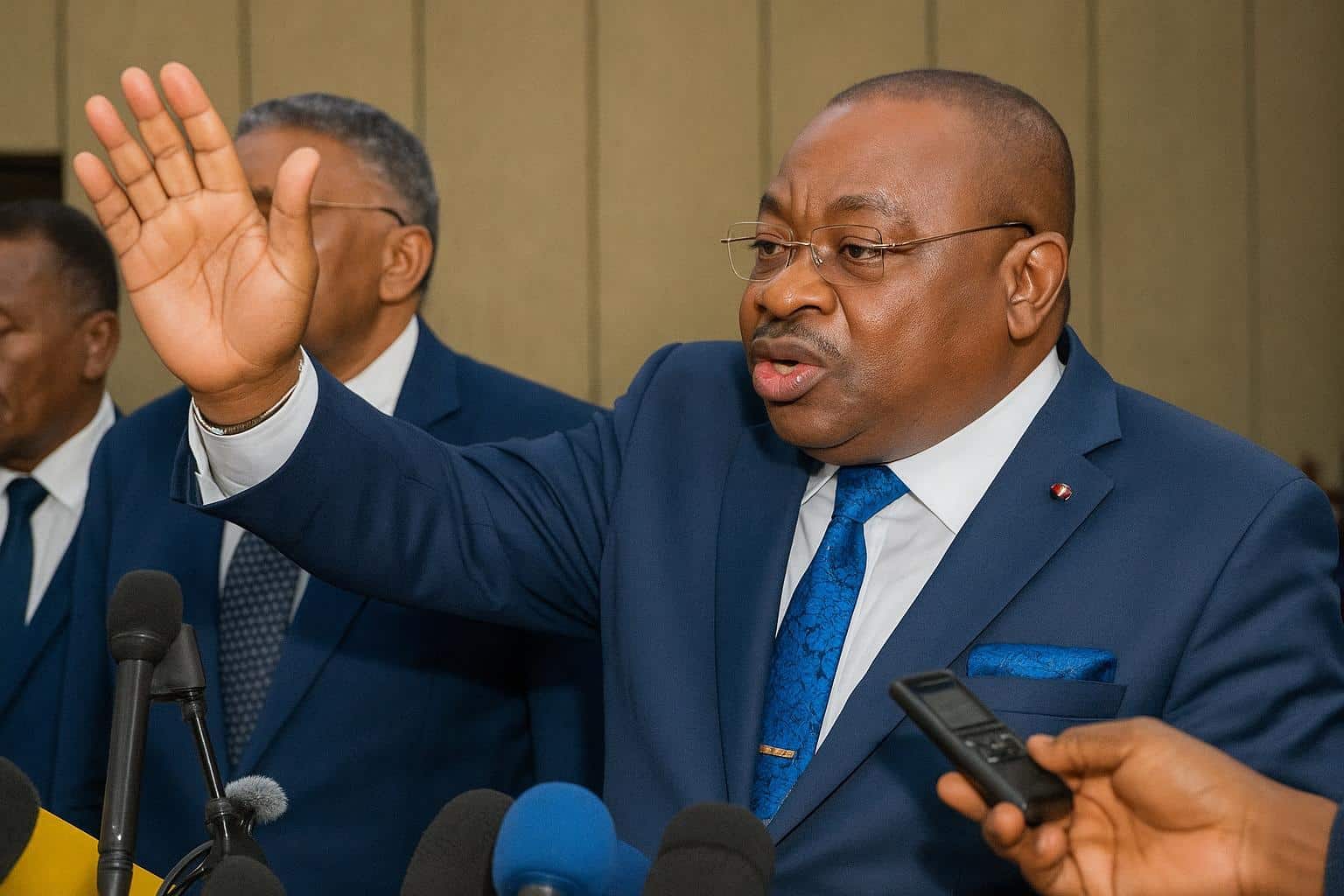
The nomination of Médard Milandou Nsonga as president of Congo-Brazzaville’s Higher Council for Freedom of Communication marks a pivotal, yet measured, adjustment in the nation’s media oversight landscape. His predecessor, Philippe Mvouo, spent twelve years building jurisprudence that balanced state prerogatives with an increasingly diversified press sector successfully.
Government spokesman Thierry Moungalla publicly welcomed the handover, framing it as “continuity with innovation,” while observers at the UNESCO office in Yaoundé suggested the transition aligns with trends favouring regulatory stability (UNESCO, 2024). For journalists, the key question remains how quickly new leadership will translate into practical reforms.
In its first communiqué since the appointment, the Union of Professionals of the Press of Congo congratulated Milandou Nsonga yet underscored structural bottlenecks. The organisation’s missive, co-signed by Edouard Adzotsa and Jean-Clotaire Hymboud, insisted that collaboration between regulator, newsroom owners, and civil society will determine the sector’s trajectory.
UPPC’s constructive agenda
Established in 2008, the UPPC federates more than twenty associations, from provincial correspondents to Brazzaville-based broadcasters. Its internal charter emphasises professionalism, solidarity, and ethical reporting standards. The current communiqué repeats those principles, arguing that conditions must improve for journalists to fulfil the constitutional mandate of providing accurate information.
One headline demand is swift implementation of the 2018 Brazzaville media forum’s forty-three recommendations, endorsed by cabinet yet awaiting full regulatory transposition. Analysts at the Congolese Media Observatory note that many proposals, including a press code and transparent accreditation rules, were already drafted in partnership with the CSLC.
UPPC leaders emphasise dialogue over confrontation. “We are guardians, not adversaries,” Adzotsa told Télé Congo after releasing the statement. His view mirrors a broader regional shift away from oppositional rhetoric toward co-regulation models championed by ECOWAS and the African Union, designed to safeguard both independence and responsibility together.
Financing media resilience
All eyes now focus on the Support Fund for Press Outlets, a 600-million-CFA mechanism inscribed in the 2025 finance law. The Ministry of Finance confirmed that disbursement guidelines are being finalised in consultation with the CSLC and treasury auditors, aiming for initial allocations before year’s end nationwide rollout.
Past experience offers cautionary lessons. The audiovisual licence fee, introduced in 2014, to similar fanfare, collected under 30 percent of projected revenue, according to the National Audit Court. Observers believe clearer governance rules and a published beneficiary list could enhance trust and shield the new fund from comparable turbulence.
Finance experts at the University of Marien Ngouabi highlight an additional challenge: most community radios lack audited accounts, complicating eligibility criteria. They suggest technical assistance windows within the fund to help outlets prepare financial statements, a model piloted in Côte d’Ivoire with support from the African Development Bank.
Diversity and professional standards
While praising institutional continuity, the UPPC expressed disappointment that no women were appointed to the CSLC board. Gender advocates recall that the government’s 2022-2026 National Equality Strategy targets forty-percent female representation in decision-making bodies. Communication ministry officials say further appointments, subject to parliamentary vetting, are still expected soon.
Professional credentials also surfaced as a concern. The UPPC urged state institutions to verify newsroom experience before conferring regulatory roles. Media law lecturer Justine Mabiala notes that such verification need not be punitive; instead, it can reinforce credibility and deter what she calls “title inflation” prevalent across sectors.
The CSLC has responded promptly, scheduling a stakeholder roundtable for October. Draft agenda items obtained by La Semaine Africaine include gender parity benchmarks, a database of rulings, and refresher training for provincial correspondents. Observers interpret the early outreach as signalling Milandou Nsonga’s intention to manage expectations through transparency.
Shared responsibilities ahead
Congo-Brazzaville’s media ecosystem mixes state broadcasters with nearly 200 private outlets, many of which operate on precarious business models. A 2023 survey by the African Media Barometer estimated that over sixty percent of local newspapers print fewer than 1 000 copies per edition, underscoring the fragility needing collective remedies.
Government initiatives already address portions of this challenge. The Digital Economy Agency is expanding fibre-optic coverage to nine additional prefectures by mid-2026, potentially reducing distribution costs for online publishers. Meanwhile, the Ministry of Technical Education plans joint workshops on entrepreneurial skills, aiming to diversify revenue streams beyond advertising.
International partners echo the cooperative tone. The French Embassy announced a training grant for investigative reporters, and the Economic Community of Central African States is finalising a regional protocol on journalist safety. CSLC commissioners view such engagement as complementary, provided domestic priorities remain “defined and owned at home.”
Stakeholders now await the inaugural CSLC board session, expected later this month. Whether the agenda prioritises funding modalities, gender representation, or accreditation reforms, consensus appears to be building around one premise: sustainable media development hinges on incremental progress, transparent governance, and a spirit of shared national stewardship ahead.