
Parliament-UNDP Synergy Fuels PADC Launch
At the marble-floored hall of Brazzaville’s Parliament Palace, lawmakers set aside party lines to dissect one headline topic: how to translate the United Nations 2030 Agenda into concrete roads, health posts and jobs across Congo’s fifteen departments.
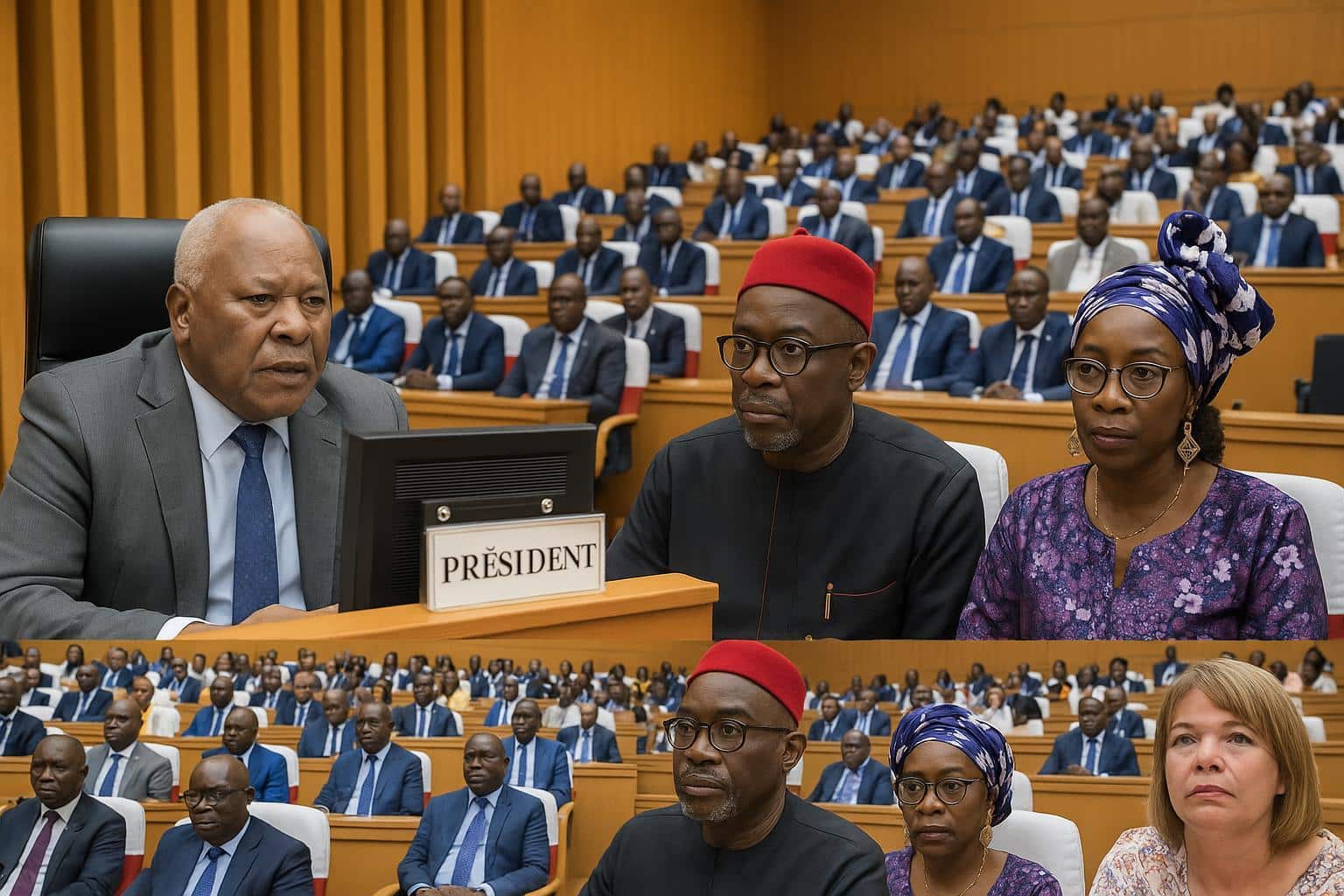
The one-day parliamentary session, convened on 28 October 2025 and co-hosted by the National Assembly and the United Nations Development Programme, officially launched a sensitisation drive around the Accelerated Community Development Programme, better known by its French acronym PADC.
Assembly president Isidore Mvouba, gavel in hand, framed the initiative as “a compass for effective and durable action”, arguing that eradicating geographic inequality remains the unfinished business of Congo’s economic rebound.
By design, PADC will run from 2026 to 2030, mirroring the last mile of the Sustainable Development Goals. Its architects promise a territorially focused methodology that prioritises baseline data, quick infrastructure wins and participatory governance in every district.
Legislative Momentum and Oversight
“Development in Congo cannot be deemed complete as long as benefits remain unevenly shared,” Mvouba told the packed chamber, urging deputies to forge a dedicated legal framework and to galvanise funding alongside government ministries and donors.
The programme’s blueprint, circulated during the workshop, is anchored in detailed diagnostics conducted across Kouilou’s coastal villages, the rainforest areas of Likouala and the savannah settlements of Plateaux, allowing site-specific interventions rather than one-size-fits-all projects.
Deputy Charlotte Opimbat applauded the shift from top-down national planning to bottom-up budgeting. “If Sangha demands river piers before clinics, figures must back that priority,” she said, calling for real-time dashboards that will let committees track disbursements.
The house adopted a bundle of recommendations, ranging from gender-responsive procurement rules to mandatory social-impact audits. Mvouba described the document as a “solid bedrock”, hinting it could feed into next year’s ordinary legislative session.
Financing Pathways Under Discussion
Financing, however, remains the golden thread. While no official envelope was disclosed, officials floated a blended scheme combining sovereign allocations, concessional loans and private sector co-investment, with UNDP providing design guarantees and capacity-building funds.
Juste-Désiré Mondélé, minister in charge of local development, said his department would “ring-fence” maintenance budgets so that newly built feeder roads do not “crumble after the ribbon-cutting”. He hinted at talks with the African Development Bank and the CEMAC Development Fund.
Parliamentary committees, he added, could help convince municipalities to streamline tax collection, boosting counterpart funding and nurturing fiscal autonomy at grassroots level.
Preliminary modelling by the Ministry of Economy pegs the five-year envelope at almost CFAF 600 billion, roughly one percent of projected GDP over the same period, a level analysts deem “ambitious but attainable” if oil revenues remain stable.
Digital governance tools are being piloted with the National Agency for Universal Access to ICT, including a mobile app that lets citizens photograph stalled projects and geotag complaints, feeding an open dashboard accessible to deputies and journalists alike.
UNDP Technical Backbone
UNDP regional director Matthias Zana Naab praised Congo’s “courage to localise the SDGs”, noting that similar community acceleration models have cut extreme poverty by double digits in Guinea and Togo. “Evidence shows that locals know best where the shoe pinches,” he said.
Resident representative Adama-Dian Barry underscored that UNDP will embed experts within parliamentary cells to support bill drafting and cost-benefit analysis, a first for the country’s legislature.
Outside partners such as UNICEF, UN Women and FAO are expected to align sectoral projects with PADC’s territorial maps, fostering what Barry called an “ecosystem of delivery” rather than parallel programmes.
Community Expectations and Social Cohesion
Grass-roots anticipation is palpable. In Ngabé, fisherwoman Yvonne Loukaya told local radio she hopes solar cold rooms will cut post-harvest losses. In Dolisie, youth groups circulated wish lists ranging from digital hubs to micro-credit kiosks.
Sociologist Blaise Ndinga warns that expectation management is critical. “Rapid results are crucial, yet unrealistic timelines could breed frustration,” he said, citing lessons from earlier decentralisation pilots.
To nurture cohesion, facilitators plan communal scorecards where villages publicly grade project delivery. The approach, tested in Ghana, reportedly enhances accountability without adversarial politics.
Next Steps on the Legislative Calendar
Final drafts of the PADC implementation bill are due before the budget session in April 2026. Deputies will scrutinise alignment with the National Development Plan 2022-2026 and the emergent Vision 2035 framework.
Observers expect debates over project selection criteria, but cross-party support appears strong. According to senior deputy Léon Alfred Opimbat, “No constituency wants to be left out of progress.”
With technical guidelines now endorsed and lawmakers publicly on board, Congo’s Accelerated Community Development Programme edges from concept to countdown, positioning the parliament not merely as a mouthpiece, but as a co-architect of inclusive growth.
For many observers, the stakes are high: if PADC delivers measurable gains, it could serve as a template for regional integration projects under the CEMAC umbrella.